
BakeryDiary is a recipe curation and editorial platform. We research and curate recipes from public sources, considering ratings, reviews, comments, and feedback. We then refine and present them clearly for home cooks. We are committed to an ad-free, focused experience that makes discovering and preparing recipes easier.
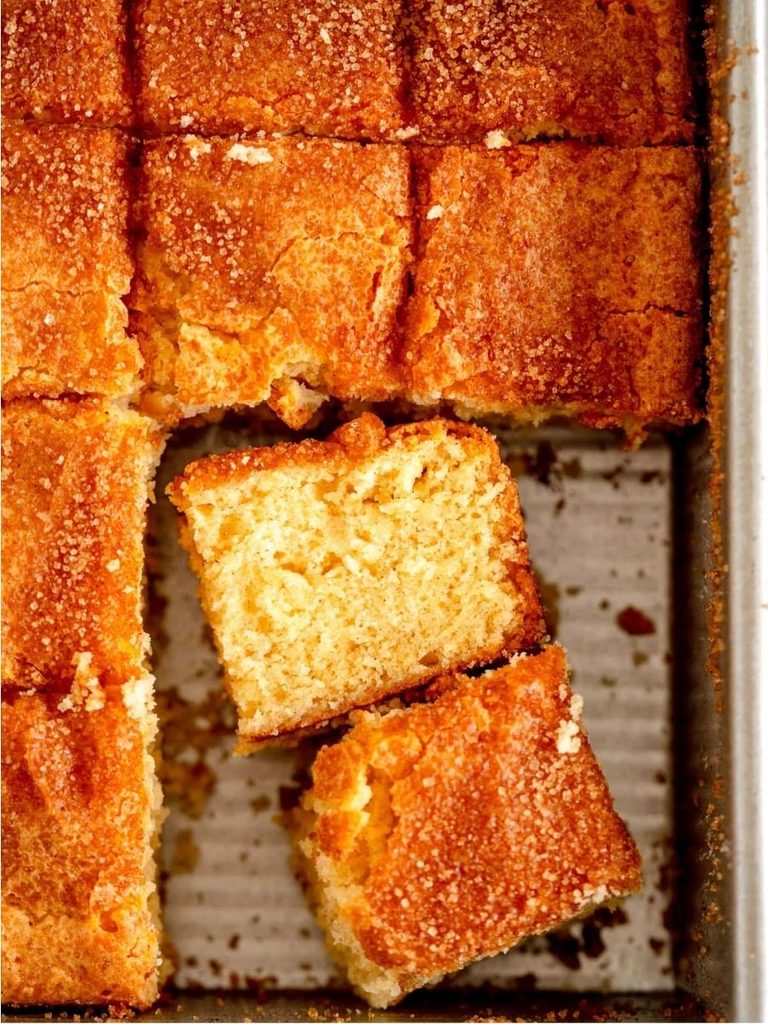
This Cinnamon Sugar Donut Cake transforms a simple butter cake into something especially irresistible by coating the pan—and the top of the batter—with a generous layer of cinnamon sugar.
As the cake bakes, it develops a sweet, warmly spiced exterior that gives every slice the familiar appeal of a cinnamon-sugar donut, while the inside remains soft, light, and fluffy.
The batter is made with rich unsalted butter, granulated sugar, vanilla, eggs, and sour cream.
The sour cream helps create a tender texture, while a small amount of cinnamon in the cake itself carries the warm flavor throughout every bite.
A coating of raw or turbinado sugar mixed with cinnamon adds a slightly textured sweetness around the outside, creating a delicious contrast with the delicate crumb.
Baked in an 8-inch square pan, this cake is wonderfully simple yet feels special enough to serve warm as a comforting dessert or sweet treat.
The generous cinnamon-sugar coating means there is no need for frosting or an elaborate topping—the cake delivers plenty of flavor and texture on its own.
Fresh from the oven, it is especially tempting, with a soft, buttery interior and a sweet cinnamon-sugar finish on every side.
Easy to slice and enjoyable for several days, this donut-inspired cake is a cozy, crowd-pleasing bake that combines the familiar flavors of a classic cinnamon sugar donut with the ease and tenderness of a homemade butter cake.


Soft-Baked Cinnamon Donut Cake
Ingredients
Equipment
Method
- Prepare the Oven and Cinnamon Sugar: Preheat the oven to 330°F (165°C). In a small bowl, combine the raw or turbinado sugar and ½ teaspoon cinnamon.
- Coat the Baking Pan: Generously grease an 8-inch (20 cm) square baking pan with butter. Add the cinnamon sugar mixture and coat the bottom and all sides of the pan generously. Shake any remaining cinnamon sugar back into the bowl and reserve it for topping the cake. Place the prepared pan in the refrigerator until ready to use so the butter can firm up and remain in place when the batter is added.
- Cream the Butter and Sugar: In the bowl of a stand mixer or a large bowl using an electric mixer, beat the room-temperature butter, granulated sugar, and vanilla on medium-high to high speed until the mixture is very light and fluffy.
- Add the Eggs: Add the eggs one at a time, mixing well after each addition. Once both eggs have been incorporated, continue beating on high speed for 2 to 3 minutes, until the mixture has thickened and become very light.
- Prepare the Remaining Ingredients: Measure the sour cream into a small bowl. In a separate medium bowl, combine the all-purpose flour, baking powder, kosher salt, and ¼ teaspoon cinnamon.
- Combine the Batter: Alternately add the flour mixture and sour cream to the butter mixture, beginning and ending with the flour. Add the flour mixture in three additions and the sour cream in two additions, mixing briefly between each addition. Switch to a spatula and gently turn the batter a few times to ensure everything is evenly combined.
- Fill the Pan: Transfer the batter to the chilled, cinnamon-sugar-coated pan. Smooth the surface with a spatula or the back of a spoon, making sure there are no large air bubbles in the batter.
- Add the Cinnamon Sugar Topping: Sprinkle the reserved cinnamon sugar evenly over the top of the batter.
- Bake the Cake: Bake for 45 to 50 minutes. The cake is ready when the center springs back lightly when pressed with a finger and a skewer inserted into the middle comes out clean or with only a few moist crumbs attached.
- Cool and Slice: Remove the cake from the oven and allow it to cool in the pan. If using a non-stick pan, slice the cake with a plastic knife or scraper to avoid damaging the pan.
- Store and Reheat: Store the cake in an airtight container at room temperature for up to 4 days. If serving after the day it was baked, microwave individual portions briefly to re-warm and freshen the cake.
Notes
- Use an 8-inch (20 cm) non-stick square cake pan for the method as tested in the original recipe. The recipe was not tested in a glass pan or a non-stick alternative.
- Generously coat every side of the buttered pan with the cinnamon sugar mixture to create the characteristic cinnamon-sugar exterior.
- Refrigerating the prepared pan before adding the batter helps the butter firm up, reducing the chance of the cinnamon-sugar coating coming away from the sides.
- Make sure the butter, eggs, and sour cream are at room temperature as specified for smoother mixing and a light, fluffy batter.
- Beat the butter, sugar, and vanilla until very light and fluffy, then continue beating after the eggs have been added for the full 2 to 3 minutes described in the recipe.
- Add the flour mixture and sour cream alternately, beginning and ending with the flour mixture, and avoid excessive mixing.
- Check for doneness by lightly pressing the center and inserting a skewer into the cake. It should spring back and the skewer should come out clean or with a few moist crumbs.
- Store leftovers in an airtight container at room temperature for up to 4 days.
- To freshen leftover cake, briefly warm individual portions in the microwave before serving.
- For a jam variation, omit the cinnamon from both the sugar coating and the cake batter. Once the batter is in the pan, make small divots with a teaspoon, fill them with jam, gently cover the jam with batter, and then sprinkle the top with sugar. The original variation used 150 g raspberry fruit preserve.
Chef’s Secret
The most useful technique for achieving the signature donut-like finish is to chill the buttered and cinnamon-sugar-coated pan before filling it with batter.
After generously greasing the pan and coating every surface with the cinnamon sugar, place it in the refrigerator while you prepare the cake batter.
This gives the butter time to firm up, helping the cinnamon-sugar layer stay attached to the bottom and sides instead of being disturbed when the thick batter is added.
When transferring the batter, add it carefully and smooth the surface gently rather than aggressively spreading it around the pan.
This simple preparation step helps preserve the generous cinnamon-sugar coating that makes the finished cake especially distinctive, creating a sweet, spiced exterior around the light and fluffy interior.
Serving Suggestions
This Cinnamon Sugar Donut Cake is especially appealing served warm, when its soft, fluffy crumb and cinnamon-sugar coating are at their most inviting.
Enjoy a slice on its own or serve it as a sweet treat alongside coffee, tea, or a glass of milk.
For serving after the first day, briefly warming an individual slice in the microwave can help refresh its soft texture.
The cake can also be presented as a simple dessert or shared as part of a brunch or afternoon spread, where its easy-to-slice square portions make serving convenient.
Since the cake already has a generous cinnamon-sugar finish, it needs no elaborate topping to be enjoyable.
Conclusion
With its light, buttery crumb and generous cinnamon-sugar coating, this Cinnamon Sugar Donut Cake brings the familiar appeal of a classic cinnamon sugar donut into an easy, comforting cake.
The simple technique of coating the pan creates flavor and texture around every slice, while sour cream helps maintain a soft and fluffy interior.
Whether enjoyed warm from the pan or gently reheated the next day, this straightforward cake is a delicious choice whenever you want a simple homemade treat with plenty of buttery cinnamon-sugar flavor.
