
BakeryDiary is a recipe curation and editorial platform. We research and curate recipes from public sources, considering ratings, reviews, comments, and feedback. We then refine and present them clearly for home cooks. We are committed to an ad-free, focused experience that makes discovering and preparing recipes easier.
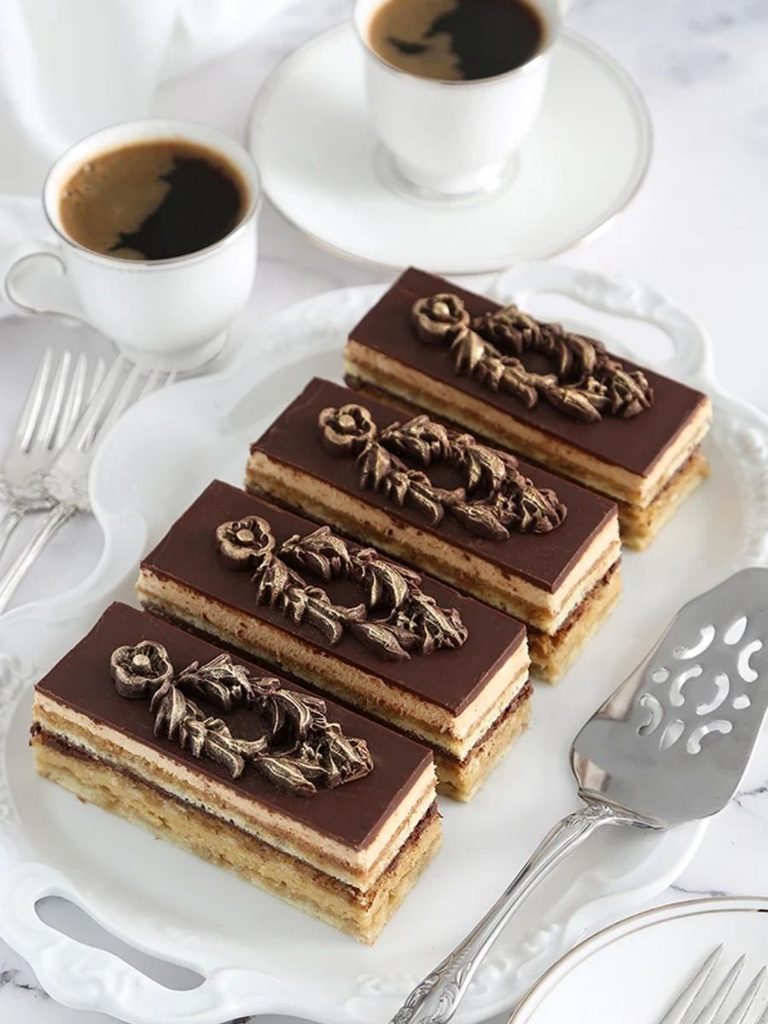
Opera Cake is a refined French dessert built around the beautiful contrast of almond sponge, bold coffee, silky buttercream, and rich chocolate.
Its signature structure comes from thin layers of delicate Jaconde-style sponge, which are lightly soaked in coffee syrup before being layered with French coffee buttercream and chocolate glaze.
The combination creates the distinctive coffee-chocolate-almond profile associated with this classic pastry.
The almond sponge is light, tender, and gently springy, with almond flour providing a subtle nuttiness while whipped egg whites help create its airy texture.
Coffee syrup adds moisture and a concentrated espresso flavor, while the French buttercream brings a smooth, rich texture and a deeper coffee note.
A semisweet chocolate glaze adds another layer of richness and gives the finished cake its polished appearance.
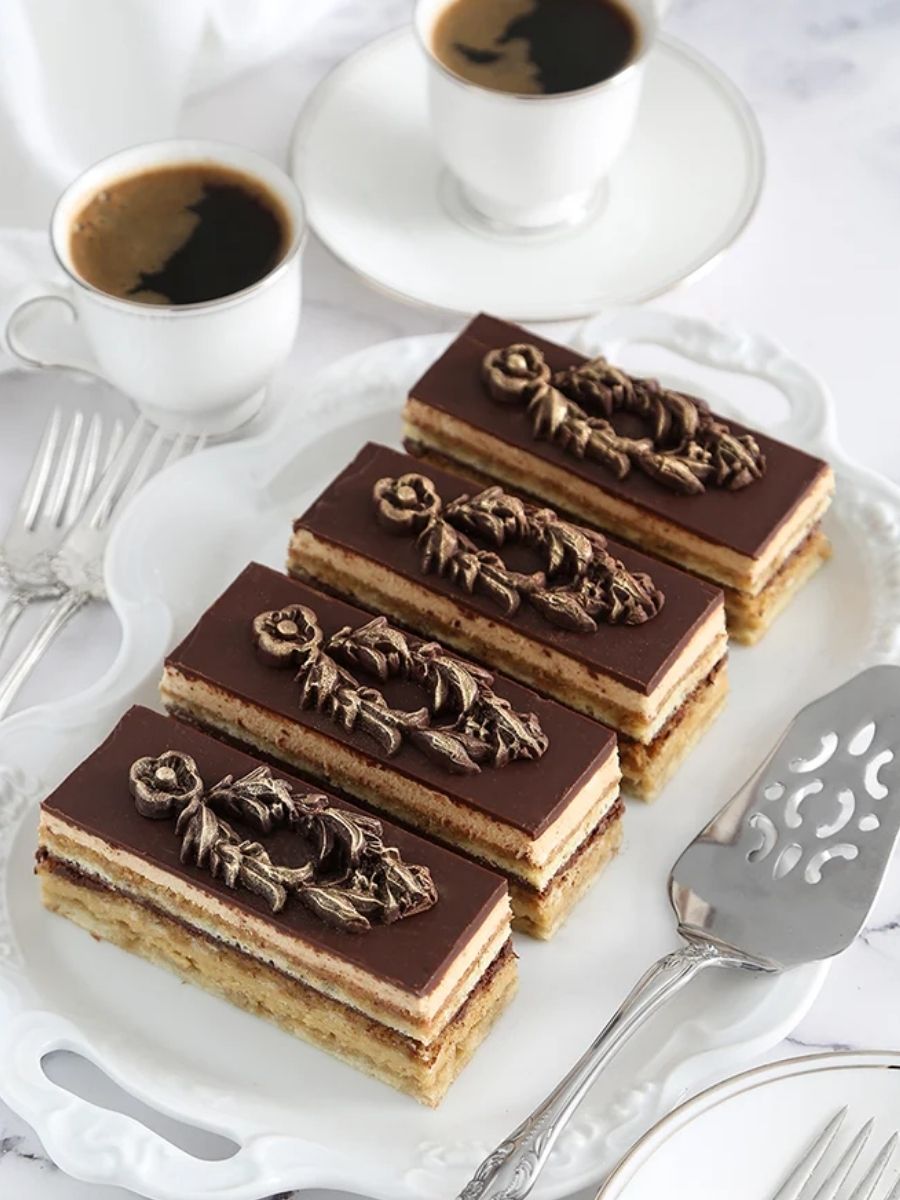
This version also includes a decorative modeling-chocolate finish brushed with gold luster dust, turning each neatly cut portion into an especially elegant dessert.
The careful layering, chilling, trimming, and glazing require some patience, but they are what give Opera Cake its clean pastry-shop appearance.
Perfect for special occasions, this cake offers several textures in every bite: tender sponge, creamy buttercream, smooth chocolate, and a delicate crispness from the finished chocolate decoration.
The result is sophisticated without relying on excessive sweetness, making it particularly appealing to coffee and chocolate lovers.

Classic French Opera Cake
Ingredients
Equipment
Method
- Prepare the Baking Pan: Preheat the oven to 450°F. Lightly grease a 17 × 11-inch jelly roll pan, line it with parchment paper, then grease the parchment. A Silpat baking mat may be used instead, provided it is also greased.
- Mix the Almond Batter: Using a stand mixer fitted with the paddle attachment, beat the almond flour, confectioners' sugar, all-purpose flour, whole eggs, and egg yolk until combined, scraping down the sides of the bowl as needed.
- Whip the Meringue: In a separate bowl, use an electric hand mixer to beat the egg whites with the superfine sugar until a thick, glossy meringue forms.
- Fold the Sponge Batter: Gently fold the meringue into the almond mixture, taking care not to deflate it. Fold in the melted butter until just incorporated.
- Bake the Jaconde Sponge: Transfer the batter to the prepared pan and spread it evenly with an offset spatula. Bake for 5–7 minutes, or until the center springs back when pressed. Remove from the oven and allow the sponge to cool slightly. It should pull away from the pan sides; if necessary, loosen the edges with a knife.
- Cool and Trim the Sponge: Invert the cake onto a wire rack and carefully remove the parchment or silicone liner. Use a small sharp knife to conservatively trim away the browned edges, then allow the sponge to cool completely.
- Dissolve the Espresso for the Syrup: Stir the instant espresso powder with 1 tablespoon of the warm water until completely dissolved.
- Cook the Coffee Syrup: Place the remaining water and granulated sugar in a saucepan. Bring to a boil, stirring until the sugar has melted. Remove from the heat, then stir in the dissolved espresso and brandy or cognac. Let the syrup cool to room temperature.
- Dissolve the Espresso for the Buttercream: Stir the instant espresso powder with 1 tablespoon of the water until the powder is fully dissolved.
- Cook the Sugar Syrup: Place the sugar and remaining water in a saucepan. Bring to a boil, stirring until the sugar dissolves. Attach a candy thermometer and continue cooking without stirring until the syrup reaches 238°F, the soft-ball candy stage. If sugar crystals form on the sides of the pan, wash them down with a pastry brush dipped in cold water.
- Beat the Egg Yolks: Beat the egg yolks in an electric mixer fitted with the whip attachment for 1 minute.
- Add the Hot Syrup: With the mixer running, slowly pour the hot sugar syrup into the egg yolks in a fine stream, aiming toward the center of the bowl rather than the sides.
- Add the Coffee: Add the dissolved espresso mixture and beat on high speed until the mixture has cooled completely. At this stage, it may appear thin and liquid rather than resembling buttercream; this is normal.
- Incorporate the Butter: Once the mixing bowl feels cool to the touch, change to the paddle attachment. With the mixer running, add the softened butter pieces one at a time. The mixture may initially appear curdled, but continue mixing.
- Finish the Buttercream: Once all the butter has been incorporated, beat on high speed until the mixture becomes a thick, creamy, silky buttercream. Cover and set aside.
- Melt the Chocolate Glaze: Place the butter and 6 oz. of the finely chopped semisweet chocolate in a large microwave-safe bowl, reserving the remaining 2 tablespoons, or 1 oz., of chocolate. Microwave for about 1 to 1 1/2 minutes in a standard household microwave.
- Smooth the Glaze: Gently whisk the melted butter and chocolate until smooth. Add the reserved chocolate and whisk until it melts completely.
- Thicken the Glaze: Leave the glaze at room temperature until it reaches a spreadable consistency. Alternatively, refrigerate it briefly to speed up the process, stirring frequently while it chills.
- Cut the Sponge Layers: Once the sponge is completely cool, use a ruler to cut it evenly into three layers.
- Build the First Layer: Place one sponge layer on a serving plate and brush it evenly with the coffee syrup. Spread half of the French coffee buttercream over the soaked sponge.
- Add the Second Sponge: Place the second sponge layer on top and brush it evenly with the coffee syrup.
- Add the Chocolate Layer: Spread half of the chocolate glaze over the second soaked sponge.
- Complete the Main Layers: Place the remaining sponge layer on top and brush it with the remaining coffee syrup. Spread the remaining French coffee buttercream evenly to the edges.
- Chill the Buttercream Layer: Refrigerate the assembled cake until the buttercream becomes firm, about 30 minutes.
- Finish the Chocolate Top: Microwave the remaining chocolate glaze for about 15 seconds, or until it becomes shiny and pourable but is not hot.
- Glaze the Cake: Pour the warmed glaze over the top of the chilled cake and spread it evenly across the surface. Refrigerate until the glaze is firm.
- Trim and Slice the Cake: Once firm, trim the edges to neaten the cake. Cut it into evenly sized fingers, approximately 2 inches wide.
- Melt the Modeling Chocolate: Place the semisweet chocolate chips in a microwave-safe bowl. Heat at full power in 30-second intervals, stirring thoroughly after each interval, until smooth.
- Make the Modeling Chocolate: Add the light corn syrup to the melted chocolate and stir until the mixture thickens and loses its shiny appearance.
- Flatten the Chocolate: Spread the modeling chocolate mixture onto a large sheet of wax paper. Cover with a second sheet and gently roll it flat with a rolling pin.
- Firm the Chocolate: Leave the flattened chocolate to stand until firm, about 1–2 hours.
- Knead the Chocolate: Remove the wax paper and knead the chocolate until it becomes pliable and putty-like.
- Mold the Chocolate Laurels: Press small pieces of the modeling chocolate into the Sorrento Laurels Mold, allowing the chocolate to overflow slightly.
- Trim the Decorations: Use a knife to remove excess chocolate so the molded surface is flat and even with the mold.
- Freeze the Laurels: Freeze the filled mold for 10 minutes.
- Release the Decorations: Gently remove the chocolate laurels from the mold and let them stand until they reach room temperature. Repeat until you have enough decorations for the cake pieces, approximately 5–6 laurels.
- Add the Gold Finish: Dip a dry art brush into the gold luster dust and gently brush it over the raised areas of each chocolate laurel.
- Decorate the Cake: Place a small dot of corn syrup on the back of each laurel and attach it to the top of an Opera Cake slice.
- Chill Before Serving: Refrigerate the decorated cake until ready to serve, then bring it to room temperature before serving.
Notes
- Keep the Jaconde batter light by folding in the meringue gently rather than stirring vigorously.
- The sponge is ready when the center springs back when pressed and the cake begins to pull away from the pan.
- Trim only the browned edges of the sponge so the finished layers remain as large and even as possible.
- Allow the coffee syrup to cool completely to room temperature before using it on the cake.
- The French buttercream can look liquid after the sugar syrup and espresso are incorporated; this is normal. Continue until the bowl cools before adding the butter.
- If the buttercream looks curdled after the butter is added, continue beating until it develops a thick, smooth, silky texture.
- The chocolate glaze should be spreadable for the middle layer and shiny and pourable—but not hot—for the final topping.
- Use a ruler when cutting the sponge and slicing the finished cake to create neat, even portions.
- Refrigerate the assembled cake until the buttercream and chocolate topping are firm before trimming and decorating.
- Bring the finished Opera Cake to room temperature before serving for the intended texture.
Chef’s Secret
The most important detail for achieving clean, distinct Opera Cake layers is controlling the consistency of each component before assembly.
Pay particular attention to the French coffee buttercream: after the hot sugar syrup and espresso are beaten into the egg yolks, do not add the butter until the mixing bowl feels cool to the touch.
Adding softened butter while the mixture is still warm can interfere with the buttercream’s final texture.
Even if the mixture initially looks thin or becomes curdled when the butter is incorporated, keep beating as directed.
Once all the butter is added, continued high-speed mixing allows the buttercream to come together into the thick, silky consistency needed for spreading.
This makes it easier to create smooth, even layers that hold their shape when the cake is chilled.
Serving Suggestions
Serve the Opera Cake in neat, approximately 2-inch-wide fingers so the almond sponge, coffee buttercream, and chocolate layers are clearly visible.
The gold-dusted chocolate laurels provide an elegant finishing touch, making the slices suitable for a special dessert table or formal occasion.
Allow the cake to return to room temperature before serving so the buttercream and chocolate layers are more enjoyable in texture.
For presentation, arrange the slices on a simple serving platter with the decorative laurel facing upward.
The cake already has a pronounced coffee-chocolate character, so it pairs naturally with a cup of freshly brewed coffee or espresso.
Conclusion
This classic Opera Cake brings together delicate almond sponge, aromatic coffee syrup, silky French coffee buttercream, and rich semisweet chocolate in a beautifully layered French dessert.
Each component contributes its own texture and flavor while creating a balanced, sophisticated whole.
The elegant chocolate laurels and gold finish make the completed slices especially striking, while careful chilling and precise cutting give them a polished appearance.
Although the recipe involves several individual preparations, following each stage patiently results in a refined dessert with the distinctive layered character that makes Opera Cake so memorable.
