Prepare the Baking Pan: Preheat the oven to 450°F. Lightly grease a 17 × 11-inch jelly roll pan, line it with parchment paper, then grease the parchment. A Silpat baking mat may be used instead, provided it is also greased.
Mix the Almond Batter: Using a stand mixer fitted with the paddle attachment, beat the almond flour, confectioners' sugar, all-purpose flour, whole eggs, and egg yolk until combined, scraping down the sides of the bowl as needed.
Whip the Meringue: In a separate bowl, use an electric hand mixer to beat the egg whites with the superfine sugar until a thick, glossy meringue forms.
Fold the Sponge Batter: Gently fold the meringue into the almond mixture, taking care not to deflate it. Fold in the melted butter until just incorporated.
Bake the Jaconde Sponge: Transfer the batter to the prepared pan and spread it evenly with an offset spatula. Bake for 5–7 minutes, or until the center springs back when pressed. Remove from the oven and allow the sponge to cool slightly. It should pull away from the pan sides; if necessary, loosen the edges with a knife. Cool and Trim the Sponge: Invert the cake onto a wire rack and carefully remove the parchment or silicone liner. Use a small sharp knife to conservatively trim away the browned edges, then allow the sponge to cool completely.
Dissolve the Espresso for the Syrup: Stir the instant espresso powder with 1 tablespoon of the warm water until completely dissolved.
Cook the Coffee Syrup: Place the remaining water and granulated sugar in a saucepan. Bring to a boil, stirring until the sugar has melted. Remove from the heat, then stir in the dissolved espresso and brandy or cognac. Let the syrup cool to room temperature.
Dissolve the Espresso for the Buttercream: Stir the instant espresso powder with 1 tablespoon of the water until the powder is fully dissolved.
Cook the Sugar Syrup: Place the sugar and remaining water in a saucepan. Bring to a boil, stirring until the sugar dissolves. Attach a candy thermometer and continue cooking without stirring until the syrup reaches 238°F, the soft-ball candy stage. If sugar crystals form on the sides of the pan, wash them down with a pastry brush dipped in cold water. Beat the Egg Yolks: Beat the egg yolks in an electric mixer fitted with the whip attachment for 1 minute.
Add the Hot Syrup: With the mixer running, slowly pour the hot sugar syrup into the egg yolks in a fine stream, aiming toward the center of the bowl rather than the sides.
Add the Coffee: Add the dissolved espresso mixture and beat on high speed until the mixture has cooled completely. At this stage, it may appear thin and liquid rather than resembling buttercream; this is normal.
Incorporate the Butter: Once the mixing bowl feels cool to the touch, change to the paddle attachment. With the mixer running, add the softened butter pieces one at a time. The mixture may initially appear curdled, but continue mixing.
Finish the Buttercream: Once all the butter has been incorporated, beat on high speed until the mixture becomes a thick, creamy, silky buttercream. Cover and set aside.
Melt the Chocolate Glaze: Place the butter and 6 oz. of the finely chopped semisweet chocolate in a large microwave-safe bowl, reserving the remaining 2 tablespoons, or 1 oz., of chocolate. Microwave for about 1 to 1 1/2 minutes in a standard household microwave. Smooth the Glaze: Gently whisk the melted butter and chocolate until smooth. Add the reserved chocolate and whisk until it melts completely.
Thicken the Glaze: Leave the glaze at room temperature until it reaches a spreadable consistency. Alternatively, refrigerate it briefly to speed up the process, stirring frequently while it chills.
Cut the Sponge Layers: Once the sponge is completely cool, use a ruler to cut it evenly into three layers.
Build the First Layer: Place one sponge layer on a serving plate and brush it evenly with the coffee syrup. Spread half of the French coffee buttercream over the soaked sponge.
Add the Second Sponge: Place the second sponge layer on top and brush it evenly with the coffee syrup.
Add the Chocolate Layer: Spread half of the chocolate glaze over the second soaked sponge.
Complete the Main Layers: Place the remaining sponge layer on top and brush it with the remaining coffee syrup. Spread the remaining French coffee buttercream evenly to the edges.
Chill the Buttercream Layer: Refrigerate the assembled cake until the buttercream becomes firm, about 30 minutes.
Finish the Chocolate Top: Microwave the remaining chocolate glaze for about 15 seconds, or until it becomes shiny and pourable but is not hot.
Glaze the Cake: Pour the warmed glaze over the top of the chilled cake and spread it evenly across the surface. Refrigerate until the glaze is firm.
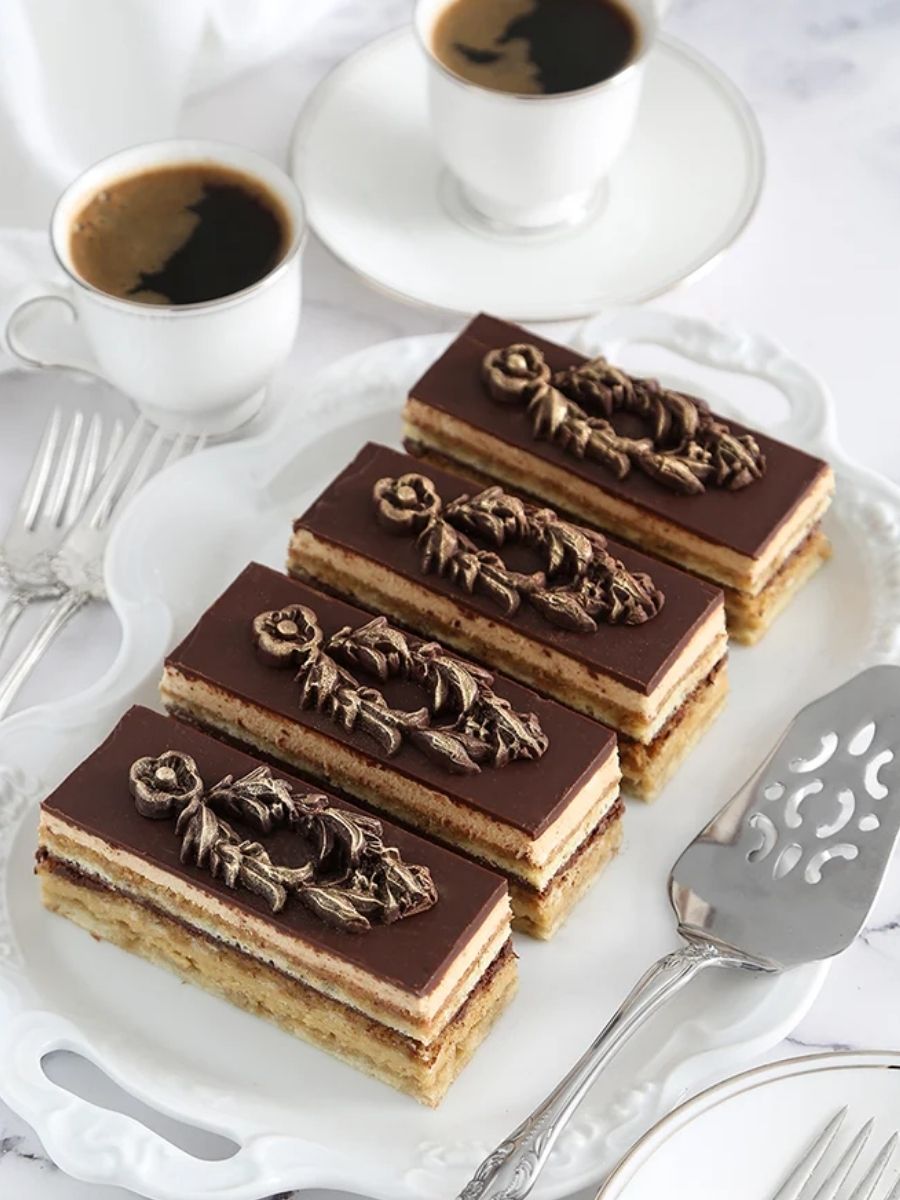
Trim and Slice the Cake: Once firm, trim the edges to neaten the cake. Cut it into evenly sized fingers, approximately 2 inches wide.
Melt the Modeling Chocolate: Place the semisweet chocolate chips in a microwave-safe bowl. Heat at full power in 30-second intervals, stirring thoroughly after each interval, until smooth.
Make the Modeling Chocolate: Add the light corn syrup to the melted chocolate and stir until the mixture thickens and loses its shiny appearance.
Flatten the Chocolate: Spread the modeling chocolate mixture onto a large sheet of wax paper. Cover with a second sheet and gently roll it flat with a rolling pin.
Firm the Chocolate: Leave the flattened chocolate to stand until firm, about 1–2 hours.
Knead the Chocolate: Remove the wax paper and knead the chocolate until it becomes pliable and putty-like.
Mold the Chocolate Laurels: Press small pieces of the modeling chocolate into the Sorrento Laurels Mold, allowing the chocolate to overflow slightly.
Trim the Decorations: Use a knife to remove excess chocolate so the molded surface is flat and even with the mold.
Freeze the Laurels: Freeze the filled mold for 10 minutes.
Release the Decorations: Gently remove the chocolate laurels from the mold and let them stand until they reach room temperature. Repeat until you have enough decorations for the cake pieces, approximately 5–6 laurels.
Add the Gold Finish: Dip a dry art brush into the gold luster dust and gently brush it over the raised areas of each chocolate laurel.
Decorate the Cake: Place a small dot of corn syrup on the back of each laurel and attach it to the top of an Opera Cake slice.
Chill Before Serving: Refrigerate the decorated cake until ready to serve, then bring it to room temperature before serving.