
BakeryDiary is a recipe curation and editorial platform. We research and curate recipes from public sources, considering ratings, reviews, comments, and feedback. We then refine and present them clearly for home cooks. We are committed to an ad-free, focused experience that makes discovering and preparing recipes easier.
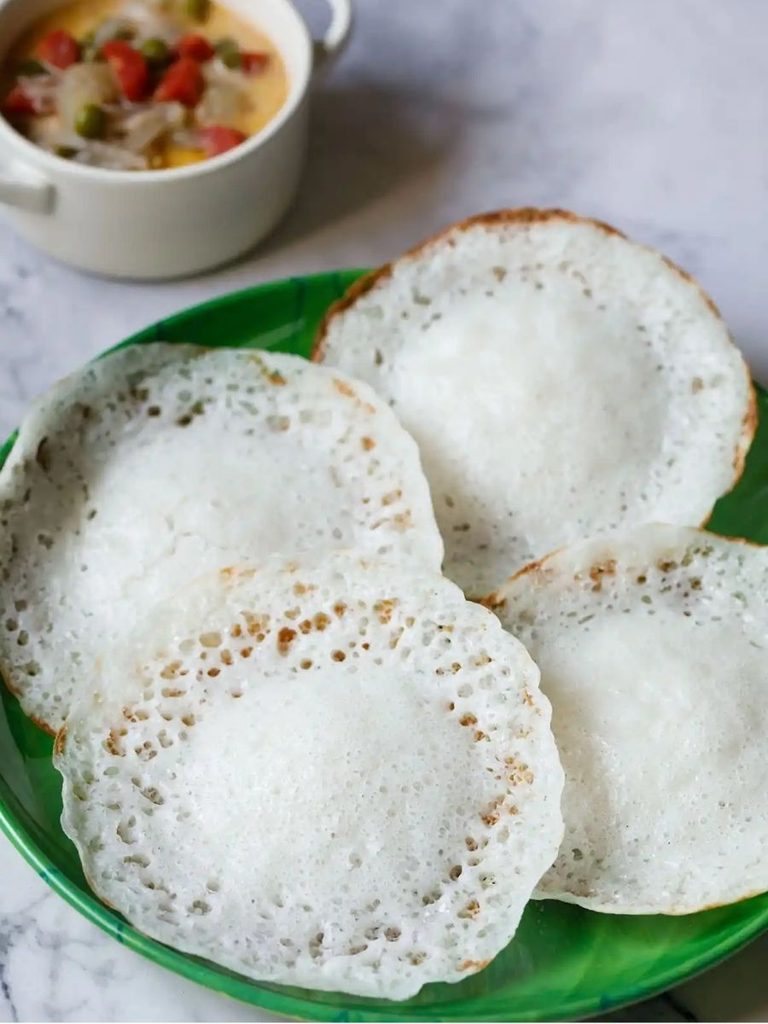
Appam, also known as palappam, is a classic Kerala specialty loved for its delicate texture and beautifully lacy edges.
Made primarily from rice and fresh coconut, this fermented pancake has a wonderfully soft, tender center surrounded by thin, lightly crisp edges.
The contrast between the fluffy middle and crisp border is one of the defining features that makes appam so appealing.
The batter begins with soaked rice, which is blended together with grated fresh coconut, poha or cooked rice, sugar, and salt until smooth and flowing.
Yeast helps the batter ferment, giving the finished appam its characteristic lightness and subtle fermented flavor.
During cooking, the batter is swirled around an appam pan so that it spreads outward while leaving a little more batter toward the center.
Once covered and cooked, the edges develop a delicate golden crispness while the center remains soft and tender.
Appam has a mildly sweet, coconut-rich flavor that pairs especially well with gentle, creamy accompaniments.
It is traditionally enjoyed hot or warm alongside vegetable stew or sweetened coconut milk flavored with cardamom.
The recipe is also naturally suited to different rice choices and allows cooked rice or puffed rice as alternatives to poha, making it flexible while maintaining the characteristic texture of Kerala-style appam.
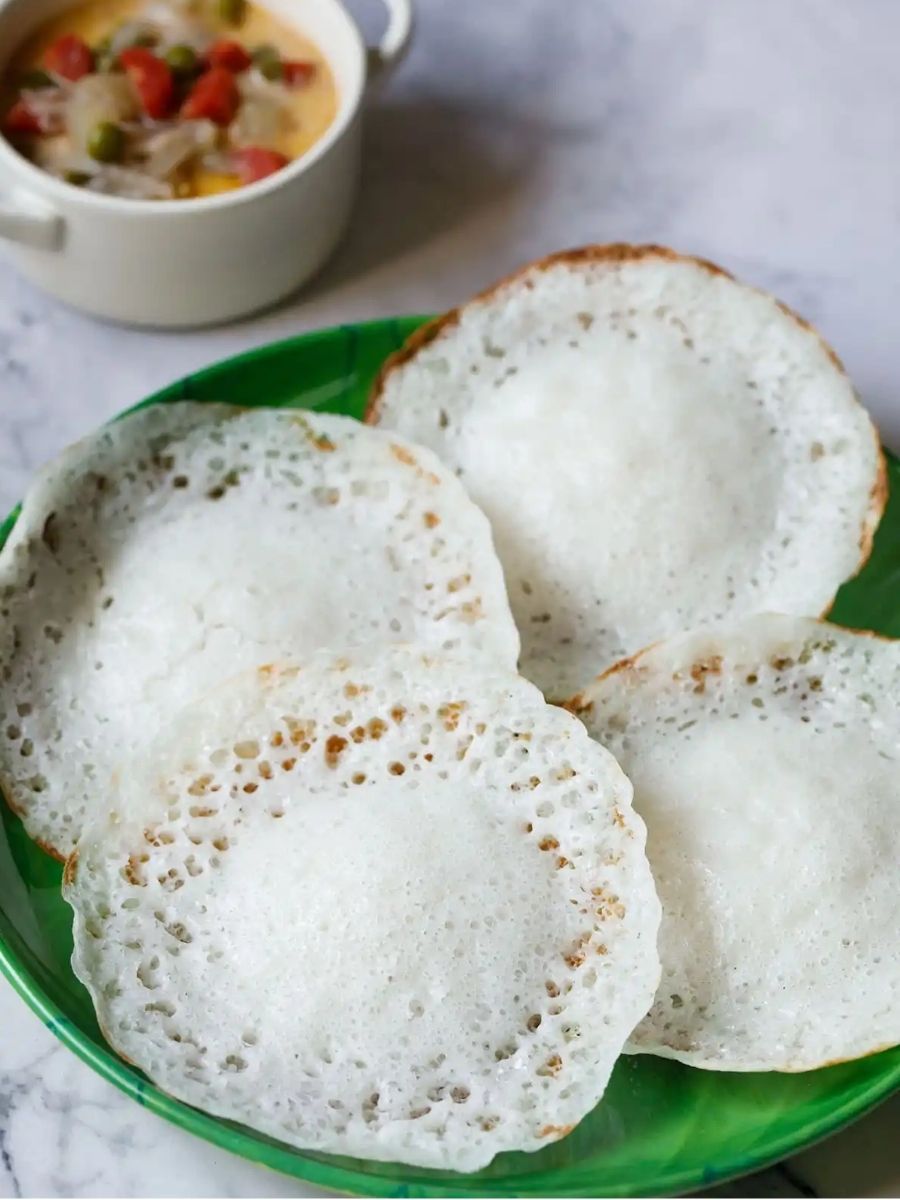

Authentic Kerala Rice Appam
Ingredients
Equipment
Method
- Rinse the Rice: Rinse the rice thoroughly in water a couple of times to remove surface impurities.
- Soak the Rice: Place the rinsed rice in 2 cups of water and soak for 4 to 5 hours.
- Prepare the Poha: If using poha, either soak it together with the rice, soak it separately for about 30 minutes, or rinse it with water before adding it to the blender. Cooked rice or puffed rice can be used instead.
- Blend the Batter: Drain the soaked rice completely. Add it to a blender or mixer-grinder along with the grated coconut, poha or chosen rice alternative, salt, and sugar. Add ¾ cup water, or as needed, and blend until you have a smooth, flowing batter.
- Transfer the Batter: Pour the blended batter into a medium to large bowl.
- Add Instant Yeast: If using instant or rapid-rise yeast, sprinkle ½ teaspoon evenly over the batter and mix thoroughly so the yeast is incorporated throughout.
- Activate Dry Yeast: If using dry active yeast, stir ¾ teaspoon yeast into 1 to 2 tablespoons of lukewarm water until well mixed. Add this yeast mixture to the batter and combine thoroughly.
- Ferment the Batter: Cover the bowl and leave the batter to ferment. With instant yeast, ferment for 1 to 2 hours, until the batter doubles in volume and develops plenty of air pockets. With dry active yeast, ferment overnight or for 8 to 12 hours or longer depending on the temperature conditions, until the batter rises and increases in volume.
- Prepare the Pan: Heat an appam pan or kadai with handles. Lightly spread some oil over the cooking surface using a spoon. If using a nonstick pan, the oiling step can be skipped.
- Pour the Batter: Pour about ⅓ to ¼ cup of batter into the heated pan.
- Shape the Appam: Immediately turn and tilt the pan so the batter moves outward and forms a neat round shape. Keep the heat at medium-low to medium, adjusting it as needed so the batter remains easy to spread.
- Add Oil: Drizzle a little oil around the edges if desired.
- Cook the Appam: Cover the pan with a lid and cook until the base becomes light golden and the edges turn crisp and lacy.
- Remove the Appam: Gently lift the cooked appam from the pan using a spatula.
- Repeat the Batches: Continue cooking the remaining batter in the same manner. If the pan becomes too hot, reduce the heat before spreading the next portion of batter.
- Keep Warm: Place the prepared appams together and cover them with a kitchen towel to keep them covered.
- Serve the Appam: Serve the appam hot or warm with vegetable stew, or with coconut milk sweetened with jaggery and lightly flavored with cardamom powder.
Notes
- Short- or medium-grained raw rice such as sona masuri, parmal, ponni, or kolam can be used.
- An equal combination of raw rice and parboiled rice or idli rice is also suitable. Basmati rice can be used as well.
- Cooked or steamed rice and puffed rice (murmura) can replace the poha.
- If coconut milk is used for grinding the rice, use little or no additional water depending on the consistency.
- Dry active yeast can also be added directly to the blender while grinding the rice instead of preparing a separate yeast solution.
- If the batter becomes too thin, add some rice flour to bring it back to a medium consistency.
- The recipe can be scaled up when preparing a larger batch for gatherings.
Chef’s Secret
The key to beautifully textured appam is keeping the batter at the right consistency before cooking.
It should be smooth and flowing enough to move easily when the pan is tilted, but it should not be excessively thin.
If the batter becomes too loose, add a little rice flour to bring it back to a medium consistency.
When cooking, pay close attention to the heat: a pan that becomes too hot can make the batter difficult to spread evenly.
Reducing the heat before pouring and swirling the next portion helps create the characteristic thin, lacy edges while allowing the center to remain soft.
This simple combination of batter consistency and heat control makes the shaping process much easier.
Serving Suggestions
Serve appam hot or warm alongside a mild vegetable stew for a classic Kerala-style combination.
For a sweeter option, pair it with coconut milk sweetened with jaggery and lightly flavored with cardamom powder.
The delicate coconut flavor and soft center also make appam well suited to other mild curries and gently spiced accompaniments.
Keep the cooked appams covered with a kitchen towel until serving so they remain warm and ready to enjoy.
Conclusion
Appam brings together fermented rice, fresh coconut, and a simple cooking technique to create a distinctive Kerala favorite.
Its soft center, delicate lacy edges, and gentle coconut flavor make it enjoyable as a breakfast or snack.
Served warm with vegetable stew or sweetened coconut milk, these traditional appams offer a comforting combination of texture and flavor that is well worth making at home.
