Rinse the Rice: Rinse the rice thoroughly in water a couple of times to remove surface impurities.
Soak the Rice: Place the rinsed rice in 2 cups of water and soak for 4 to 5 hours.
Prepare the Poha: If using poha, either soak it together with the rice, soak it separately for about 30 minutes, or rinse it with water before adding it to the blender. Cooked rice or puffed rice can be used instead.
Blend the Batter: Drain the soaked rice completely. Add it to a blender or mixer-grinder along with the grated coconut, poha or chosen rice alternative, salt, and sugar. Add ¾ cup water, or as needed, and blend until you have a smooth, flowing batter.
Transfer the Batter: Pour the blended batter into a medium to large bowl.
Add Instant Yeast: If using instant or rapid-rise yeast, sprinkle ½ teaspoon evenly over the batter and mix thoroughly so the yeast is incorporated throughout.
Activate Dry Yeast: If using dry active yeast, stir ¾ teaspoon yeast into 1 to 2 tablespoons of lukewarm water until well mixed. Add this yeast mixture to the batter and combine thoroughly.
Ferment the Batter: Cover the bowl and leave the batter to ferment. With instant yeast, ferment for 1 to 2 hours, until the batter doubles in volume and develops plenty of air pockets. With dry active yeast, ferment overnight or for 8 to 12 hours or longer depending on the temperature conditions, until the batter rises and increases in volume. Prepare the Pan: Heat an appam pan or kadai with handles. Lightly spread some oil over the cooking surface using a spoon. If using a nonstick pan, the oiling step can be skipped.
Pour the Batter: Pour about ⅓ to ¼ cup of batter into the heated pan.
Shape the Appam: Immediately turn and tilt the pan so the batter moves outward and forms a neat round shape. Keep the heat at medium-low to medium, adjusting it as needed so the batter remains easy to spread.
Add Oil: Drizzle a little oil around the edges if desired.
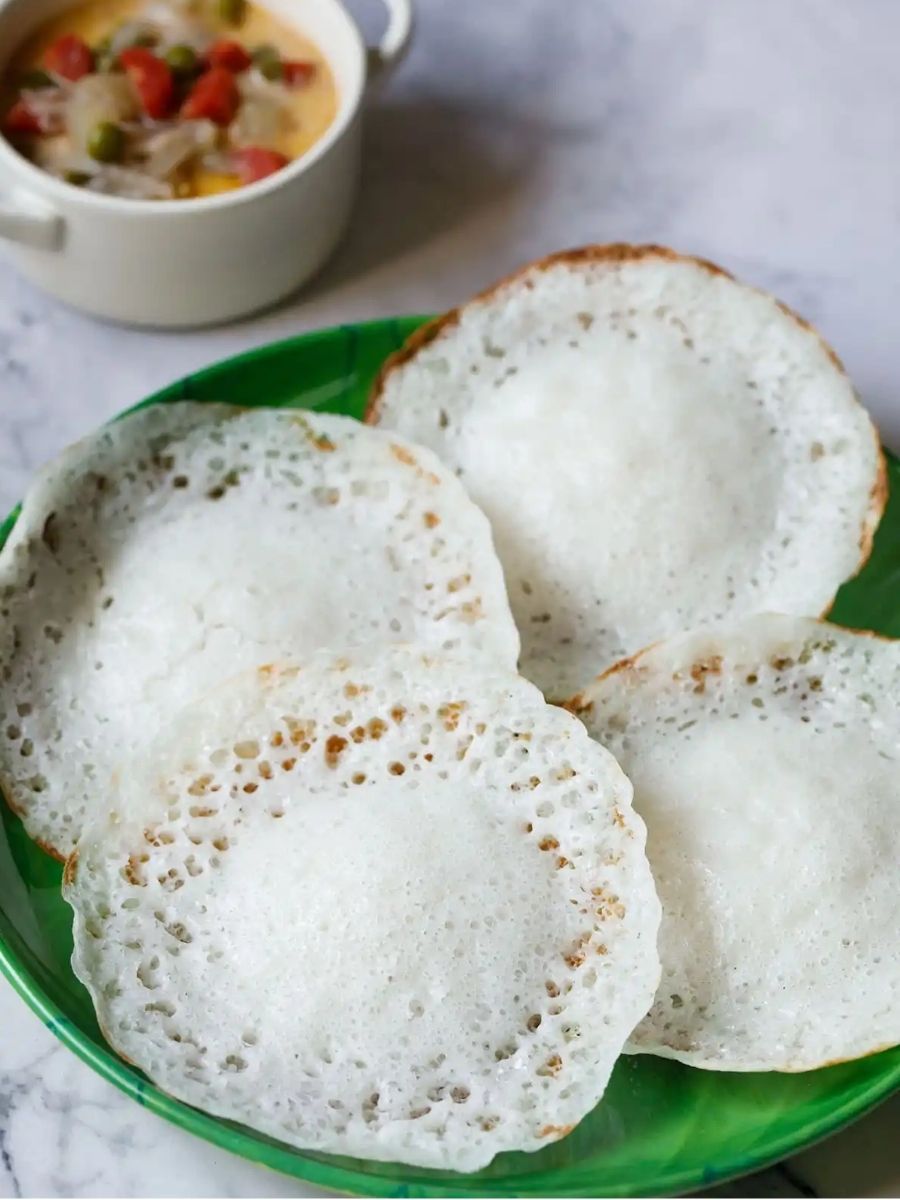
Cook the Appam: Cover the pan with a lid and cook until the base becomes light golden and the edges turn crisp and lacy.
Remove the Appam: Gently lift the cooked appam from the pan using a spatula.
Repeat the Batches: Continue cooking the remaining batter in the same manner. If the pan becomes too hot, reduce the heat before spreading the next portion of batter.
Keep Warm: Place the prepared appams together and cover them with a kitchen towel to keep them covered.
Serve the Appam: Serve the appam hot or warm with vegetable stew, or with coconut milk sweetened with jaggery and lightly flavored with cardamom powder.