
BakeryDiary is a recipe curation and editorial platform. We research and curate recipes from public sources, considering ratings, reviews, comments, and feedback. We then refine and present them clearly for home cooks. We are committed to an ad-free, focused experience that makes discovering and preparing recipes easier.
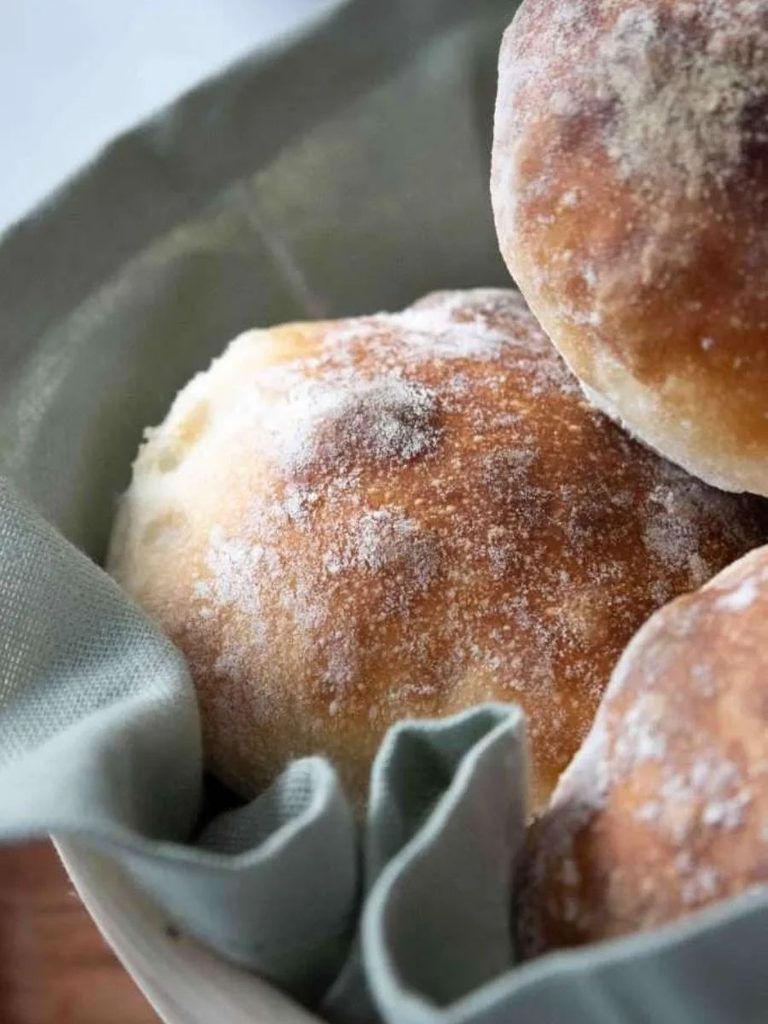
Bürli bread is a beloved Swiss-style roll known for its wonderfully crackly crust, rustic appearance, and soft, airy interior.
Made with a simple combination of bread flour, yeast, salt, and water, these rolls demonstrate how a few everyday ingredients can produce bakery-style bread with remarkable texture and flavor.
Their golden, flour-dusted exteriors and irregular shapes give them a traditional, homemade charm.
The secret to this bread’s distinctive character is its slow, overnight fermentation.
After a brief initial rest at room temperature, the sticky dough spends 12–18 hours in the refrigerator, allowing it to develop flavor gradually.
This extended resting period also makes the recipe convenient for preparing the dough ahead of time.
Best of all, the no-knead method eliminates the need for extensive hands-on work, making these rustic rolls approachable even for home bakers who are new to bread-making.
Baking the rolls at a high temperature on a preheated pizza stone helps create their signature crisp crust.
A burst of steam at the beginning of baking encourages the exterior to develop a beautiful, crackly finish, while the inside remains tender and pleasantly chewy.
As the rolls bake, they turn deeply golden and develop the appealing, uneven shapes that make traditional Bürli so distinctive.
These Swiss bread rolls are wonderfully versatile. Serve them warm alongside soups, salads, or hearty meals, or enjoy them at breakfast with butter, jam, or your favorite spread.
They are also delicious as simple sandwich rolls. With their crisp exterior, soft center, and straightforward preparation, homemade Bürli bread brings the charm of a traditional Swiss bakery straight to your kitchen.


Traditional Swiss Bürli Bread
Ingredients
Equipment
Method
- Activate the Yeast: In a small bowl, dissolve the active dry yeast in 60 g (¼ cup) of warm water. Leave it undisturbed for 5–10 minutes, until the mixture becomes lightly foamy.
- Combine the Dry Ingredients: Add the bread flour and fine sea salt to a large mixing bowl. Stir until the salt is evenly distributed throughout the flour.
- Mix the Dough: Pour the activated yeast mixture into the flour mixture, followed by the remaining 290 g (1¼ cups) of cool water. Stir until no dry flour remains. The dough should look rough, shaggy, and sticky; kneading is unnecessary.
- Rest at Room Temperature: Cover the bowl and leave the dough at room temperature for 1 hour. This initial rest begins the fermentation process.
- Ferment Overnight: Transfer the covered bowl to the refrigerator and let the dough ferment for 12–18 hours. The dough may not rise dramatically during this period, as much of its expansion occurs in the oven.
- Preheat the Oven: Place a pizza stone or heavy baking sheet in the oven and preheat to 250°C (480°F) for at least 30 minutes. Position an empty metal pan on the bottom oven rack to prepare for steam baking.
- Divide the Dough: Generously dust a work surface with flour. Gently turn the sticky dough out onto the surface, taking care not to handle it more than necessary. Divide it into 6 rough portions using a dough scraper. Keep the portions irregular rather than shaping them into smooth balls.
- Rest the Portions: Leave the divided dough pieces on the floured surface for 20–30 minutes. This brief rest allows the portions to relax before baking.
- Prepare for Baking: Transfer the dough portions onto parchment paper. Carefully slide the parchment and rolls onto the preheated pizza stone or heavy baking sheet.
- Create Steam: Immediately pour 1 cup of hot water into the empty metal pan on the bottom rack. Close the oven door promptly to trap the steam. Take care to avoid contact with the hot pan and escaping steam.
- Bake Until Golden: Bake the rolls at 250°C (480°F) for 10 minutes. Reduce the oven temperature to 220°C (430°F) and continue baking for another 10–15 minutes, until the crust is deeply golden and crackly.
- Cool Before Serving: Remove the baked Bürli rolls from the oven and let them cool for at least 20 minutes before serving. This allows the interior to settle while the crust retains its crisp texture.
Notes
- Sticky dough is normal: Bürli dough should be soft, wet, and sticky. Avoid adding extra flour to the mixing bowl, as this can affect the texture of the finished rolls.
- Allow enough fermentation time: Refrigerate the dough for 12–18 hours to develop its characteristic flavor and texture.
- Expect a modest rise: The dough may not expand dramatically overnight. Much of its rise occurs during baking.
- Instant yeast substitution: Replace the active dry yeast with ½ teaspoon (approximately 2 g) of instant yeast. Mix the instant yeast directly into the flour.
- Preheat thoroughly: Heat the pizza stone or heavy baking sheet at 250°C (480°F) for at least 30 minutes before baking.
- Handle the dough gently: Divide it into six rough portions without shaping them into smooth balls. Their irregular appearance is part of the traditional rustic style.
- Use steam carefully: Adding hot water to the preheated metal pan creates steam that helps the rolls develop their characteristic crackly crust.
- Cool before cutting: Allow the rolls to rest for at least 20 minutes after baking for the interior to settle.
- Storage: Bürli rolls are best enjoyed on the day they are baked. Freeze completely cooled rolls in an airtight container for longer storage.
- Reheating: Reheat frozen rolls at 180°C (350°F) for 10–12 minutes to refresh the crust.
Chef’s Secret
The key to achieving Bürli’s signature crackly crust is creating steam during the first stage of baking.
For the best results, preheat your pizza stone or heavy baking sheet for at least 30 minutes so the dough begins baking on a thoroughly hot surface.
Prepare the empty metal pan on the bottom rack before the rolls go into the oven, then add the cup of hot water immediately after loading the bread.
Close the oven door promptly to retain the steam. Just as importantly, resist the temptation to reshape the dough into neat, smooth balls.
Keeping the six portions rough preserves their traditional rustic appearance.
Once baked, allow the rolls to cool for at least 20 minutes before serving so the soft interior can settle beneath the crisp crust.
Serving Suggestions
Serve Bürli bread slightly warm alongside creamy soups, vegetable stews, or fresh garden salads for a satisfying meal.
For breakfast or brunch, split a roll and spread it with butter, fruit jam, or honey.
These crusty Swiss rolls also pair beautifully with sliced cheese, cold cuts, and fresh vegetables for a simple sandwich or light lunch.
For an appetizer, serve smaller pieces with olive oil, herb butter, or a selection of savory spreads.
You can also place a basket of freshly baked Bürli on the dinner table alongside roasted vegetables, grilled meats, or hearty casseroles.
For the most enjoyable contrast, serve the rolls while the crust is still crisp and the interior remains tender.
Conclusion
Homemade Swiss Bürli bread is a wonderful way to enjoy rustic bakery-style rolls using a handful of everyday ingredients.
Its slow overnight fermentation, simple no-knead method, and steam-assisted baking produce a deeply golden, crackly crust with a soft, chewy center.
Whether served at breakfast, alongside a comforting dinner, or as the foundation for a delicious sandwich, these traditional Swiss rolls bring warmth and character to any table.
Allow the dough plenty of time to ferment, handle it gently, and enjoy the satisfying results of freshly baked Bürli.
