
BakeryDiary is a recipe curation and editorial platform. We research and curate recipes from public sources, considering ratings, reviews, comments, and feedback. We then refine and present them clearly for home cooks. We are committed to an ad-free, focused experience that makes discovering and preparing recipes easier.
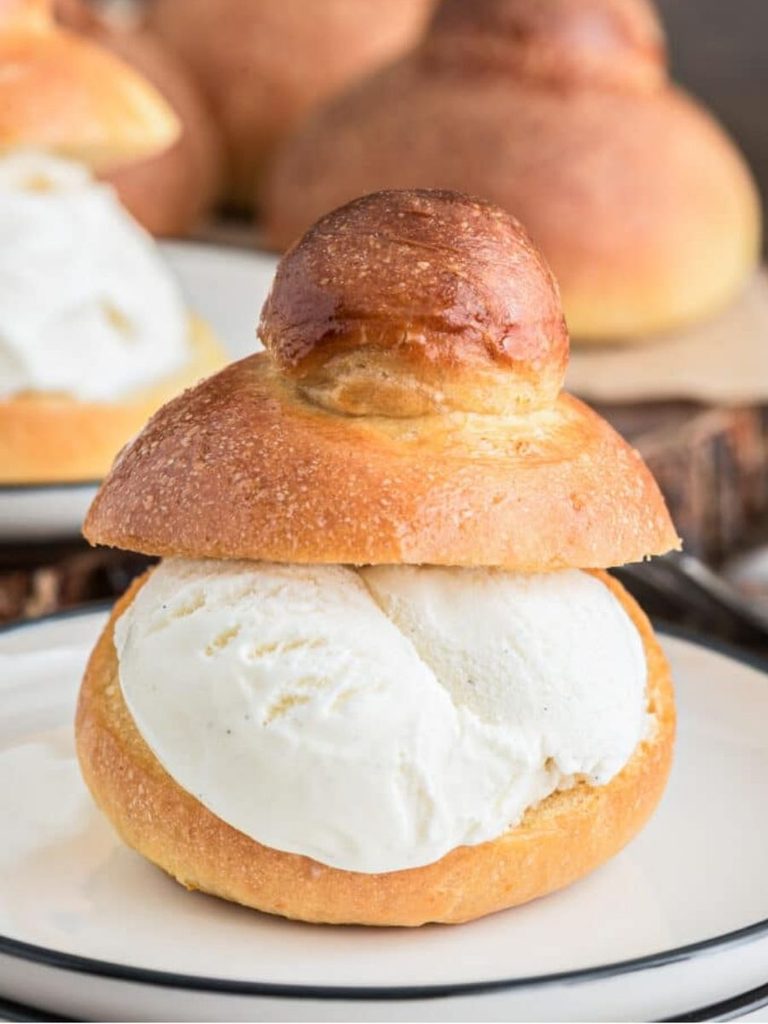
Brioche col Tuppo is a beloved Sicilian sweet bread known for its soft, airy crumb, delicate sweetness, and distinctive two-part shape.
Each brioche is formed from a larger round base topped by a smaller ball of dough, creating the characteristic “tuppo” that gives this traditional treat its name.
The result is an inviting golden bun that is tender enough for breakfast yet special enough to serve as a dessert.
The dough combines all-purpose flour and flour 00 with milk, eggs, butter, sugar, and yeast, creating a rich brioche texture without making the bread overly sweet.
A fragrant mixture of honey, vanilla, lemon zest, and orange zest is worked into the dough, adding bright citrus notes and a subtle floral sweetness.
Butter contributes richness and tenderness, while the eggs help give the finished buns their soft, golden interior.
After several stages of resting, kneading, shaping, and rising, the brioche is baked until lightly golden and beautifully puffed. A simple egg wash helps give the surface an appealing finish.
Once cooled, the buns can be lightly dusted with powdered sugar for a classic presentation.
Brioche col Tuppo is especially delightful when enjoyed fresh from the day’s bake.
For a distinctly Sicilian-style serving, the bun can be sliced open and filled with a scoop of vanilla ice cream.
Its soft texture and gentle citrus aroma make it equally enjoyable alongside coffee or as a sweet afternoon snack.


Traditional Brioche Col Tuppo
Ingredients
Equipment
Method
- Prepare the Filling: Combine the honey, vanilla extract, lemon zest, and orange zest in a small bowl. Cover the bowl and let the mixture sit while preparing the first dough.
- Activate the Yeast: Pour the lukewarm milk into the bowl of a stand mixer and add 1 teaspoon of sugar. Sprinkle the active dry yeast over the milk and let it stand for 5–10 minutes. Stir to combine.
- Make the First Dough: Add the flour 00 to the yeast mixture and mix until a fairly firm batter forms. Cover the bowl and let the dough rest for 1 hour.
- Start the Second Dough: Add the all-purpose flour, granulated sugar, room-temperature eggs, and egg yolk to the first dough. Begin kneading and continue for about 5 minutes.
- Add the Citrus Mixture: Add the prepared honey, vanilla, lemon zest, and orange zest mixture. Knead for another 3–5 minutes, or until it is incorporated.
- Incorporate the Butter: Add the softened butter gradually, allowing each addition to become absorbed before adding more. Add the salt and continue kneading until the dough becomes smooth and elastic, approximately 12–15 minutes. The total kneading time should be about 25–30 minutes. If the dough is too wet, add more flour; if it is too dry, add more milk.
- First Rise: Transfer the dough to a lightly floured surface and gently knead it into a ball. Place it in a greased bowl, cover, and let it rise in a warm, draft-free area for 2–4 hours, or until doubled in size.
- Divide the Dough: Transfer the risen dough to a lightly floured surface and knead it a few times. Divide it into larger portions of approximately 2¾ ounces / 80 g and smaller portions of approximately ½ ounce / 15 g. Shape each portion into a ball.
- Shape the Brioche: Arrange each larger dough ball on a parchment-lined baking sheet. Using your finger or a ½-inch teaspoon measure, make a small hole in the top of each larger ball. Lightly brush the hole with egg wash, then place a smaller dough ball in the center.
- Second Rise: Cover the shaped brioche with a clean tea towel and let them rise in a warm, draft-free area for about 1–2 hours.
- Preheat the Oven: Preheat the oven to 350°F/180°C.
- Bake the Brioche: Bake the risen brioche for approximately 20 minutes, until baked through and lightly golden.
- Cool the Buns: Remove the brioche from the oven and transfer them to a wire rack. Allow them to cool before serving.
- Serve: Dust the cooled brioche with powdered sugar before serving. For a Sicilian-style serving, slice a bun in half and add a scoop of vanilla ice cream.
Notes
- For the best texture, use the eggs at room temperature and make sure the butter is softened before beginning the second dough.
- The milk for the first dough should be lukewarm rather than hot when combined with the yeast.
- Allow the first dough to rest for the full 1 hour before beginning the second dough.
- The first rise is complete when the dough has doubled in size; depending on conditions, this can take 2–4 hours.
- Keep the shaped brioche covered during the second rise so the dough does not dry out.
- These buns are best enjoyed on the day they are baked.
- Store leftovers in an airtight container at room temperature for 1–2 days.
- Cooled buns can be frozen in a freezer-safe bag or container for up to 2 months. Thaw at room temperature and warm briefly before serving.
- Avoid overheating during reheating, as excessive heat can dry the brioche.
Chef’s Secret
The key to beautifully soft Brioche Col Tuppo is giving the dough enough time to develop before shaping.
During the second dough stage, add the softened butter gradually rather than all at once, allowing each portion to become absorbed before adding more.
This helps the dough develop its smooth, elastic texture while maintaining the rich character of the brioche.
Pay close attention to the dough rather than relying only on the clock during the rising stages.
The first rise should continue until the dough has doubled, while the shaped buns need another 1–2 hours to become noticeably puffy.
These visual cues are especially useful because rising time can vary depending on the environment.
Serving Suggestions
For a simple finish, dust the cooled brioche generously with powdered sugar and serve alongside coffee or tea.
For the classic Sicilian-style experience, slice a bun in half and fill it with a scoop of vanilla ice cream.
The creamy ice cream pairs particularly well with the buttery brioche and its subtle honey, vanilla, lemon, and orange notes.
The buns can also be served as part of a breakfast or dessert spread, allowing everyone to enjoy them fresh with their preferred accompaniment.
Conclusion
Brioche Col Tuppo brings together a tender, buttery crumb, fragrant citrus notes, and the distinctive shape that makes this Sicilian specialty so recognizable.
With its lightly sweet flavor and versatile serving options, it is a wonderful choice for breakfast, an afternoon treat, or a memorable dessert served with vanilla ice cream.
