
BakeryDiary is a recipe curation and editorial platform. We research and curate recipes from public sources, considering ratings, reviews, comments, and feedback. We then refine and present them clearly for home cooks. We are committed to an ad-free, focused experience that makes discovering and preparing recipes easier.
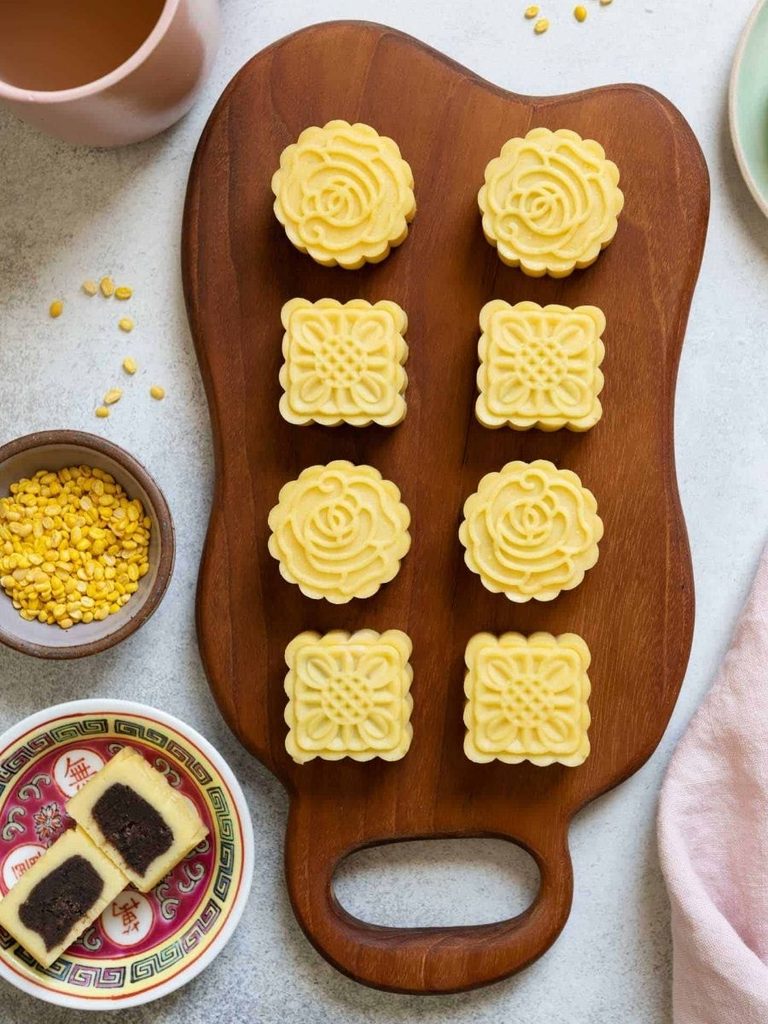
These mung bean cakes are a delicate Chinese dessert made from tender split mung beans transformed into a smooth, rich paste and shaped into beautifully patterned cakes.
Each bite combines the mild, naturally earthy flavor of mung beans with the gentle sweetness of sugar, while a small amount of butter gives the paste a creamy richness.
Virgin or unrefined coconut oil adds a subtle aromatic note that makes the finished cakes especially inviting.
The center holds a soft layer of sweet red bean paste, creating a pleasing contrast between the pale mung bean exterior and the deeper-colored filling.
Once pressed into a mooncake mold, the cakes take on a neat, decorative shape that makes them look elegant enough for serving to guests while remaining simple enough for a homemade dessert.
Unlike baked mooncakes, these mung bean cakes are steamed rather than baked and are enjoyed either at room temperature or chilled.
The preparation begins by soaking and steaming the split mung beans until they are exceptionally tender.
They are then blended while hot with butter, sugar, and coconut oil to create a smooth paste.
Working while the mixture is still warm is important because the paste can become prone to cracking as it cools.
The mung bean paste is wrapped around small portions of red bean paste before each cake is shaped in a 50-gram mooncake press.
The result is a soft, smooth, subtly fragrant dessert with a sweet bean-filled center and an attractive molded finish.


Tender Mung Bean Cakes with Coconut Aroma
Ingredients
Equipment
Method
- Rinse and Soak the Mung Beans: Rinse the split mung beans through 2 to 3 changes of water, then place them in a bowl. Add enough water so the water level sits about 2 inches above the beans. Leave them to soak overnight.
- Set Up the Steamer: Place a steaming rack inside a large wok and add enough water to leave roughly a 1/2-inch gap between the water level and the top of the rack. Cover the wok and bring the water to a boil.
- Steam the Soaked Beans: Drain the mung beans thoroughly and spread them evenly over a large heatproof plate or pan suitable for steaming. Carefully place it on the steaming rack, cover the wok, and steam over medium-high heat for 25 minutes.
- Prepare the Red Bean Filling: While the mung beans steam, divide the red bean paste into 14 to 15 portions of 15g each, then roll each portion into a small ball. A small cookie scoop can help portion the filling evenly. Set the prepared filling aside.
- Replenish the Steaming Water: After 25 minutes, much of the water in the wok will have evaporated. Carefully add about 3/4 cup water to the bottom of the wok using a measuring cup with a spout.
- Add Sugar and Butter: Sprinkle the sugar evenly over the steamed mung beans, then distribute the small cubes of butter across the surface. Cover the wok and continue steaming for another 5 to 7 minutes.
- Check the Beans: Turn off the heat and test a mung bean by crushing it between your fingers. The bean should break down very easily, indicating that it is fully cooked.
- Blend the Mung Bean Paste: While the beans are still hot, carefully transfer the bean mixture to a food processor and add the coconut oil. Use an oven mitt or tea towel when handling the hot plate or pan. Process until the mixture becomes smooth.
- Portion the Warm Paste: Keep the mung bean paste warm because it becomes more prone to cracking as it cools. Scoop seven 30g portions directly from the food processor using a medium cookie scoop. Keep the remaining paste covered with the food processor lid.
- Shape the Mung Bean Shells: Roll one 30g portion into a ball, then use your fingers to flatten it into a shallow bowl about 2 to 2 1/2 inches wide. If forming a bowl is difficult, flatten the paste into a disc about 2 1/2 inches wide.
- Add the Red Bean Filling: Place one prepared red bean paste ball in the center of the mung bean paste. Carefully mold the mung bean layer around the filling, gradually enclosing it completely.
- Seal the Filled Balls: Pinch the edges of the mung bean paste together until the red bean filling is fully enclosed. Gently roll the filled ball between your hands until its surface is smooth. Repeat with the remaining six portions in the first batch.
- Prepare the Mooncake Press: Place one filled mung bean ball into the 50-gram mooncake press. Use your fingers to gently press the dough into the mold so it stays in place when the press is turned over.
- Press the Cake: Turn the mooncake press over onto your work surface and press down using medium pressure. Release the cake from the mold and transfer it carefully to a plate.
- Shape the Remaining First Batch: Continue pressing the other filled mung bean balls with the mooncake press. Keep the unused mung bean paste covered so it remains warm.
- Finish the Remaining Cakes: Uncover the remaining mung bean paste, divide it into 30g portions, wrap each portion around a red bean paste ball, smooth the surface, and press each filled ball into the mooncake mold.
- Handle Cracking Paste: If the mung bean layer begins cracking, work in 1 to 2 teaspoons of water or oil. Work quickly, as cooler mung bean paste is more likely to crack. Using substantially less sugar can also make the paste more prone to cracking.
- Prevent Sticking: If a cake sticks to the mooncake mold, clean the mold's crevices with a toothpick. Lightly coat the large mung bean dough balls with a neutral-flavored oil, such as sunflower or vegetable oil, before placing them into the mold.
- Shape Dough for a Square Mold: If using a square mooncake press, shape each filled ball into a slightly oblong oval before placing it in the mold. This helps prevent the dough from scraping against the sides of the press.
- Prevent Sticking to Hands: If the bean paste sticks to your hands during shaping, lightly grease your hands with neutral oil or coconut oil.
- Serve or Store the Cakes: Enjoy the mung bean cakes immediately, or keep them covered at room temperature for a few hours so their surfaces do not crust over. If they will not be eaten within a few hours, place them in a container and refrigerate. They can be enjoyed chilled and should be eaten within 3 to 4 days.
Notes
- The recipe makes about 14 to 15 cakes, while the listed serving size is 14 cakes.
- For a less-sweet mung bean paste, use 6 tablespoons (72g) sugar instead of 7 tablespoons (84g).
- About 1 cup of red bean paste is typically enough, but keeping at least 1 1/4 cups ready allows for easier portioning.
- The mung bean paste is easiest to shape while it is still warm because it can crack as it cools.
- If making unfilled cakes, divide the mung bean paste into 15 portions and press each portion directly in the mooncake mold.
- Reducing the sugar substantially can make the mung bean paste drier and more susceptible to cracking.
- For a dairy-free or vegan version, replace the butter with a neutral-flavored oil or a toasted nut oil such as walnut, peanut, or hazelnut oil.
- Store finished cakes covered at room temperature for only a few hours. Refrigerate them in a container if keeping them longer.
- For the best texture and freshness, consume the cakes within 3 to 4 days.
Chef’s Secret
The most important technique is to work with the mung bean paste while it is still warm.
Once cooled, the paste becomes more likely to crack, making it difficult to wrap smoothly around the red bean filling or release cleanly from the mooncake press.
After blending, portion only seven 30-gram pieces at a time and keep the remaining paste covered inside the food processor bowl.
When shaping, work efficiently rather than allowing the paste to sit exposed.
If a portion does begin cracking, gently work in 1 to 2 teaspoons of water or oil to improve its flexibility.
Keeping your hands lightly greased can also make shaping easier when the paste becomes sticky.
Serving Suggestions
These mung bean cakes are lovely served on their own as a delicate dessert or alongside a cup of tea.
They can be enjoyed at room temperature for a softer texture or chilled from the refrigerator for a firmer, refreshing bite.
Arrange the molded cakes on a small serving plate so their decorative mooncake patterns remain visible.
For a simple presentation, serve them with unsweetened tea to balance their gentle sweetness. Any extra red bean paste can be enjoyed separately or saved for another use.
Conclusion
These mung bean cakes offer a wonderfully delicate combination of smooth mung bean paste, sweet red bean filling, buttery richness, and subtle coconut fragrance.
The decorative mooncake shape gives them an elegant finish, while the soft texture makes them especially enjoyable chilled or freshly prepared.
With careful attention to keeping the mung bean paste warm during shaping, you can create beautifully formed cakes with a tender exterior and satisfying sweet center.
They make a lovely homemade Chinese dessert for tea time, sharing, or whenever you want something gently sweet and distinctive.
