
BakeryDiary is a recipe curation and editorial platform. We research and curate recipes from public sources, considering ratings, reviews, comments, and feedback. We then refine and present them clearly for home cooks. We are committed to an ad-free, focused experience that makes discovering and preparing recipes easier.
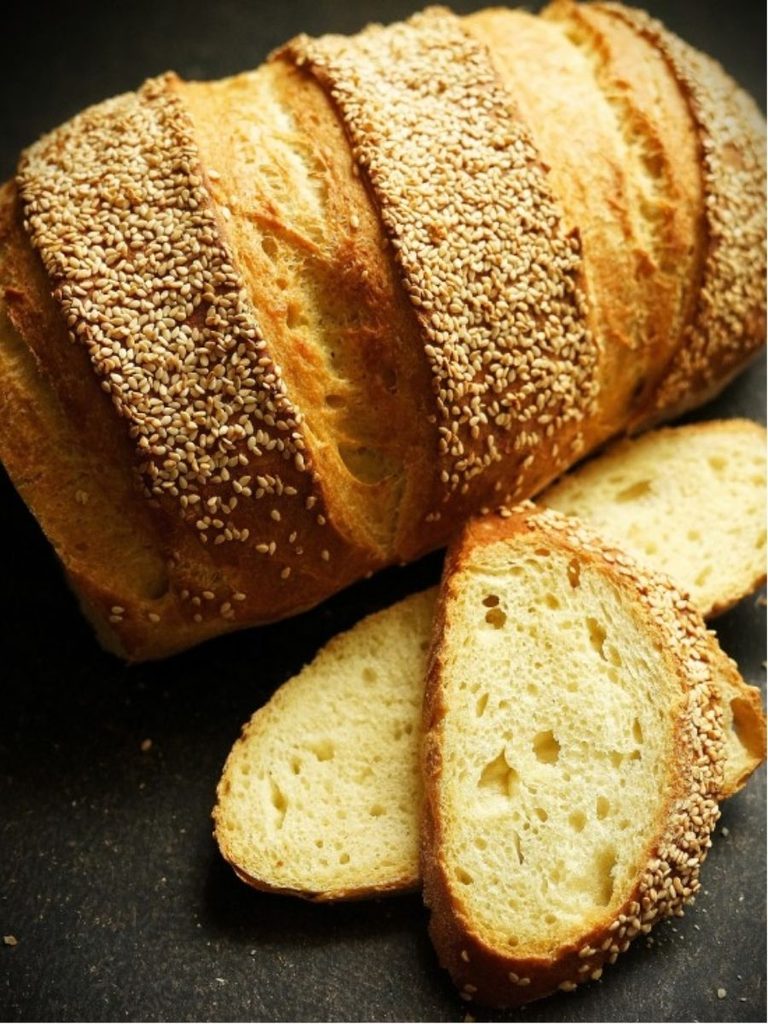
Sicilian Semolina Bread is a beautiful rustic loaf known for its rich golden color, crisp sesame-covered crust, and satisfyingly chewy interior.
Made with finely milled semolina flour, this traditional Sicilian-style bread has a distinctive appearance and a hearty texture that makes it a wonderful addition to everyday meals.
A light coating of beaten egg helps the sesame seeds cling to the surface while giving the finished loaf an attractive, golden finish.
This recipe uses an overnight, no-knead method, making it a convenient choice for home bakers who want flavorful homemade bread without spending time kneading dough by hand.
Semolina flour forms the foundation of the loaf, while strong white bread flour can be included to encourage a slightly higher rise.
Instant dried yeast supports fermentation, olive oil adds richness, and salt balances the flavor.
Water brings everything together into a firm, slightly sticky dough that develops bubbles as it rests.
After its overnight fermentation, the dough is gently folded and shaped before undergoing a shorter second rise.
Baking it in a preheated, covered cast-iron pot or Dutch oven helps the loaf develop its crust, while uncovering it toward the end allows the exterior to become crisp and deeply golden.
A scattering of sesame seeds completes the classic look and adds a delicate nutty flavor.
The result is a substantial loaf with a rustic appearance, a pleasantly chewy crumb, and a crunchy crust.
Slice it for breakfast, serve it alongside soups or pasta, or enjoy it with olive oil and your favorite spreads.
Whether you’re exploring Italian baking or simply looking for a distinctive homemade loaf, this Sicilian Semolina Bread is a rewarding recipe to add to your baking collection.
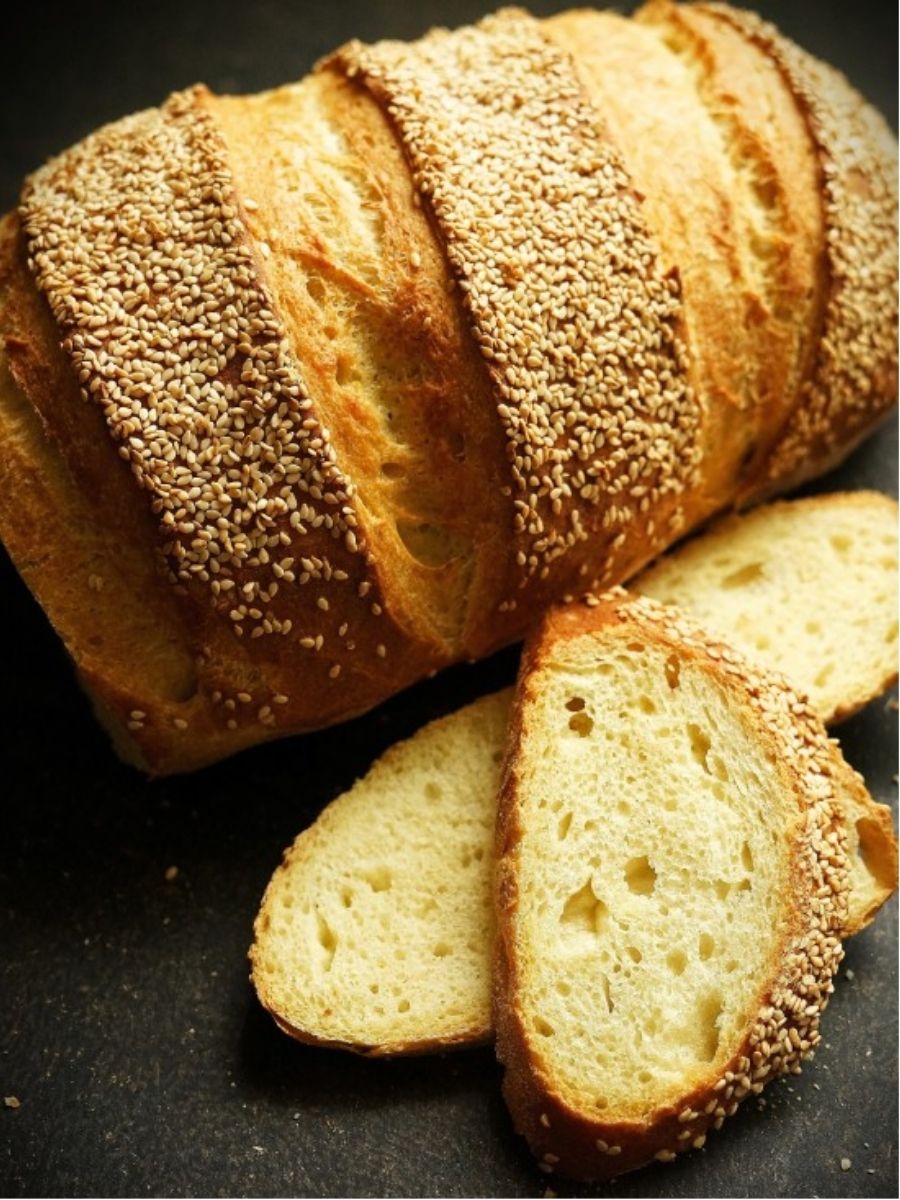

Rustic Italian Semolina Bread
Ingredients
Equipment
Method
- Combine the Dry Ingredients: The night before baking, add the double-milled semolina flour, strong white bread flour (if using), salt, and instant dried yeast to a large mixing bowl. Stir thoroughly to distribute the ingredients evenly.
- Add the Olive Oil and Water: Make a well in the center of the flour mixture and pour in 1 tablespoon of olive oil. Add approximately 250 ml of water and stir to begin bringing the ingredients together. Gradually add more water until a dough forms, using up to approximately 350–400 ml as needed. The dough should have no visible dry flour but should remain firm rather than sloppy.
- Coat and Ferment the Dough: Drizzle the remaining 1 teaspoon of olive oil into the bowl and turn the dough until lightly coated. Cover the bowl or place it inside a large reusable polythene bag. Leave at room temperature overnight to ferment. If the room is warm, refrigerate the dough overnight or leave it at room temperature for a few hours before transferring it to the fridge.
- Check the Fermented Dough: The next day, check that the dough has risen, spread out, and developed bubbles underneath. If it has not reached this stage, leave it to ferment a little longer. If refrigerated, allow the dough to return to room temperature before continuing.
- Fold the Dough: Lightly dust a work surface, preferably covered with a silicone mat, with semolina flour. Transfer the dough onto the surface and fold it over itself several times until it becomes smoother. Add only as much extra semolina flour as necessary to prevent sticking.
- Shape the Loaf: Dust the inside of a lined banneton or a bowl lined with a clean tea towel with semolina flour. Fold and shape the dough to fit the proving vessel. Sprinkle more semolina over the dough, then place it inside with the rounded side facing down. Dust the exposed side lightly with additional semolina flour.
- Prove and Preheat the Oven: Cover the dough or place the proving vessel inside a large reusable polythene bag. Leave it in a warm place for approximately 30–45 minutes. Meanwhile, preheat the oven to 240°C / 220°C fan / Gas Mark 9 / 475°F, placing a lidded cast-iron pot or Dutch oven on the middle shelf to heat.
- Test the Dough: Gently press a finger into the dough to check its readiness. If the indentation fills slowly and remains visible, the dough is ready to bake. If the dough springs back immediately without retaining an impression, leave it to prove for another 5–10 minutes before checking again.
- Transfer and Top the Loaf: Carefully remove the hot pot from the oven and take off the lid. Turn the dough out of the proving vessel into the pot so that its rounded side faces up. Brush the top with beaten egg, using only what is needed to coat the surface, then sprinkle generously with 2–3 tablespoons of sesame seeds.
- Score and Bake the Bread: Using a sharp knife, razor blade, or baker’s lame, make three slashes across the width of the dough, or create another scoring pattern of your choice. Replace the lid, return the pot to the oven, and bake for 35 minutes at the initial temperature.
- Finish Baking Uncovered: After 35 minutes, reduce the oven temperature to 220°C / 200°C fan / Gas Mark 7 / 425°F. Carefully remove the pot from the oven and turn the loaf out. Return the bread directly to the oven shelf and bake for another 5–8 minutes, or until cooked through. The underside should sound hollow when tapped.
- Cool and Store: Transfer the finished loaf to a wire rack and allow it to cool completely before slicing. For the best quality, eat within 3 days or freeze for longer storage. Slicing the bread before freezing makes it easier to remove only the amount needed.
Notes
- Choose the right semolina flour: Use double-milled semolina flour, often labelled semola rimacinata in Italian. It is finer than regular semolina and is important for achieving the intended bread texture.
- Choose your flour blend: Using 450 g semolina flour and 150 g strong white bread flour produces a slightly higher-rising loaf. For bread made entirely with semolina, replace the 150 g bread flour with an additional 150 g semolina flour.
- Adjust the water gradually: Begin with approximately 250 ml of water and add more as needed. The exact amount depends on how much liquid the flour absorbs. The dough should have no dry flour remaining but should not be sloppy.
- Use room-temperature water for the overnight method: The water does not need to be warm when preparing the no-knead dough.
- Watch the fermentation: The dough should rise, spread, and develop bubbles underneath. Fermentation may take longer depending on room temperature.
- Prevent sticking during shaping: Dust your work surface and proving vessel with semolina flour, but use only enough to handle the dough comfortably.
- Check the second rise carefully: The finger-indentation test helps determine when the dough is ready for baking. If it springs back immediately, allow another 5–10 minutes before testing again.
- Preheat the covered pot: Heating the cast-iron pot or Dutch oven in the oven before adding the dough is part of the original baking method.
- Cool completely before slicing: Let the loaf cool fully on a wire rack to help preserve its crumb structure.
- Freeze conveniently: Slice the bread before freezing so you can take out individual portions without thawing the entire loaf.
- Alternative same-day method: For a kneaded version, use lukewarm water no warmer than 38°C, optionally add 1 teaspoon of sugar or honey, knead for 8–10 minutes, and allow 1–2 hours for the first rise or until nearly doubled.
- Alternative tray-baking method: The loaf can also be baked on a tray with steam. Follow the source’s alternative method using an oven temperature of 200°C / 180°C fan / Gas Mark 6 / 400°F and a deep metal roasting tin filled with cold water. Never use glass for this purpose because it could shatter.
Chef’s Secret
The most useful trick for this Sicilian Semolina Bread is to judge the dough by its condition rather than relying only on the clock.
After the overnight fermentation, look for a risen, bubbly dough, then pay close attention to how it responds during the second proof.
A gentle finger press should leave an indentation that fills slowly, indicating that the dough is ready for the oven.
If it springs back immediately, give it another 5–10 minutes before testing again.
This small check helps you avoid baking the loaf before it has proved sufficiently.
Also, keep additional semolina flour to a minimum while shaping; too much can make the dough harder to handle and leave excess flour on the finished crust.
Serving Suggestions
Serve Sicilian Semolina Bread slightly warm or at room temperature, sliced thickly and accompanied by extra-virgin olive oil for dipping.
It pairs beautifully with tomato-based soups, minestrone, pasta dishes, roasted vegetables, and fresh salads.
For a simple Italian-inspired snack, top a slice with chopped tomatoes, basil, a little olive oil, and a pinch of salt.
The chewy crumb also makes an excellent base for bruschetta or toasted sandwiches filled with cheese, roasted peppers, or cured meats.
At breakfast, enjoy it with butter, jam, or honey. You can also toast leftover slices and serve them alongside antipasti, olives, and marinated vegetables.
The sesame-coated crust adds a pleasant nutty flavor, so simple toppings work especially well without overpowering the bread.
Conclusion
Sicilian Semolina Bread brings rustic Italian baking into your kitchen with its golden sesame crust, chewy interior, and distinctive semolina flavor.
The overnight no-knead method keeps preparation straightforward while allowing the dough plenty of time to ferment.
With carefully measured ingredients, patient proofing, and a properly heated Dutch oven, you can create a substantial homemade loaf suited to everyday meals, sharing platters, and special occasions.
Serve it fresh, enjoy it toasted, or freeze pre-sliced portions for later.
This traditional Sicilian-inspired bread is a satisfying addition to any home baker’s collection.
