
BakeryDiary is a recipe curation and editorial platform. We research and curate recipes from public sources, considering ratings, reviews, comments, and feedback. We then refine and present them clearly for home cooks. We are committed to an ad-free, focused experience that makes discovering and preparing recipes easier.
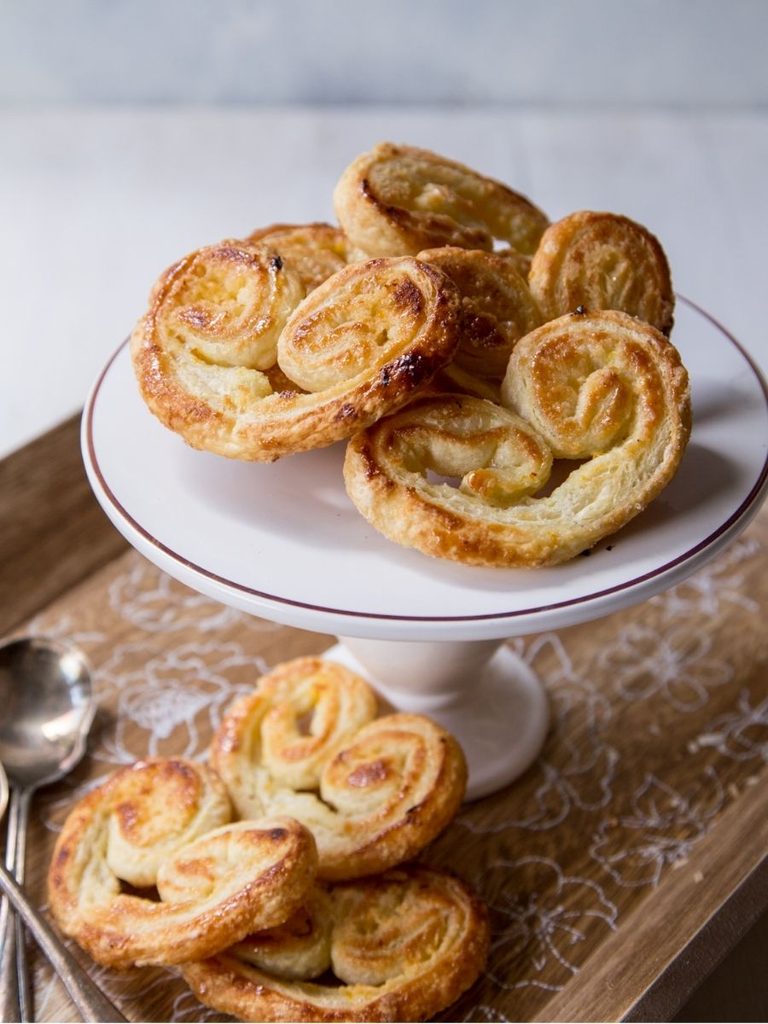
These Orange Palmiers are an effortlessly elegant pastry treat made with just a handful of simple ingredients.
A sheet of thawed puff pastry provides the foundation, transforming in the oven into delicate layers that are wonderfully flaky, crisp, and golden.
Orange zest is mixed with sugar to create a bright, citrusy filling that adds a refreshing contrast to the rich pastry, while melted butter helps the sugar adhere and contributes to the buttery finish.
The preparation is remarkably straightforward. The puff pastry is rolled into a square, lightly brushed with melted butter, and covered evenly with orange-infused sugar.
Two opposite sides are then rolled inward until they meet in the center, creating the classic palmier shape.
A short chill in the refrigerator can make the pastry easier to slice and helps keep the layers neat before baking.
Once sliced and arranged on a parchment-lined baking sheet, the palmiers bake at a high temperature until beautifully golden.
During baking, the sugar melts and caramelizes around the pastry, creating crisp, glossy edges and a delicate crunch.
The centers remain light and layered, giving every bite a pleasing contrast between flaky pastry and caramelized sweetness.
With only 10 minutes of preparation and about 12 minutes of baking, these orange palmiers are an excellent choice when you want something that looks special without requiring complicated pastry work.
They are equally appealing for dessert, afternoon tea, or a simple sweet treat alongside coffee.


Quick Orange Zest Palmiers
Ingredients
Equipment
Method
- Preheat the Oven: Heat the oven to 425°F.
- Make the Orange Sugar: In a small dish, combine the sugar and orange zest, mixing until the zest is evenly distributed. Set aside.
- Roll the Pastry: Place the thawed puff pastry on a lightly floured surface and roll it into a 13 × 13-inch square. Lightly brush the surface with some of the melted butter.
- Add the Orange Sugar: Sprinkle the orange-sugar mixture evenly over the entire surface of the puff pastry.
- Form the Palmier Roll: Roll two opposing sides of the pastry inward toward the center until the rolled sections meet in the middle.
- Chill the Pastry: If time allows, place the rolled pastry in the refrigerator for about 10 minutes. This cools the butter and firms the pastry, making it easier to slice.
- Position for Slicing: Turn the pastry over so the rolled ends and seam are facing downward. This makes the roll easier to cut.
- Slice the Palmiers: Cut the pastry roll into approximately 1/2-inch slices.
- Arrange on the Baking Sheet: Place the slices on a parchment-lined cookie sheet, leaving at least 2 inches of space between each palmier.
- Bake Until Golden: Bake for 6–7 minutes, then carefully flip each palmier. Continue baking for another 4–6 minutes, until golden brown. Watch them closely because the sugar can caramelize and burn very quickly.
- Cool the Palmiers: Remove the baked palmiers from the oven and transfer them to a cooling rack.
Notes
- Use thawed puff pastry so it can be rolled evenly without cracking.
- Roll the pastry to exactly 13 × 13 inches to maintain the intended proportions.
- Spread the orange sugar as evenly as possible so the citrus sweetness is distributed throughout the palmiers.
- Chilling the rolled pastry for about 10 minutes is optional, but it makes the roll firmer and easier to slice cleanly.
- Keep the sliced palmiers at least 2 inches apart on the baking sheet.
- Watch the palmiers closely during the final minutes of baking because the sugar can move quickly from caramelized to burnt.
- Flip the palmiers after 6–7 minutes to brown both sides evenly.
Chef’s Secret
The most useful trick for these orange palmiers is to take advantage of the optional 10-minute refrigerator chill.
Once the pastry has been rolled around the orange sugar, chilling firms the butter and makes the entire log easier to handle.
A firmer roll allows you to cut cleaner 1/2-inch slices without flattening the delicate layers or losing the recognizable palmier shape. It is especially helpful if the pastry feels soft after rolling.
When arranging the slices, also give them plenty of space on the parchment-lined sheet.
The sugar will melt and caramelize during baking, so close spacing can make the pastries harder to separate.
Most importantly, keep a close eye on them near the end of baking, as caramelized sugar can burn very quickly.
Serving Suggestions
Serve the orange palmiers once they have cooled on the rack, when their flaky layers and caramelized sugar can be fully appreciated.
They make a simple accompaniment to coffee or tea and can also be arranged on a dessert platter for an elegant presentation.
For a polished serving, place the golden palmiers in a single layer so their distinctive rolled shape remains visible.
Their bright orange zest flavor also makes them particularly appealing as a light sweet treat after a meal.
Conclusion
These Orange Palmiers prove that impressive-looking pastries do not have to require complicated preparation.
With thawed puff pastry, orange zest, sugar, and butter, you can create beautifully layered pastries with crisp, caramelized edges and a bright citrus flavor.
The quick preparation and short baking time make them an easy choice whenever a flaky homemade dessert is wanted.
