
BakeryDiary is a recipe curation and editorial platform. We research and curate recipes from public sources, considering ratings, reviews, comments, and feedback. We then refine and present them clearly for home cooks. We are committed to an ad-free, focused experience that makes discovering and preparing recipes easier.
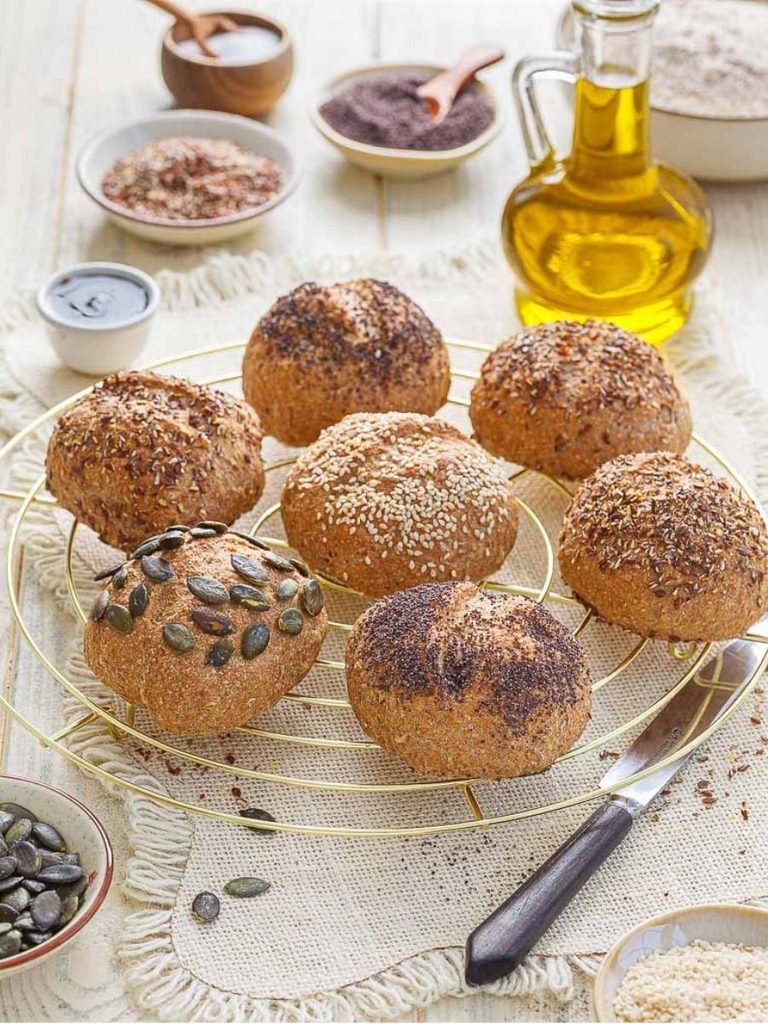
Frisch gebackene Vollkornbrötchen bringen den Duft einer kleinen Hausbäckerei direkt auf den Frühstückstisch.
Diese Variante aus 100 % Weizen-Vollkornmehl verbindet einen angenehm kräftigen Getreidegeschmack mit einer lockeren, weichen Krume und einer schön gebackenen Oberfläche.
Durch Joghurt, Olivenöl und Zuckerrübensirup erhält der Teig zusätzliche Geschmeidigkeit und eine dezente geschmackliche Tiefe, während die frische Hefe für die nötige Lockerung sorgt.
Besonders praktisch ist die unkomplizierte Zubereitung: Die Hefe wird zunächst in lauwarmem Wasser aufgelöst, anschließend kommen die übrigen Teigzutaten dazu.
Nach dem gründlichen Kneten darf der Teig ruhen, bis sich sein Volumen verdoppelt hat.
Danach werden etwa zehn gleich große Brötchen geformt, eingeschnitten und kurz auf dem Backblech gehen gelassen.
Für eine appetitliche Oberfläche werden die Teiglinge vor dem Backen mit Wasser bestrichen und nach Wunsch mit Kürbiskernen, Leinsaat, Mohn, Sesam oder Sonnenblumenkernen bestreut.
Das Backen beginnt bei hoher Temperatur und wird anschließend bei reduzierter Hitze beendet.
So entstehen Brötchen, die außen schön gebacken und innen angenehm locker sind.
Ob zum Sonntagsfrühstück, Brunch oder einfach frisch und noch lauwarm serviert – diese Vollkornbrötchen sind vielseitig und lassen sich nach Geschmack mit unterschiedlichen Saaten verfeinern.


Hausgemachte Vollkornbrötchen mit Saaten
Ingredients
Equipment
Method
- Preheat the Oven: Preheat the oven to 230°C using conventional top-and-bottom heat. Fill a large ovenproof cup with about 300 ml water and place it in the oven. Line a baking sheet with parchment paper and set it aside.
- Dissolve the Yeast: Crumble ½ cube of fresh yeast into a large mixing bowl, add 300 ml lukewarm water, and stir until the yeast has completely dissolved. The water should feel pleasantly warm rather than hot; the source notes an ideal range of 26°C to 37°C for yeast development.
- Combine the Dough Ingredients: Add 500 g whole-wheat flour, 2 tbsp yogurt, 1 tbsp sugar beet syrup, 1 heaped tsp salt, and 2 tbsp olive oil to the dissolved yeast. Mix with the dough hooks of a hand mixer or stand mixer on a low setting until the ingredients are combined.
- Knead the Dough: Increase the mixer to a higher setting and knead the dough for about 5 minutes. The finished dough should pull away from the sides of the bowl on its own and form a soft, fairly smooth ball.
- Let the Dough Rest: Cover the bowl tightly with plastic wrap and leave the dough to rest in a room-temperature location for 45 to 60 minutes.
- Check the Dough: Let the dough rise until its volume has approximately doubled.
- Fold the Dough: Transfer the risen dough to a lightly floured work surface and briefly work it by folding the dough several times from the outside toward the center.
- Divide the Dough: Use a dough scraper to divide the dough into about 10 equal pieces, each weighing just under 100 g.
- Shape the Rolls: Fold each portion several times, then shape it into a round roll by gently rounding and tightening the dough.
- Score the Rolls: Arrange the shaped rolls on the prepared baking sheet, gently flatten each one, and make one vertical cut across the top with a sharp knife.
- Proof the Rolls: Cover the rolls with a kitchen towel and let them rise on the baking sheet for 10 minutes.
- Add the Topping: Brush the rolls generously with water, then sprinkle them with your choice of seeds. Lightly press the seeds into the surface so they adhere.
- Bake at High Heat: Place the baking sheet on the middle rack of the preheated oven and bake the rolls at 230°C for 8 minutes.
- Finish Baking: Reduce the oven temperature to 200°C and continue baking the rolls for another 10 to 12 minutes, until fully baked.
- Cool the Rolls: Remove the baked rolls from the oven and transfer them to a wire rack to cool. They are especially enjoyable while still lukewarm.
Notes
- The recipe makes approximately 10 equal-sized whole-wheat rolls, each weighing just under 100 g before baking.
- The dough needs 45–60 minutes of resting time, or until its volume has doubled.
- Use lukewarm rather than hot water when dissolving the fresh yeast.
- Olive oil can be replaced with neutral rapeseed oil.
- Choose pumpkin seeds, flaxseed, poppy seeds, sesame seeds, sunflower seeds, or a combination for the topping.
- Lightly press the seeds into the moistened dough so they stay attached during baking.
- The rolls are best enjoyed while still lukewarm.
Chef’s Secret
For the best texture, pay close attention to the dough’s rise rather than relying only on the clock.
After the 45–60 minute resting period, the dough should have visibly doubled in volume before you begin shaping it.
This is particularly useful with whole-wheat dough, which can have a denser structure than dough made from refined flour.
During shaping, fold each portion several times before rounding it into a roll. This helps create a well-formed surface while keeping the process gentle.
Also make sure the yeast water feels pleasantly warm rather than hot; the original recipe recommends approximately 26°C to 37°C for yeast development.
These small details help preserve the intended light, airy character of the finished whole-wheat rolls.
Serving Suggestions
Serve the freshly baked rolls while they are still lukewarm for the most enjoyable texture.
They work naturally as part of a breakfast or brunch spread alongside butter, cream cheese, jam, honey, or other favorite spreads.
For a savory serving, pair them with cheese, sliced vegetables, or other breakfast accompaniments.
The seed topping also adds visual appeal and extra texture, especially when you combine options such as sesame, sunflower, flax, pumpkin, or poppy seeds.
Conclusion
These homemade whole-wheat rolls are a simple choice for a fresh breakfast or relaxed brunch.
With a soft, airy interior, a beautifully baked exterior, and a customizable seed topping, they bring plenty of texture and wholesome grain flavor to the table.
Served warm from the oven, they are especially inviting and versatile enough for both sweet and savory accompaniments.
