
BakeryDiary is a recipe curation and editorial platform. We research and curate recipes from public sources, considering ratings, reviews, comments, and feedback. We then refine and present them clearly for home cooks. We are committed to an ad-free, focused experience that makes discovering and preparing recipes easier.
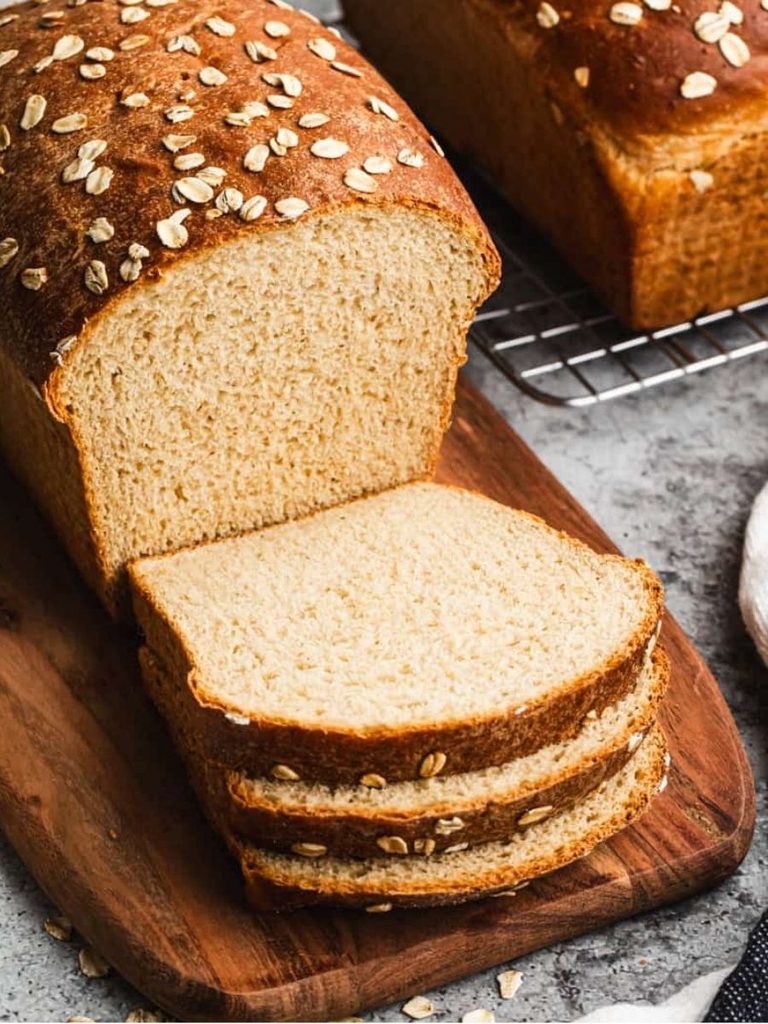
This oatmeal bread brings together the hearty character of rolled oats, whole wheat flour, and the gentle sweetness of honey in a soft homemade loaf.
The combination of whole wheat flour and all-purpose flour creates a balanced texture that is substantial enough to feel satisfying while remaining light and tender.
Rolled oats add a pleasant chewiness throughout the bread, while honey contributes a subtle sweetness that complements the grains without overpowering them.
The process begins by combining old-fashioned rolled oats and softened butter with warm milk, allowing the oats to soften and the mixture to cool before the remaining dough ingredients are added.
Honey, instant yeast, kosher salt, whole wheat flour, and all-purpose flour come together to form a soft dough that is kneaded until smooth and elastic.
After two rises, the dough is divided into two loaves, brushed with an egg wash, and finished with a scattering of dry oats on top.
Baked until the loaves sound hollow when lightly tapped, this bread develops a nicely baked exterior while keeping the inside soft and chewy.
The finished loaves are especially versatile, making them suitable for everyday slices, toast, or sandwiches.
The recipe also provides options for adding raisins, nuts, or dried fruit after the first rise, giving you ways to vary the basic loaf while keeping its core character intact.


Fluffy Oatmeal Sandwich Bread
Ingredients
Equipment
Method
- Soften the Oats: Place the rolled oats and softened butter in the bowl of a stand mixer or a large mixing bowl. Bring the milk to a simmer, then pour it over the oats and butter. Stir to combine and leave the mixture for about 1 1/2 hours, or until it has cooled to room temperature.
- Combine the Dough Ingredients: Add the honey, warm water, instant yeast, and kosher salt to the cooled oat mixture. Stir thoroughly to combine.
- Add Whole Wheat Flour: Add the whole wheat flour and mix on medium-low speed until incorporated.
- Add All-Purpose Flour: Gradually add the all-purpose flour, a little at a time, until the dough begins pulling away from the sides of the bowl. Use only enough flour to create a soft dough that is not overly sticky; avoid adding too much flour.
- Knead the Dough: Knead the dough for a few minutes, scraping down the sides and bottom of the bowl as needed, until the dough becomes smooth and elastic.
- First Rise: Transfer the dough to a greased bowl and cover it with a dish towel or plastic wrap. Let it rise for about 1 hour, or until it has doubled in size.
- Divide the Dough: Punch down the risen dough, then divide it into two equal portions.
- Shape the Loaves: Shape each portion into a loaf and place the two loaves in lightly greased loaf pans.
- Apply the Topping: Combine the egg white and 1 tablespoon water to make the egg wash. Gently brush the tops of both loaves with the egg wash, then sprinkle a small handful of dry oats over each loaf.
- Second Rise: Lightly grease a piece of plastic wrap and gently place it over the loaves. Let them rise in a warm place for 45 minutes to 1 hour, or until the dough has risen about 1 inch above the loaf pans. Carefully peel away the plastic wrap.
- Bake the Bread: Bake the loaves at 350°F for 30–40 minutes. They are ready when lightly tapping the tops produces a hollow sound, or when an instant-read thermometer registers 200°F.
- Cool the Loaves: Let the baked loaves cool on a wire rack for 15 minutes. Turn them out of the pans and allow them to cool completely before serving.
Notes
- Use old-fashioned rolled oats, not quick or instant oats, for the intended texture.
- Let the milk-and-oat mixture cool to room temperature before adding the yeast and other dough ingredients.
- Add the all-purpose flour gradually. The recipe calls for 2 1/4–3 cups, but only enough should be used to create a soft dough that is not overly sticky.
- The dough should become smooth and elastic after kneading.
- During the first rise, allow the dough to double in size.
- For the second rise, let the shaped loaves rise about 1 inch above the loaf pans.
- The egg wash helps create a finished surface for the loaves, while dry oats provide the topping.
- The bread can be varied by adding raisins, nuts, or dried fruit after the first rise, before shaping.
- Active dry yeast can be substituted for instant yeast in an equal amount according to the source.
- Allow the baked bread to cool completely after removing it from the pans for easier slicing.
Chef’s Secret
The most important detail for achieving the intended soft, chewy texture is to resist adding too much all-purpose flour.
Because the recipe provides a range of 2 1/4 to 3 cups, add the flour gradually while mixing and stop once the dough begins pulling away from the bowl and feels soft rather than excessively sticky.
Adding the full amount automatically can produce a heavier loaf. Pay attention to the dough itself rather than relying only on the measurement. After kneading, it should become smooth and elastic.
The oat mixture should also be allowed to cool completely to room temperature before the yeast is added.
This helps keep the dough preparation on track while preserving the recipe’s intended texture.
Serving Suggestions
Serve slices of oatmeal bread fresh once completely cooled, or lightly toast them for a warm, crisp-edged breakfast or snack.
Honey, butter, or your preferred spread can complement the bread’s naturally mild sweetness.
It also works well as everyday sandwich bread. For a variation, use the source’s suggested raisins, nuts, or dried fruit additions before shaping the loaves.
A simple topping of butter and honey highlights the oats and whole wheat flavor without overwhelming the bread.
Conclusion
This oatmeal bread is a satisfying homemade loaf that combines rolled oats, honey, whole wheat flour, and all-purpose flour for a soft, chewy texture and gently sweet flavor.
The two-rise method produces beautifully developed loaves, while the oat topping gives them a simple, rustic finish.
Whether enjoyed fresh, toasted, or used for sandwiches, these loaves make a versatile addition to an everyday bread collection.
