
BakeryDiary is a recipe curation and editorial platform. We research and curate recipes from public sources, considering ratings, reviews, comments, and feedback. We then refine and present them clearly for home cooks. We are committed to an ad-free, focused experience that makes discovering and preparing recipes easier.
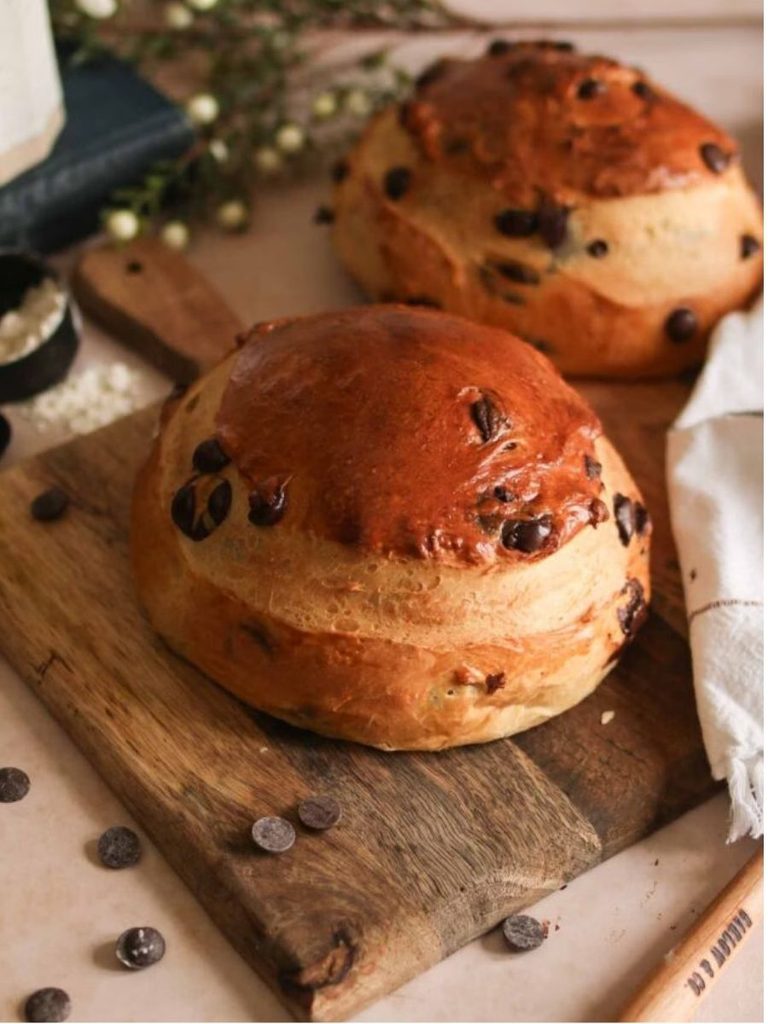
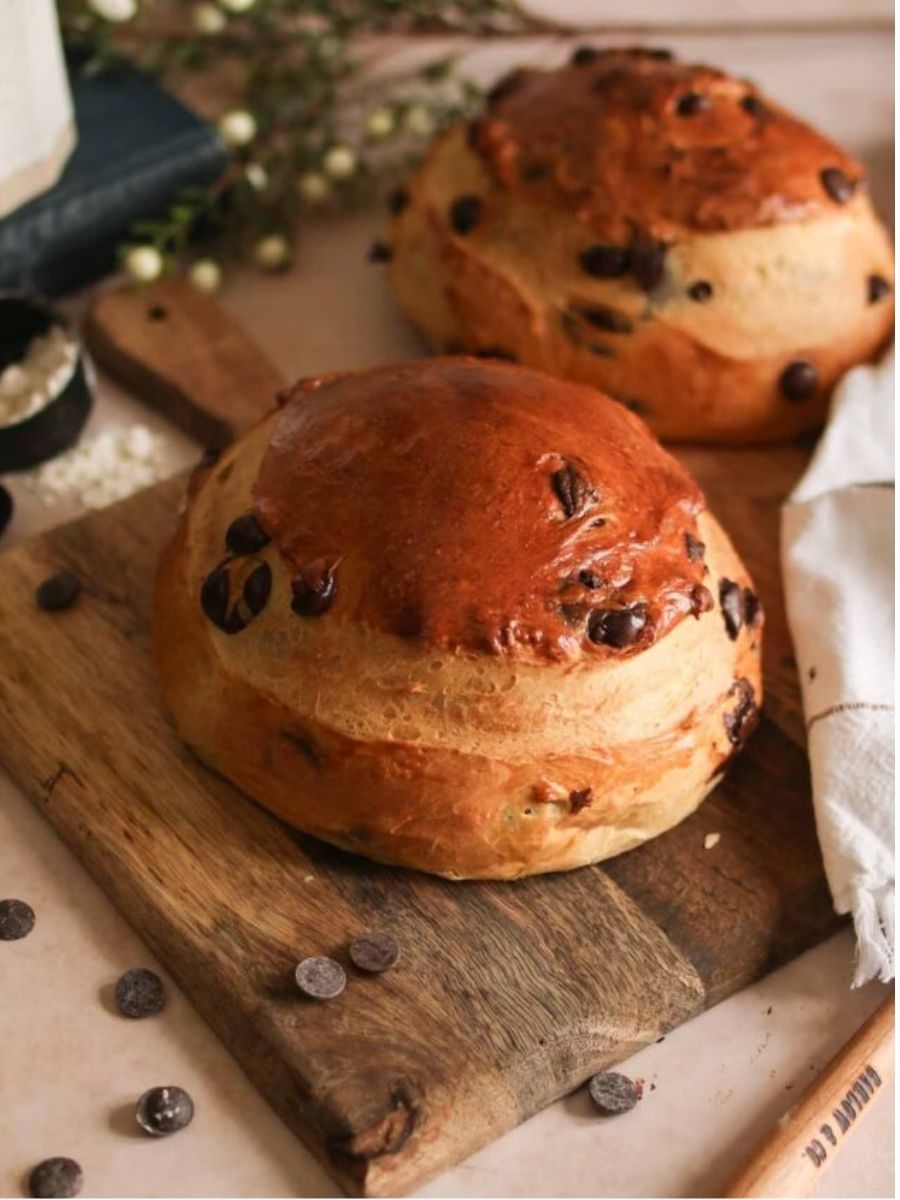
Chocolate Cramique is a wonderfully rich brioche bread that combines a soft, buttery crumb with generous pockets of decadent chocolate chips.
Made with whole milk, eggs, softened unsalted butter, sugar, and bread flour, the dough develops into a smooth, tender loaf with a luxurious texture.
Instant yeast gives the brioche its rise, while the butter and eggs add richness that makes every bite feel especially indulgent.
The chocolate chips are folded into the dough after its first rise, allowing them to remain distinct throughout the finished bread.
As the loaves bake, the chocolate becomes wonderfully melty and fragrant, complementing the lightly sweet brioche without overwhelming it.
A simple egg wash gives the loaves a beautifully golden exterior, while scoring the tops creates the characteristic decorative finish.
This recipe makes two round loaves, though the dough can also be divided into four smaller loaves.
The finished Cramique is delicious while still warm, when the crumb is soft and the chocolate is especially inviting, but it can also be cooled completely for neat slices.
Its versatility makes it equally enjoyable plain, toasted, or transformed into French toast. With its combination of buttery brioche, tender texture, golden crust, and chocolate-rich center, this is a particularly satisfying bread for breakfast, brunch, or an indulgent treat.

Decadent Chocolate Cramique Brioche
Ingredients
Equipment
Method
- Combine Milk, Yeast, and Sugar: Add the warm milk, yeast, and granulated sugar to the bowl of a stand mixer fitted with a dough hook. If making the dough by hand, use a large mixing bowl instead.
- Begin the Dough: Add about 2 cups of the flour along with the room-temperature eggs and salt. Mix until the ingredients are well combined.
- Add the Butter: With the mixer running, gradually add the softened butter, allowing it to incorporate into the dough.
- Adjust the Flour: Slowly add the remaining flour. You may need slightly more or less than the stated 3½–4 cups depending on the moisture level. The finished dough should be soft and smooth without being excessively sticky.
- Knead the Dough: Knead the dough on low speed for 10 minutes. It should become smooth and cohesive.
- Shape and Cover: Form the dough into a tight ball and place it in a bowl. Cover tightly with plastic wrap. Because the dough is buttery, greasing the bowl is not necessary.
- First Rise: Let the covered dough rise for about 1 hour, or until it has doubled in size. Alternatively, refrigerate the dough overnight to divide the preparation into separate stages.
- Add the Chocolate Chips: After the first rise, gently fold the chocolate chips into the dough. Some of the chips may remain visible or poke out of the surface.
- Divide the Dough: Cut the dough into 2 equal portions for standard loaves. For smaller bakery-style mini loaves, divide it into 4 portions instead.
- Shape the Loaves: For each portion, fold the edges toward the center and pinch the seams together. Turn the dough seam-side down and rotate it in a circular motion against the work surface to create a tight, rounded loaf. A bench scraper can help with shaping if desired.
- Arrange for the Second Rise: Place the shaped loaves on a parchment-lined sheet pan, or use a sheet pan prepared with cooking spray. Cover the loaves again.
- Second Rise: Let the loaves rise for another 30 minutes.
- Preheat the Oven: While the loaves are rising, preheat the oven to 350°F.
- Prepare the Egg Wash: Gently whisk together the egg and 1 tablespoon of water.
- Brush the Loaves: Once the loaves have finished their second rise, brush the egg wash evenly over their exteriors.
- Score the Tops: Using a sharp knife, kitchen scissors, or bread lame, score each loaf in a circular motion across the top to create a circle.
- Bake the Brioche: Bake the loaves at 350°F for about 30–35 minutes. If the tops are browning too quickly, loosely place a piece of foil over them at about the 20-minute mark.
- Check for Doneness: The loaves are ready when the bottoms are a dark golden brown and the internal temperature reaches 195–200°F.
- Cool Briefly: Let the baked loaves rest on the sheet pan for 5–10 minutes, then transfer them to a cooling rack.
- Serve: Serve the brioche warm and tear it apart, or allow it to cool completely before slicing for cleaner slices. Enjoy it plain, toasted, or use it to make French toast.
- Store: Keep the bread at room temperature for up to 3 days. The loaves can also be frozen.
Notes
- Use warm milk rather than hot milk when combining it with the instant yeast.
- The flour quantity is approximate at about 3½–4 cups. Add it gradually and stop when the dough becomes soft and smooth without being overly sticky.
- Bread flour may be substituted with all-purpose flour. A 50/50 combination of the two can also be used.
- The dough can be refrigerated overnight after the first mixing and kneading stage if you prefer to divide the preparation into separate steps.
- Fold in the chocolate chips only after the first rise.
- For two standard loaves, divide the dough into two equal portions. For smaller loaves, divide it into four portions.
- The finished loaves should reach an internal temperature of 195–200°F.
- If the tops brown too quickly during baking, cover them loosely with foil at around the 20-minute point.
- Allow the loaves to rest for 5–10 minutes on the sheet pan before transferring them to a cooling rack.
- Store the bread at room temperature for up to 3 days, or freeze it for longer storage.
Chef’s Secret
The most important shaping detail is creating a genuinely tight ball before the second rise.
After dividing the dough, fold the edges inward toward the center and pinch the seams together firmly.
Then turn the dough seam-side down and rotate it in a circular motion against the work surface.
This helps create surface tension around the dough, giving each loaf a more defined, rounded shape as it rises.
Because the dough is rich with butter and chocolate chips, handle it gently when folding in the chocolate so the dough remains cohesive and the chips stay distributed throughout.
A bench scraper can make the shaping process easier, particularly when working with sticky, buttery dough.
Serving Suggestions
Chocolate Cramique is especially inviting when served warm, allowing the soft brioche and chocolate chips to shine.
Tear the loaf into pieces for a casual presentation, or let it cool completely and slice it for cleaner servings.
It can be enjoyed plain or lightly toasted, and the rich brioche also makes an excellent base for French toast.
For breakfast or brunch, serve slices alongside fresh fruit or a simple hot drink.
The bread can also be presented as a sweet afternoon treat, with the chocolate-filled slices providing plenty of richness on their own.
Conclusion
Chocolate Cramique brings together everything that makes brioche so appealing: a soft, buttery crumb, a lightly sweet dough, a golden exterior, and generous chocolate chips throughout.
The straightforward shaping and two-stage rise produce beautiful round loaves that are delicious warm, neatly sliced once cooled, toasted, or transformed into French toast.
With the option to make either two standard loaves or four smaller ones, this recipe is a versatile and indulgent way to enjoy homemade chocolate brioche.
