
BakeryDiary is a recipe curation and editorial platform. We research and curate recipes from public sources, considering ratings, reviews, comments, and feedback. We then refine and present them clearly for home cooks. We are committed to an ad-free, focused experience that makes discovering and preparing recipes easier.

A Lemon Meringue Cake brings together the refreshing taste of lemon meringue pie and the beauty of a classic layered cake.
Made with soft, buttery lemon sponge, tangy lemon curd, silky Swiss meringue buttercream, and beautifully toasted meringue swirls, this dessert offers a delightful combination of flavors and textures in every slice.
The cake begins with two layers of homemade lemon sponge, prepared with margarine or unsalted butter, caster sugar, eggs, flour, milk, and fresh lemon zest and juice.
The result is a tender, golden sponge with a light crumb and a bright citrus aroma.
Fresh lemon adds a lively zing that balances the sweetness of the cake and its creamy frosting.
Between the sponge layers, a generous filling of lemon curd provides a smooth, tangy center.
Rings of Swiss meringue buttercream help hold the filling in place while adding a rich, velvety texture.
Made from egg whites, granulated sugar, butter, vanilla, and a touch of salt, the buttercream complements the lemon flavor without overwhelming it.
The finishing touch is a collection of glossy meringue swirls piped around the top and lightly browned with a kitchen blowtorch.
Their delicate exterior adds a subtle toasted flavor and a lovely contrast to the soft sponge and creamy filling.
A final sprinkle of fresh lemon zest enhances the cake’s citrus fragrance and elegant appearance.
Whether served at a birthday celebration, afternoon tea, or a special family gathering, this Lemon Meringue Cake makes an impressive centerpiece.
Its combination of sweet, tangy, buttery, and airy elements creates a memorable dessert for anyone who enjoys fresh lemon flavor.
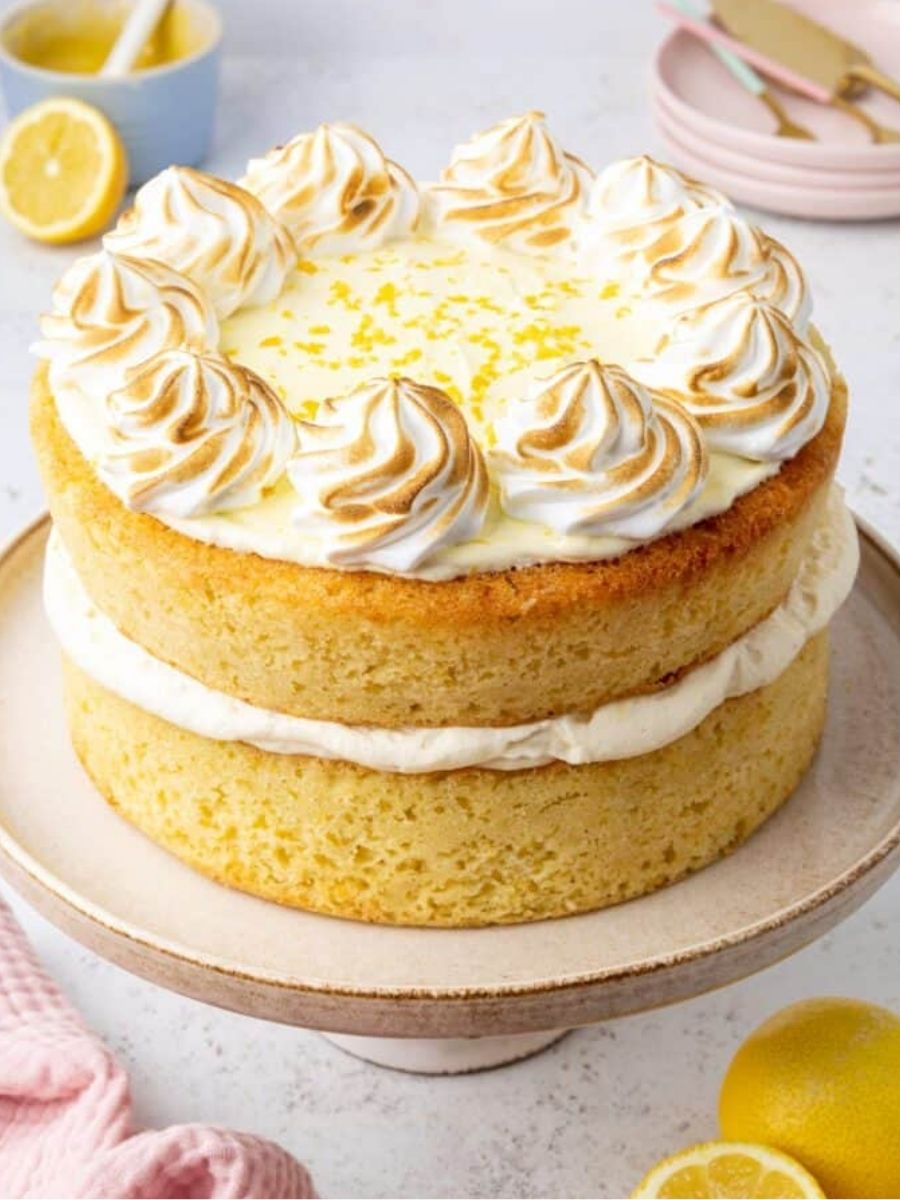

Classic Lemon Meringue Layer Cake
Ingredients
Equipment
Method
- Prepare the Oven and Cake Tins: Preheat the oven to 160°C fan or 180°C conventional. Grease two 8-inch round cake tins and line their bases with baking paper.
- Cream the Butter and Sugar: Beat the margarine or unsalted butter with the caster sugar until the mixture becomes light and fluffy.
- Incorporate the Eggs: Add the eggs one at a time, beating after each addition. Add a spoonful of the flour alongside each egg to help prevent the mixture from curdling.
- Add the Flour and Milk: Add the self-raising flour, baking powder, and milk. Fold the ingredients together until combined.
- Mix in the Lemon: Add the zest and juice of one lemon. Fold gently until you have a smooth, evenly mixed cake batter.
- Divide the Batter: Distribute the batter evenly between the two prepared cake tins and smooth the surfaces.
- Bake the Sponge Layers: Place the tins on the middle shelf of the oven and bake for 35–45 minutes. The cakes should rise, turn golden, and spring back when gently pressed in the center. Check from 35 minutes if your oven runs hot. Leave the cakes to cool completely in their tins.
- Separate the Eggs: Separate the five eggs, placing the whites in a clean stand mixer bowl and keeping the yolks separate. Ensure no yolk gets into the whites, as this can prevent the meringue from reaching stiff peaks.
- Combine the Egg Whites and Sugar: Add the granulated sugar to the egg whites and whisk until combined.
- Heat the Meringue Mixture: Set the mixing bowl over a small saucepan containing about 1 inch of simmering water over medium heat. Make sure the bottom of the bowl does not touch the water. Whisk continuously for approximately 5–10 minutes, until the sugar has completely dissolved, the mixture looks white and foamy, and it no longer feels grainy when rubbed carefully between your thumb and finger.
- Whip to Stiff Peaks: Fit the bowl onto the stand mixer with the whisk attachment. Whisk on medium-high speed for approximately 10–15 minutes, until the meringue is glossy and forms stiff peaks that stand upright without curling over. The meringue and the bottom of the bowl should no longer feel warm. If they remain warm, refrigerate the bowl for 10 minutes before continuing.
- Reserve the Piping Meringue: Transfer approximately half of the whipped meringue into a piping bag fitted with a large star nozzle. Set it aside for decorating the cake later.
- Add the Butter: Replace the whisk attachment with the paddle attachment. Set the mixer to medium-low speed, cut the softened butter into chunks, and add them gradually. Allow each addition to incorporate fully before adding the next.
- Finish the Buttercream: Reduce the mixer to a slow speed and add the vanilla extract and salt. Mix until the buttercream becomes thick, creamy, and silky smooth.
- Level the Cake Layers: Once the sponges have cooled completely, use a sharp knife to trim any domed tops, creating flat, level layers.
- Fill the First Layer: Place one sponge layer on a cake stand or serving plate. Spread a layer of Swiss meringue buttercream over the top. Pipe two concentric rings of buttercream around the outer edge, then spoon the lemon curd into the center.
- Add the Second Layer: Turn the second sponge upside down and carefully place it over the filling so the flat side faces upward.
- Frost the Top: Spread another layer of Swiss meringue buttercream over the top of the assembled cake.
- Add Fresh Lemon Zest: Finely zest the remaining lemon over the buttercream-covered top.
- Pipe the Meringue Swirls: Using the reserved meringue in the prepared piping bag, pipe decorative swirls around the outside of the cake.
- Toast the Meringue: Lightly brown the piped meringue with a kitchen blowtorch, taking care not to melt the buttercream beneath it.
- Serve or Store: Serve the cake once decorated, or keep it in a covered container in the refrigerator for up to 4 days.
Notes
- Room-temperature eggs: Use room-temperature eggs for the sponge and buttercream preparation as specified. This helps the ingredients combine more smoothly.
- Prevent curdling: When making the sponge batter, add a small spoonful of flour with each egg to help keep the mixture smooth.
- Check the baking time: Start checking the sponge after 35 minutes. Depending on your oven, baking may take up to 45 minutes. If you use cake strips, the cakes may need closer to 45 minutes.
- Cool the cakes completely: Allow both sponge layers to cool fully in their tins before assembling to prevent the buttercream from softening.
- Keep egg whites free of yolk: Separate each egg into a spare bowl before adding its white to the mixing bowl. Even a small amount of yolk can interfere with whipping.
- Check the sugar carefully: The Swiss meringue mixture should feel completely smooth rather than grainy before whipping it to stiff peaks.
- Troubleshoot thin buttercream: If the buttercream looks thin or soupy, refrigerate the bowl for 30 minutes to firm up the butter, then beat slowly until thick. Repeat if necessary.
- Fix curdled buttercream: If the buttercream looks split, place the bowl over a pan of gently simmering water for a few minutes until the mixture softens slightly around the edges. Return it to the mixer and beat slowly until smooth, repeating if needed.
- Toast gently: Use the blowtorch carefully, browning the meringue swirls without melting the buttercream.
- Refrigerate leftovers: Store the cake in a covered container in the refrigerator for up to 4 days.
Chef’s Secret
The key to a beautifully smooth Swiss meringue buttercream is managing the temperature of both the meringue and the butter.
After whipping the egg whites and sugar into stiff, glossy peaks, check that the mixing bowl no longer feels warm before adding the butter.
If the meringue is still warm, the butter can melt and leave the buttercream thin or soupy.
If needed, refrigerate the bowl for 10 minutes, then check again before continuing.
Add the softened butter gradually, allowing each portion to blend in before adding more.
The butter should be soft enough to indent with a finger but not melting.
These simple temperature checks help create a silky, stable buttercream that spreads neatly over the lemon sponge and holds the lemon curd securely between the layers.
Serving Suggestions
Serve the Lemon Meringue Cake in generous slices alongside freshly brewed tea or coffee for an elegant afternoon treat.
For a refreshing contrast, offer fresh berries such as raspberries, strawberries, or blueberries, whose fruity tartness complements the bright lemon filling.
A few thin curls of lemon zest can provide an extra citrus aroma and a simple decorative finish.
For special occasions, serve each slice on a dessert plate with a small spoonful of fresh berries or a little extra lemon curd on the side.
The cake is also lovely as the centerpiece of a birthday celebration, spring gathering, afternoon tea, or family dessert table.
Keep the toasted meringue swirls visible when slicing so each serving showcases the golden topping, creamy buttercream, tangy lemon center, and soft sponge layers.
Conclusion
This Lemon Meringue Cake combines tender lemon sponge, tangy lemon curd, creamy Swiss meringue buttercream, and lightly toasted meringue in one beautiful dessert.
Its balance of sweet and citrusy flavors, contrasting textures, and elegant appearance makes it a lovely choice for celebrations or special occasions.
Follow the cooling and buttercream preparation steps carefully, then finish with golden meringue swirls for a cake that looks as delightful as it tastes.
