
BakeryDiary is a recipe curation and editorial platform. We research and curate recipes from public sources, considering ratings, reviews, comments, and feedback. We then refine and present them clearly for home cooks. We are committed to an ad-free, focused experience that makes discovering and preparing recipes easier.
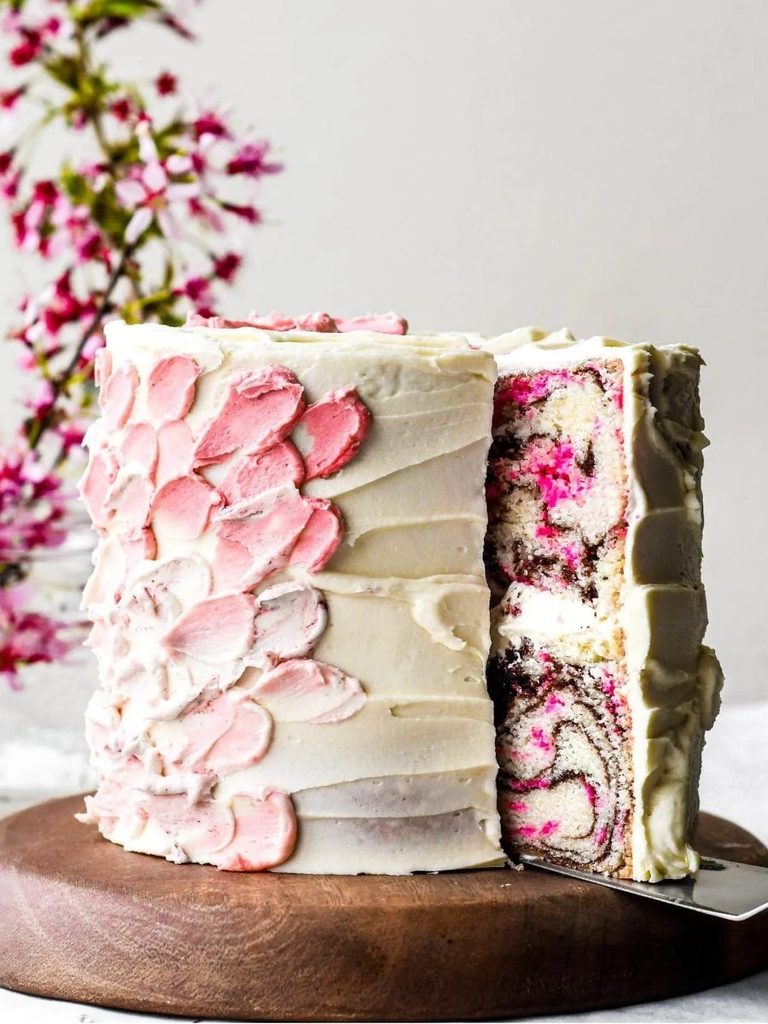
Cherry Blossom Cake is a delicate, eye-catching layer cake inspired by the beauty of springtime cherry blossoms. Its most charming feature is hidden inside.
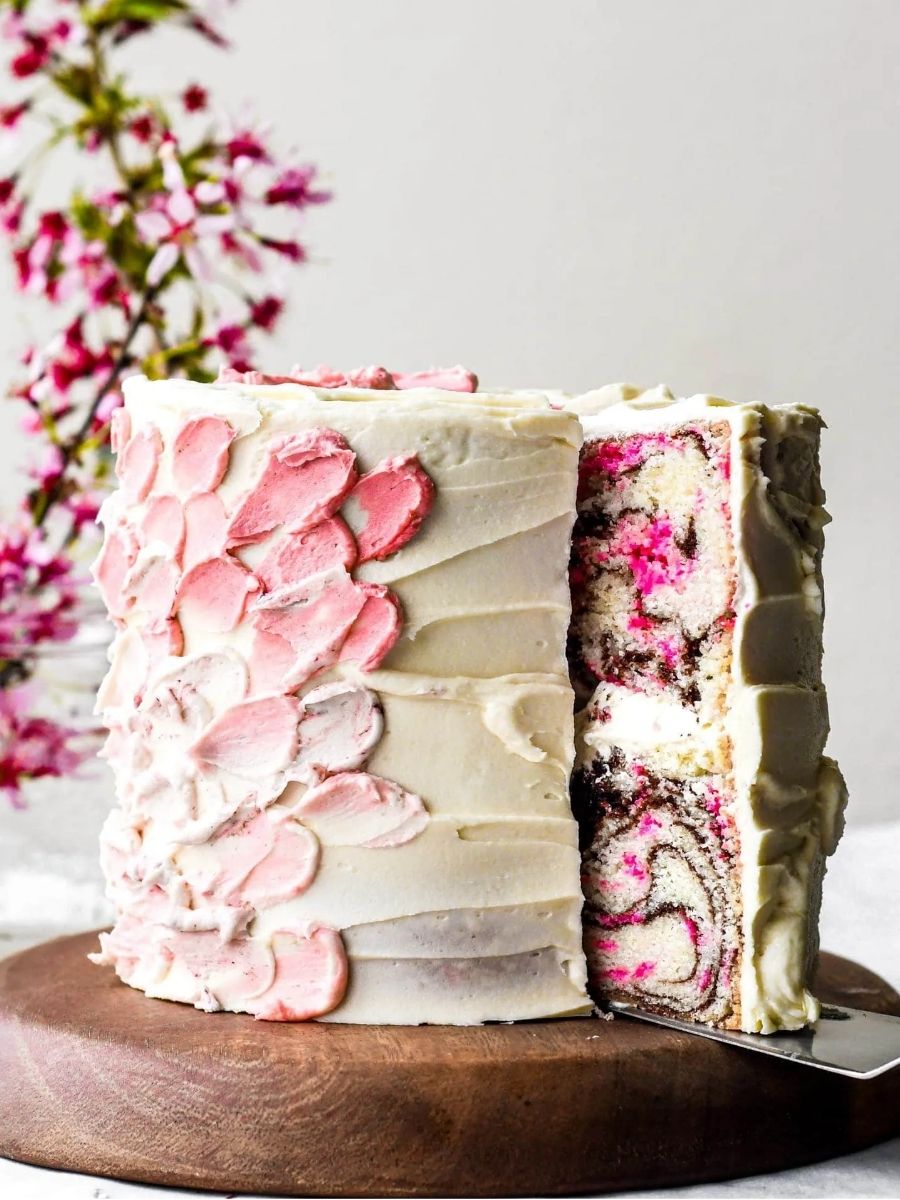
Ribbons of chocolate batter are piped through the pale cake mixture to create an intertwined branch-like pattern, while pink sprinkles add tiny bursts of color throughout the crumb.
Once sliced, each piece reveals the whimsical cherry blossom-inspired surprise.
The cake itself has a soft, tender texture from cake flour, softened butter, egg whites, and buttermilk or kefir.
Coconut oil contributes to the rich, moist crumb, while fine granulated sugar provides balanced sweetness.
Sakura extract gives the white cake its distinctive floral character, although rose water or orange blossom water can be used as alternatives. Pure vanilla extract and a touch of sea salt round out the flavor.
The chocolate batter creates a contrasting layer of flavor and color, combining Dutch cocoa powder, butter, sugar, egg yolk, cake flour, and buttermilk.
Piped in loose, overlapping squiggles, it resembles delicate branches running through the cake without overwhelming its center.
A silky sakura vanilla buttercream completes the cake. Made from butter, powdered sugar, cream or milk, vanilla, sakura essence, and salt, it adds a smooth, lightly floral finish.
The result is a beautiful celebration cake that combines a tender vanilla-sakura crumb, chocolate accents, colorful sprinkles, and creamy buttercream in one elegant dessert.

Cherry Blossom Surprise Cake
Ingredients
Equipment
Method
- Prepare the Chocolate Batter: Beat the 30 g butter and 50 g sugar together until light and fluffy. Add a dash of vanilla, a pinch of salt, the egg yolk, and baking soda, then continue beating for a few minutes. Sift in the cake flour and Dutch cocoa powder, add the buttermilk or kefir, and stir just until the mixture is combined.
- Transfer Chocolate Batter: Set the chocolate mixture aside until you are ready to assemble the cakes. Transfer it to a small piping bag so it will be ready for piping between the layers of white cake batter.
- Prepare the Cake Pans: Preheat the oven to 325°F. Butter and flour two 8-inch round cake pans.
- Cream the Main Ingredients: Beat the 226 g softened butter, 400 g sugar, and 75 g coconut oil together until the mixture is light and fluffy, about 5 minutes.
- Add the Egg Whites: Add the 4 egg whites one at a time, beating for about 2 minutes after each addition. Scrape down the sides and bottom of the bowl as needed.
- Add the Flavorings: Add the sea salt, vanilla extract, sakura extract, and baking powder. Beat well, then scrape down the bowl again to ensure the ingredients are evenly incorporated.
- Add the Flour: Sift in the cake flour. Fold it in slightly with a spatula first to prevent flour from scattering when the mixer is turned on.
- Add the Buttermilk: With the mixer running on low, slowly pour in the 240 g buttermilk or kefir. Mix only until the batter is just combined.
- Fold in the Sprinkles: Add the pink sprinkles and fold them through the batter. Scrape the bottom of the bowl to make sure the sprinkles are evenly distributed and the batter is homogeneous.
- Create the First Cake Layer: Divide enough white cake batter between the prepared pans to create a layer about ½ inch thick in the bottom of each pan. Smooth the batter gently.
- Pipe the Chocolate Branches: Snip a small opening at the tip of the piping bag containing the chocolate batter. Pipe loose, overlapping squiggles across the white batter, gently shaking the bag as you move. Avoid straight lines and create intertwined, branch-like patterns. Do not add excessive chocolate batter, as too much can weigh down the center of the cake.
- Build the Remaining Layers: Add more white cake batter over the chocolate squiggles and smooth the surface very gently so the pattern is not disturbed. Pipe another layer of chocolate squiggles over the batter.
- Distribute the Batter: Continue alternating white cake batter and chocolate squiggles until all the batter is divided evenly between the two prepared pans.
- Bake the Cakes: Bake the cakes at 325°F for approximately 40–50 minutes, until baked through.
- Cool the Cakes: Allow the cakes to cool in their pans for 5 minutes. Then invert them onto a cooling rack.
- Beat the Buttercream Base: Beat the room-temperature butter until it becomes very light in color, about 7 minutes.
- Flavor the Buttercream: Add the vanilla extract, sakura essence, and sea salt. Beat until the ingredients are fully combined.
- Add the Powdered Sugar: Sift in the powdered sugar and beat until the buttercream is combined and fluffy.
- Finish the Buttercream: Add the heavy whipping cream or milk and beat again until fully incorporated.
Notes
- Keep the butter for the white cake softened so it creams smoothly with the sugar and coconut oil.
- Add the egg whites one at a time and beat for about 2 minutes after each addition for an evenly mixed batter.
- Scrape the bowl several times during mixing, especially after adding the egg whites and before dividing the batter.
- The chocolate batter should be piped in loose, irregular squiggles rather than straight lines to create the branch-like interior effect.
- Avoid using too much chocolate batter in the center, as the source notes that excess chocolate can weigh down the cake.
- Smooth the white batter gently over the chocolate squiggles so the decorative pattern remains in place.
- The cakes should cool in their pans for 5 minutes before being inverted onto the cooling rack.
- For the buttercream, allow the butter to reach room temperature before beating it until very light in color.
Chef’s Secret
The key to getting the cherry-blossom branch effect without losing the cake’s delicate texture is controlling how much chocolate batter you pipe into each layer.
Keep the piping opening small and create loose, irregular squiggles that overlap naturally rather than drawing thick lines.
The goal is to distribute the chocolate batter across the white cake mixture while leaving plenty of space for the light batter to remain the dominant part of the crumb.
When adding the next layer of white batter, spread it gently instead of pressing firmly, which helps preserve the pattern beneath.
Scraping the bottom of the mixing bowl before dividing the batter also helps ensure the pink sprinkles remain evenly distributed throughout both cakes.
Serving Suggestions
Serve slices of Cherry Blossom Cake at room temperature so the sakura vanilla buttercream is smooth and easy to enjoy.
The finished cake can be decorated simply with extra pink sprinkles to echo the colorful specks inside the crumb.
For a more spring-inspired presentation, serve individual slices on delicate plates alongside fresh berries or a light cup of tea.
The floral sakura notes pair naturally with a mild tea, while the chocolate branch accents provide a pleasant contrast to the vanilla-sakura cake.
For celebrations, the two 8-inch cakes can be layered or served as individual cakes, depending on the desired presentation.
Conclusion
Cherry Blossom Cake combines a tender sakura-scented crumb, colorful pink sprinkles, delicate chocolate branch-like swirls, and silky vanilla buttercream in one distinctive dessert.
Its hidden interior pattern makes every slice a small surprise, while the floral and chocolate flavors keep the cake balanced and inviting.
It is an elegant choice when you want a homemade cake that feels both playful and beautifully seasonal.
