
BakeryDiary is a recipe curation and editorial platform. We research and curate recipes from public sources, considering ratings, reviews, comments, and feedback. We then refine and present them clearly for home cooks. We are committed to an ad-free, focused experience that makes discovering and preparing recipes easier.
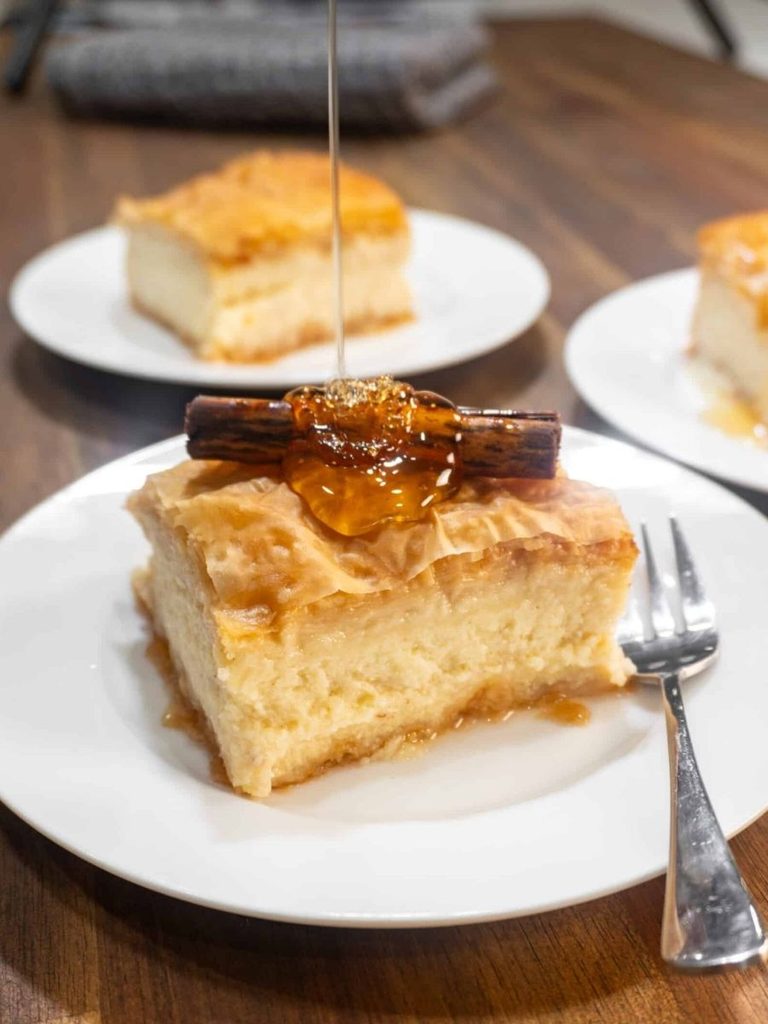
Galaktoboureko is a beloved Greek dessert that brings together delicate, buttery layers of phyllo pastry, a rich semolina custard filling, and a fragrant lemon-spiced syrup.
This traditional sweet is known for its beautiful contrast of textures: crisp, golden pastry on the outside and smooth, creamy custard in the center.
Once the warm pie is soaked in cool syrup, the flavors blend into a wonderfully sweet, aromatic dessert that feels both comforting and elegant.
The custard is the heart of this recipe. Made with milk, eggs, sugar, vanilla extract, semolina, and butter, it develops a thick, velvety consistency that holds its shape when sliced while remaining soft and tender.
Semolina gives the filling its characteristic texture, while vanilla adds a gentle sweetness that complements the buttery pastry.
The syrup brings another layer of flavor to every bite. Sugar and water form the base, while whole cloves, a cinnamon stick, fresh lemon juice, and honey create a fragrant balance of sweetness, spice, and citrus.
Pouring the cooled syrup over the freshly baked pie allows it to soak into the pastry, producing the signature texture that makes Galaktoboureko so memorable.
Although the dessert has several preparation stages, each contributes to the finished result.
Layering the phyllo sheets carefully creates a crisp exterior, while scoring the top before baking makes portioning easier later.
After absorbing the syrup and resting for several hours, the pie becomes ready to serve in neat, custard-filled slices.
Perfect for family gatherings, festive meals, or an afternoon treat, this Greek classic offers a delightful combination of creamy filling, flaky pastry, and fragrant sweetness in every serving.


Authentic Greek Galaktoboureko Pastry
Ingredients
Equipment
Method
- Prepare the Syrup: Combine the water, sugar, lemon juice, whole cloves, and cinnamon stick in a small saucepan. Bring the mixture to a boil, stirring as needed until the sugar dissolves.Remove the pan from the heat, add the honey, and mix well. Set the syrup aside to cool completely. It should be cold when poured over the freshly baked pie.
- Heat the Milk: Pour the 2 litres of milk into a large saucepan and add the vanilla extract. Place the pan over the heat to begin warming the mixture.
- Incorporate the Eggs: Crack the eggs into a separate bowl and whisk them together. Add the beaten eggs to the milk, stirring to combine.
- Add the Sugar and Semolina: Gradually mix the sugar and semolina into the milk mixture while stirring continuously. Keep the ingredients moving to help create a smooth custard.
- Cook the Custard: Continue cooking over the heat, stirring constantly until the mixture thickens and becomes creamy. Watch for bubbles beginning to rise to the surface, which indicates that the custard is nearly ready. Do not stop stirring during this stage.
- Finish the Filling: Once the custard reaches a thick, creamy consistency, turn off the heat. Add the 100 g of unsalted butter and stir until it is fully incorporated. Set the custard aside.
- Prepare the Baking Dish: Preheat the oven to 180°C. Melt the 200 g of butter intended for the pastry. Brush the bottom of a 34 × 24 cm baking dish with some of the melted butter.
- Layer the Bottom Pastry: Place one sheet of phyllo pastry in the prepared dish, allowing the excess pastry to hang over the sides. Brush the sheet with melted butter.
- Build the Pastry Base: Repeat the layering process with nine more sheets, brushing each sheet with butter before adding the next. Arrange the ten sheets so they overlap in different directions, covering the base and sides of the dish.
- Add the Custard Filling: Pour the prepared custard over the layered phyllo base. Spread it evenly across the dish so the filling reaches the edges.
- Fold the Overhanging Pastry: Fold the overhanging phyllo sheets inward over the custard, one at a time. Brush each sheet with melted butter before folding the next sheet over it.
- Cover the Folded Layers: Place a fresh sheet of phyllo over the folded pastry layers and brush it with butter. Fold its remaining overhanging edges over themselves to cover the surface neatly.
- Continue Layering the Top: Repeat the process with additional phyllo sheets, buttering and folding each one before adding the next. Continue until only one sheet remains.
- Finish the Final Sheet: Fold the last phyllo sheet to fit the dimensions of the baking dish without leaving any overhang. Lay it neatly over the top and brush it with melted butter.
- Score the Pastry: Using a knife, score the top into your preferred serving portions. Cut through the upper pastry layers carefully, but do not cut all the way through to the custard.
- Apply the Remaining Butter: Brush the surface with any remaining melted butter to coat the top evenly.
- Bake Until Golden: Place the dish in the preheated oven and bake at 180°C for approximately 1 hour. Keep an eye on the pastry, as baking times can vary by oven. Remove it when the top is golden.
- Pour Over the Cold Syrup: Immediately after removing the pie from the oven, pour the cooled syrup evenly over the hot pastry. Allow the syrup to soak into the layers.
- Cool Before Serving: Leave the Galaktoboureko to cool for at least 5 hours before cutting and serving. This resting period allows the syrup to absorb into the pastry and the custard pie to settle.
- Slice and Serve: Cut along the scored lines to create individual portions. Serve the cooled slices and enjoy this traditional Greek dessert.
Notes
- Phyllo Pastry: Keep the phyllo sheets covered while assembling the pie to help prevent them from drying out.
- Butter Each Layer: Brush the pastry sheets evenly with melted unsalted butter to help create a golden, crisp finish.
- Custard Consistency: Stir the custard continuously as it cooks to prevent it from sticking to the bottom of the saucepan and to encourage an even, creamy texture.
- Cold Syrup Is Essential: Prepare the syrup in advance and allow it to cool completely before pouring it over the hot pie.
- Watch the Pastry: Bake at 180°C for approximately 1 hour, checking the surface toward the end of baking. Remove the pie when the pastry turns golden.
- Score Before Baking: Mark the desired portions before placing the dish in the oven, taking care not to cut through the entire pastry and custard layers.
- Allow Enough Resting Time: Cool the dessert for at least 5 hours before serving so the syrup can soak into the pastry and the custard can settle.
- Plan Ahead: Although the preparation and baking take about 2 hours, the minimum cooling period means the dessert requires at least 7 hours in total before serving.
Chef’s Secret
The secret to beautifully textured Galaktoboureko is managing the temperature contrast between the freshly baked pastry and the syrup.
Prepare the syrup first so it has plenty of time to cool completely while you make the custard and assemble the pie.
When the pastry comes out of the oven, pour the cold syrup evenly over the entire golden surface, paying attention to the scored lines and edges.
This contrast helps the syrup penetrate the pastry without requiring you to bake the dessert again.
Another important detail is to stir the semolina custard continuously as it thickens.
This helps prevent lumps and scorching while producing a smooth, cohesive filling.
Finally, resist cutting the pie too early; the five-hour minimum resting period is essential for a better-set texture.
Serving Suggestions
Serve Galaktoboureko in individual squares or rectangles, following the scored lines for neat portions.
Its sweet, buttery pastry and fragrant custard pair wonderfully with a cup of strong Greek coffee, espresso, or unsweetened black tea.
For a lighter accompaniment, offer fresh berries, sliced strawberries, or orange segments to complement the lemon and warm spices in the syrup.
A small spoonful of thick Greek yogurt on the side can provide a pleasantly tangy contrast to the dessert’s sweetness.
If you prefer a simple presentation, serve each piece on its own, allowing the golden pastry and syrup-soaked layers to take center stage.
For gatherings and special occasions, arrange the portions on a serving platter and offer extra napkins, as the syrup can make the pastry pleasantly sticky.
Conclusion
Galaktoboureko is a classic Greek dessert that combines crisp, buttery phyllo pastry, rich semolina custard, and aromatic syrup in one memorable treat.
Although it involves several steps, preparing the syrup ahead of time, stirring the custard carefully, and allowing the finished pie to rest make the process more manageable.
The result is a golden, syrup-soaked pastry with a creamy center and a delicate balance of citrus, honey, and warm spices.
Serve it at family gatherings, festive celebrations, or whenever you want to bring a taste of Greek baking to your table.
