
BakeryDiary is a recipe curation and editorial platform. We research and curate recipes from public sources, considering ratings, reviews, comments, and feedback. We then refine and present them clearly for home cooks. We are committed to an ad-free, focused experience that makes discovering and preparing recipes easier.
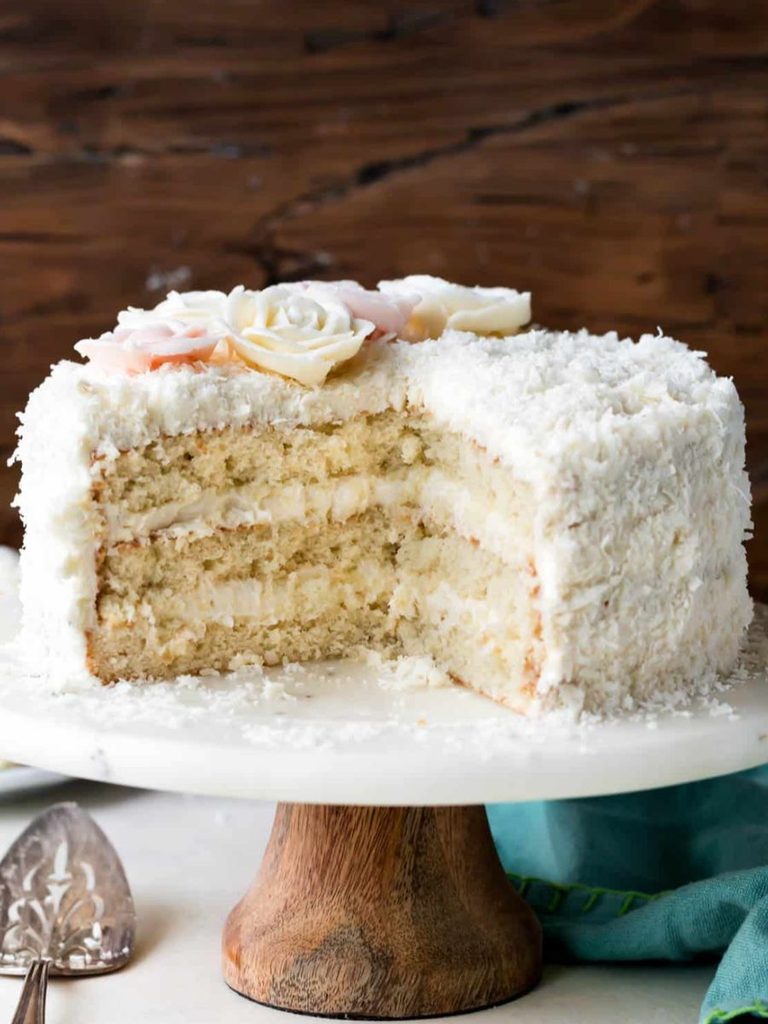
A homemade coconut cake is a beautiful dessert for anyone who loves delicate cake layers, creamy frosting, and a rich coconut flavor in every bite.
This classic three-layer cake combines a soft, fluffy crumb with the sweetness of shredded coconut and the smooth richness of coconut cream cheese buttercream.
Whether served at a birthday party, holiday gathering, or family celebration, it makes an impressive centerpiece for the dessert table.
Cake flour gives the layers their tender, delicate texture, while softened butter adds richness and granulated sugar provides sweetness.
Egg whites help create a light, airy crumb without the added color of egg yolks.
Sour cream contributes moisture and a subtle tang, balancing the sweetness, while vanilla extract and coconut extract deepen the cake’s flavor.
Unsweetened canned coconut milk brings additional coconut richness to the batter, and sweetened shredded coconut adds a pleasant texture throughout each slice.
The frosting is equally inviting, blending softened butter and full-fat cream cheese into a smooth, creamy base.
Confectioners’ sugar sweetens the mixture, while coconut milk, vanilla, and coconut extract complement the flavor of the cake.
A generous coating of sweetened shredded coconut finishes the exterior, giving every slice an appealing look and extra coconut texture.
Although this cake requires time for baking, cooling, assembling, and chilling, the process creates a stunning dessert with distinct layers and a balanced combination of flavors.
Follow the recipe carefully, especially the instructions for using room-temperature ingredients and cooling the cake completely before frosting.
The result is a moist, tender coconut cake wrapped in creamy frosting, perfect for sharing on special occasions or whenever a homemade coconut dessert sounds irresistible.
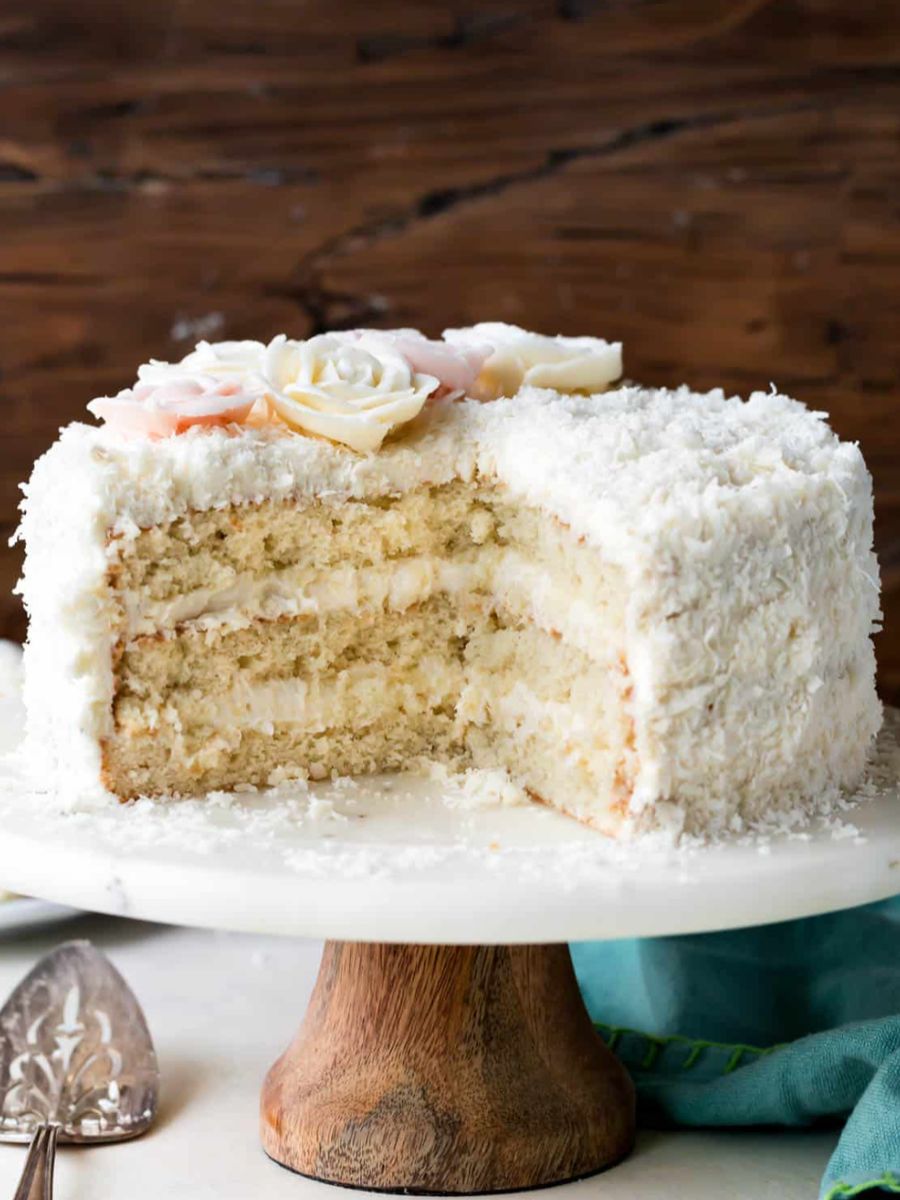

Classic Coconut Cream Layer Cake
Ingredients
Equipment
Method
- Prepare the Cake Pans: Preheat the oven to 350°F (177°C). Grease three 8-inch round cake pans, line the bottoms with parchment paper rounds, and grease the parchment paper. This helps the cake layers release easily after baking.
- Combine the Dry Ingredients: In a medium bowl, whisk together the cake flour, baking powder, baking soda, and salt until evenly mixed. Set aside.
- Cream the Butter and Sugar: Using a handheld or stand mixer fitted with a paddle or whisk attachment, beat the softened butter and granulated sugar on medium-high speed for about 2 minutes, until smooth and creamy. Scrape down the sides and bottom of the bowl with a rubber spatula as needed.
- Add the Wet Ingredients: Beat in the egg whites until combined. Add the sour cream, vanilla extract, and coconut extract, then mix until incorporated. The mixture may appear slightly curdled because of the different ingredient textures and the butter. Scrape down the bowl as necessary.
- Finish the Cake Batter: Reduce the mixer speed to low and gradually add the dry ingredients and coconut milk. Mix until combined, then add the sweetened shredded coconut. Use a whisk to mix by hand, checking the bottom of the bowl for any remaining butter lumps. The finished batter should be slightly thick.
- Divide the Batter: Distribute the batter evenly among the three prepared cake pans. If desired, weigh the pans to ensure the layers contain equal amounts of batter.
- Bake the Cake Layers: Bake at 350°F (177°C) for 21–24 minutes, or until the cakes are fully baked. Insert a toothpick into the center of a cake; if it comes out clean, the layer is done.
- Cool the Cake Layers: Place the pans on a cooling rack and let the cakes cool in the pans for 1 hour. Remove the layers from the pans and transfer them directly to the rack. Allow them to cool completely before frosting and assembling.
- Beat the Butter and Cream Cheese: In a large bowl, using a handheld or stand mixer fitted with a paddle or whisk attachment, beat the softened butter and full-fat brick cream cheese on medium speed for about 2 minutes, until creamy and smooth.
- Prepare the Coconut Buttercream: With the mixer running on low speed, add the confectioners’ sugar, canned coconut milk, vanilla extract, coconut extract, and salt. Increase the speed to high and beat for 3 minutes. If the frosting is too thin, add more confectioners’ sugar. If it is too thick, add more coconut milk. If it tastes too sweet, mix in an extra pinch of salt.
- Level the Cake Layers: Once the cakes have cooled completely, use a large serrated knife to trim a thin layer from the top of each cake, creating a flat surface. Discard the trimmings or crumble them over ice cream.
- Assemble the First Two Layers: Place one cake layer on a cake stand, turntable, or serving plate. Spread 1 heaping cup of frosting (approximately 250–300 g) evenly over the top. Add the second cake layer and cover its top with another heaping cup of frosting.
- Frost the Assembled Cake: Position the third cake layer on top. Spread the remaining frosting over the top and sides of the cake. Use an icing spatula to apply the frosting and a bench scraper to smooth the sides, if desired.
- Decorate with Shredded Coconut: Sprinkle the sweetened shredded coconut over the top of the cake and gently press it onto the frosted sides. Work carefully, as some coconut may scatter during decorating.
- Chill Before Slicing: Refrigerate the assembled cake for at least 20 minutes before slicing. Chilling helps the layers hold their shape when cut while preserving the cake’s soft, fluffy texture.
- Store Leftovers: Cover any leftover cake tightly and refrigerate for up to 5 days.
Notes
- Cake Flour: Use cake flour for the softest, most delicate crumb. Spoon it into the measuring cup and level it off rather than packing it down.
- Room-Temperature Ingredients: Bring the butter, egg whites, sour cream, and canned coconut milk to room temperature before mixing. This helps the batter combine more evenly.
- Egg Whites: Use five large egg whites without any yolks to maintain the cake’s light, fluffy texture. Separating cold eggs is generally easier.
- Coconut Milk: Choose unsweetened canned coconut milk rather than refrigerated carton coconut milk beverage. Use 1 cup for the cake batter and 2 tablespoons for the frosting.
- Sweetened Shredded Coconut: Sweetened shredded coconut contributes moisture and texture to the cake. If preferred, pulse it briefly in a food processor to shorten the strands.
- Cream Cheese: Use full-fat cream cheese sold in a brick, not cream cheese spread, for the frosting.
- Even Cake Layers: Divide the batter equally among the three prepared pans. Weighing the pans can help produce evenly sized layers.
- Complete Cooling: Let the cake layers cool completely before frosting to prevent the buttercream from becoming too soft.
- Frosting Consistency: Adjust the buttercream gradually with additional confectioners’ sugar if too thin or coconut milk if too thick.
- Make-Ahead Option: Bake the cake layers a day ahead and store them tightly covered at room temperature overnight. The frosting can also be made ahead and refrigerated.
- Freezing: Freeze frosted cake or unfrosted layers for 2–3 months. Thaw overnight in the refrigerator and bring to room temperature before decorating or serving.
- Alternative Cake Shapes: For a 9 × 13-inch sheet cake, bake at the same temperature for approximately 40 minutes, checking the center with a toothpick. For two 9-inch round layers, bake for 24–26 minutes. For cupcakes, fill liners two-thirds full and bake for 19–21 minutes at 350°F (177°C).
Chef’s Secret
For the most tender coconut cake, pay particular attention to the temperature of your ingredients and the way you combine the batter.
Room-temperature butter, egg whites, sour cream, and canned coconut milk blend more evenly, helping create a consistent texture throughout the layers.
When adding the dry ingredients and coconut milk, keep the mixer on low speed and mix only until everything is combined. Overmixing can make the cake less tender.
Before pouring the batter into the pans, use a whisk to check the bottom of the mixing bowl for any remaining butter lumps, as the original recipe recommends.
Finally, resist the temptation to frost the layers while they are still warm.
Complete cooling helps the cream cheese buttercream retain its smooth consistency and makes assembling the three-layer cake much easier.
Serving Suggestions
Serve this coconut cake as the centerpiece of a birthday celebration, holiday dessert table, or afternoon gathering.
Cut it into neat slices after chilling for at least 20 minutes, allowing the layers to hold together more easily.
Pair each slice with freshly brewed coffee, black tea, or a mild cup of green tea to balance the cake’s sweetness.
For a simple presentation, add a light sprinkle of shredded coconut to each plate or garnish with a few thin curls of coconut.
Fresh strawberries, raspberries, or pineapple pieces can provide a fruity contrast to the creamy frosting.
For a more indulgent dessert, serve a slice alongside a scoop of vanilla ice cream.
Keep the cake refrigerated between servings to preserve the cream cheese frosting.
Conclusion
This classic coconut cake combines three tender, moist layers with rich coconut flavor and smooth coconut cream cheese buttercream.
Sweetened shredded coconut throughout the cake and coating its exterior adds texture and completes its appealing finish.
By measuring the ingredients carefully, using room-temperature dairy ingredients, and allowing the layers to cool completely before assembling, you can create a beautiful homemade dessert for birthdays, holidays, and other special occasions.
Prepare it ahead when convenient, chill before slicing, and share each fluffy, coconut-filled piece with family and friends.
