Go Back
Lawrence D. Smith

Classic Coconut Cream Layer Cake

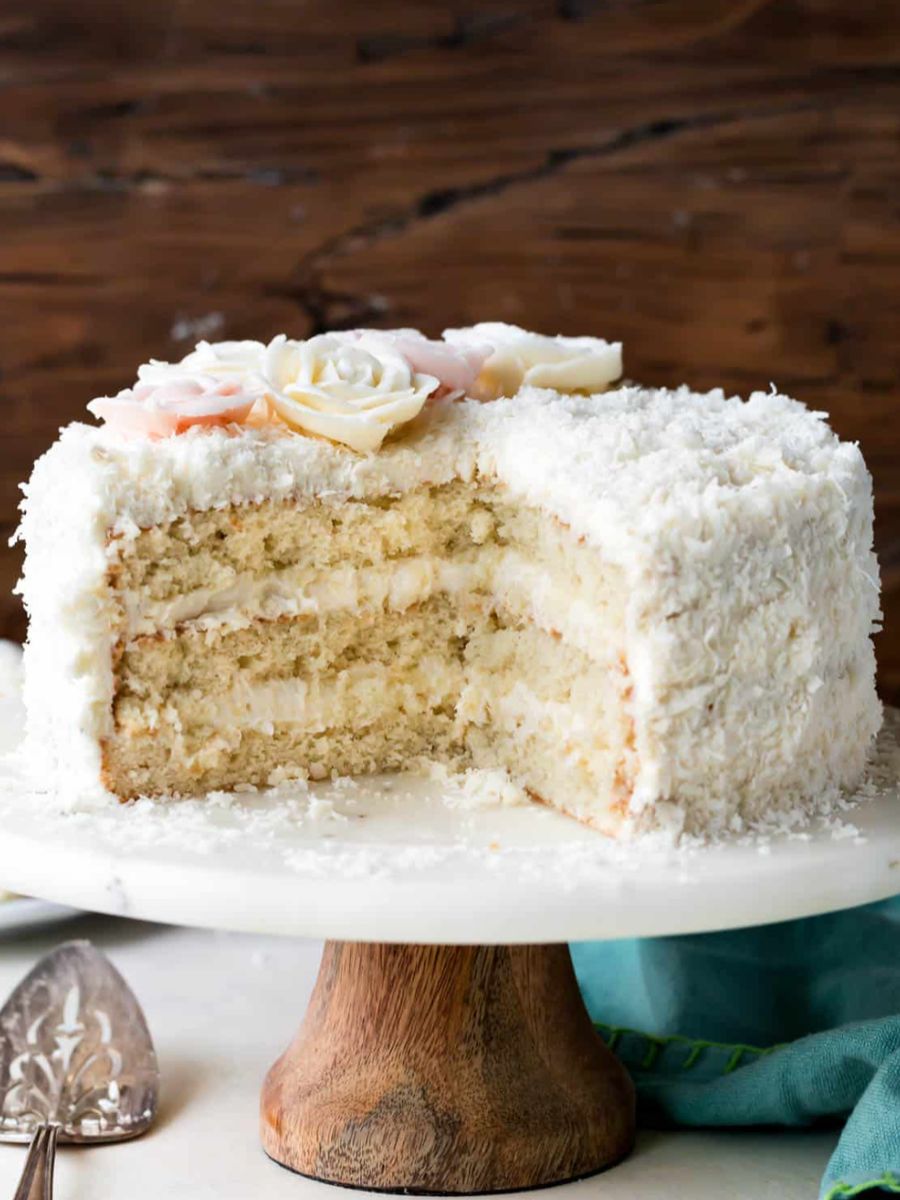
A soft, three-layer coconut cake made with cake flour, egg whites, sour cream, coconut milk, and shredded coconut. Finished with smooth coconut cream cheese buttercream and a generous coating of shredded coconut, this homemade dessert is ideal for birthdays, holidays, and special gatherings.
Prep Time 35 minutes
Cook Time 25 minutes
Cooling Time 1 hour
Total Time 2 hours
Servings: 12
Course: Dessert
Cuisine: American

Ingredients
  

For the Coconut Cake
  • - 2 ½ cups 295 g cake flour, spooned and leveled
  • - 2 teaspoons baking powder
  • - ½ teaspoon baking soda
  • - 1 teaspoon salt
  • - ¾ cup 12 tablespoons; 170 g unsalted butter, softened to room temperature
  • - 1 ⅔ cups 330 g granulated sugar
  • - 5 large egg whites at room temperature
  • - ½ cup 120 g sour cream, at room temperature
  • - 2 teaspoons pure vanilla extract
  • - 1 teaspoon coconut extract
  • - 1 cup 226 g/240 ml unsweetened canned coconut milk, at room temperature
  • - 1 cup 80 g sweetened shredded coconut
For the Coconut Cream Cheese Buttercream
  • - 1 cup 16 tablespoons; 226 g unsalted butter, softened to room temperature
  • - 8 ounces 226 g full-fat brick cream cheese, softened to room temperature
  • - 5 cups 600 g confectioners’ sugar
  • - 2 tablespoons 30 ml canned coconut milk
  • - ½ teaspoon pure vanilla extract
  • - ½ teaspoon coconut extract
  • - ⅛ teaspoon salt
  • - 2 cups 160 g sweetened shredded coconut, for decorating

Equipment

  • Three 8-inch round cake pans
  • Kitchen scale (optional, for accurately dividing the batter)
  • Mixing bowls
  • Electric hand mixer or stand mixer with paddle or whisk attachment
  • Whisk
  • Rubber spatula
  • Cooling rack
  • Toothpick for testing cake doneness
  • Large serrated knife
  • Cake stand, cake turntable, or serving plate
  • Icing spatula
  • Bench scraper (for smoothing the frosting)
  • Refrigerator-safe cake cover or airtight container

Method
 

  1. Prepare the Cake Pans: Preheat the oven to 350°F (177°C). Grease three 8-inch round cake pans, line the bottoms with parchment paper rounds, and grease the parchment paper. This helps the cake layers release easily after baking.
  2. Combine the Dry Ingredients: In a medium bowl, whisk together the cake flour, baking powder, baking soda, and salt until evenly mixed. Set aside.
  3. Cream the Butter and Sugar: Using a handheld or stand mixer fitted with a paddle or whisk attachment, beat the softened butter and granulated sugar on medium-high speed for about 2 minutes, until smooth and creamy.
    Scrape down the sides and bottom of the bowl with a rubber spatula as needed.
  4. Add the Wet Ingredients: Beat in the egg whites until combined. Add the sour cream, vanilla extract, and coconut extract, then mix until incorporated.
    The mixture may appear slightly curdled because of the different ingredient textures and the butter. Scrape down the bowl as necessary.
  5. Finish the Cake Batter: Reduce the mixer speed to low and gradually add the dry ingredients and coconut milk. Mix until combined, then add the sweetened shredded coconut.
    Use a whisk to mix by hand, checking the bottom of the bowl for any remaining butter lumps. The finished batter should be slightly thick.
  6. Divide the Batter: Distribute the batter evenly among the three prepared cake pans. If desired, weigh the pans to ensure the layers contain equal amounts of batter.
  7. Bake the Cake Layers: Bake at 350°F (177°C) for 21–24 minutes, or until the cakes are fully baked. Insert a toothpick into the center of a cake; if it comes out clean, the layer is done.
  8. Cool the Cake Layers: Place the pans on a cooling rack and let the cakes cool in the pans for 1 hour. Remove the layers from the pans and transfer them directly to the rack. Allow them to cool completely before frosting and assembling.
  9. Beat the Butter and Cream Cheese: In a large bowl, using a handheld or stand mixer fitted with a paddle or whisk attachment, beat the softened butter and full-fat brick cream cheese on medium speed for about 2 minutes, until creamy and smooth.
  10. Prepare the Coconut Buttercream: With the mixer running on low speed, add the confectioners’ sugar, canned coconut milk, vanilla extract, coconut extract, and salt.
    Increase the speed to high and beat for 3 minutes. If the frosting is too thin, add more confectioners’ sugar. If it is too thick, add more coconut milk. If it tastes too sweet, mix in an extra pinch of salt.
  11. Level the Cake Layers: Once the cakes have cooled completely, use a large serrated knife to trim a thin layer from the top of each cake, creating a flat surface. Discard the trimmings or crumble them over ice cream.
  12. Assemble the First Two Layers: Place one cake layer on a cake stand, turntable, or serving plate. Spread 1 heaping cup of frosting (approximately 250–300 g) evenly over the top. Add the second cake layer and cover its top with another heaping cup of frosting.
  13. Frost the Assembled Cake: Position the third cake layer on top. Spread the remaining frosting over the top and sides of the cake. Use an icing spatula to apply the frosting and a bench scraper to smooth the sides, if desired.
  14. Decorate with Shredded Coconut: Sprinkle the sweetened shredded coconut over the top of the cake and gently press it onto the frosted sides. Work carefully, as some coconut may scatter during decorating.
  15. Chill Before Slicing: Refrigerate the assembled cake for at least 20 minutes before slicing. Chilling helps the layers hold their shape when cut while preserving the cake’s soft, fluffy texture.
  16. Store Leftovers: Cover any leftover cake tightly and refrigerate for up to 5 days.
Notes

  • Cake Flour: Use cake flour for the softest, most delicate crumb. Spoon it into the measuring cup and level it off rather than packing it down.
  • Room-Temperature Ingredients: Bring the butter, egg whites, sour cream, and canned coconut milk to room temperature before mixing. This helps the batter combine more evenly.
  • Egg Whites: Use five large egg whites without any yolks to maintain the cake's light, fluffy texture. Separating cold eggs is generally easier.
  • Coconut Milk: Choose unsweetened canned coconut milk rather than refrigerated carton coconut milk beverage. Use 1 cup for the cake batter and 2 tablespoons for the frosting.
  • Sweetened Shredded Coconut: Sweetened shredded coconut contributes moisture and texture to the cake. If preferred, pulse it briefly in a food processor to shorten the strands.
  • Cream Cheese: Use full-fat cream cheese sold in a brick, not cream cheese spread, for the frosting.
  • Even Cake Layers: Divide the batter equally among the three prepared pans. Weighing the pans can help produce evenly sized layers.
  • Complete Cooling: Let the cake layers cool completely before frosting to prevent the buttercream from becoming too soft.
  • Frosting Consistency: Adjust the buttercream gradually with additional confectioners' sugar if too thin or coconut milk if too thick.
  • Make-Ahead Option: Bake the cake layers a day ahead and store them tightly covered at room temperature overnight. The frosting can also be made ahead and refrigerated.
  • Freezing: Freeze frosted cake or unfrosted layers for 2–3 months. Thaw overnight in the refrigerator and bring to room temperature before decorating or serving.
  • Alternative Cake Shapes: For a 9 × 13-inch sheet cake, bake at the same temperature for approximately 40 minutes, checking the center with a toothpick. For two 9-inch round layers, bake for 24–26 minutes. For cupcakes, fill liners two-thirds full and bake for 19–21 minutes at 350°F (177°C).