
BakeryDiary is a recipe curation and editorial platform. We research and curate recipes from public sources, considering ratings, reviews, comments, and feedback. We then refine and present them clearly for home cooks. We are committed to an ad-free, focused experience that makes discovering and preparing recipes easier.
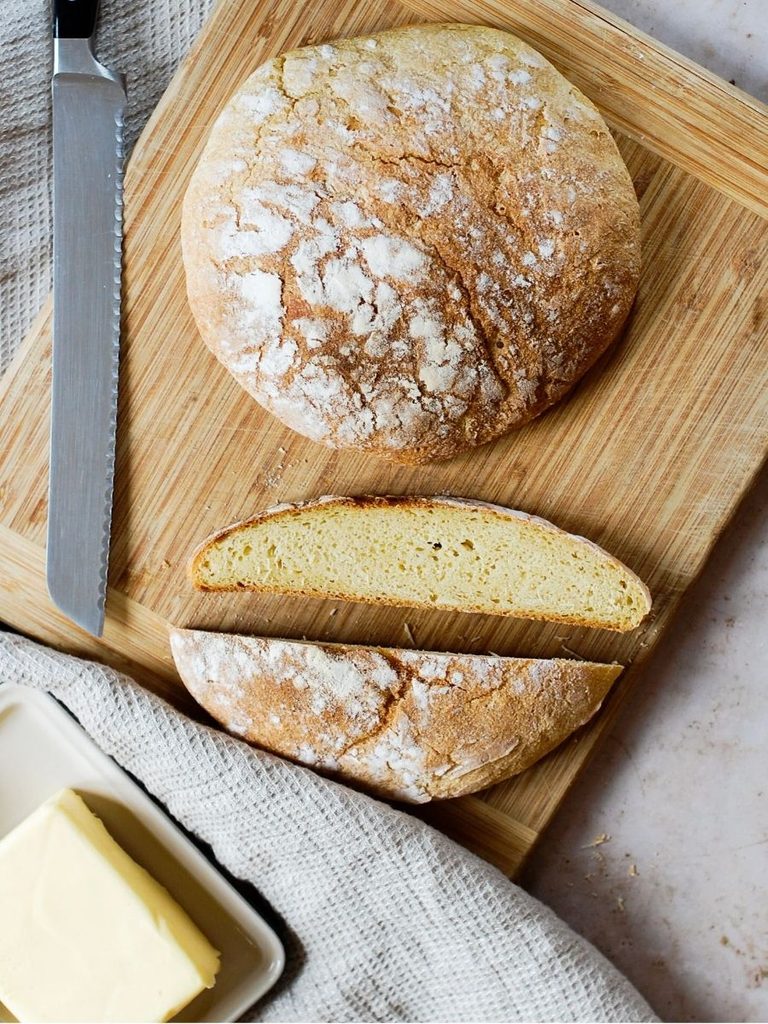
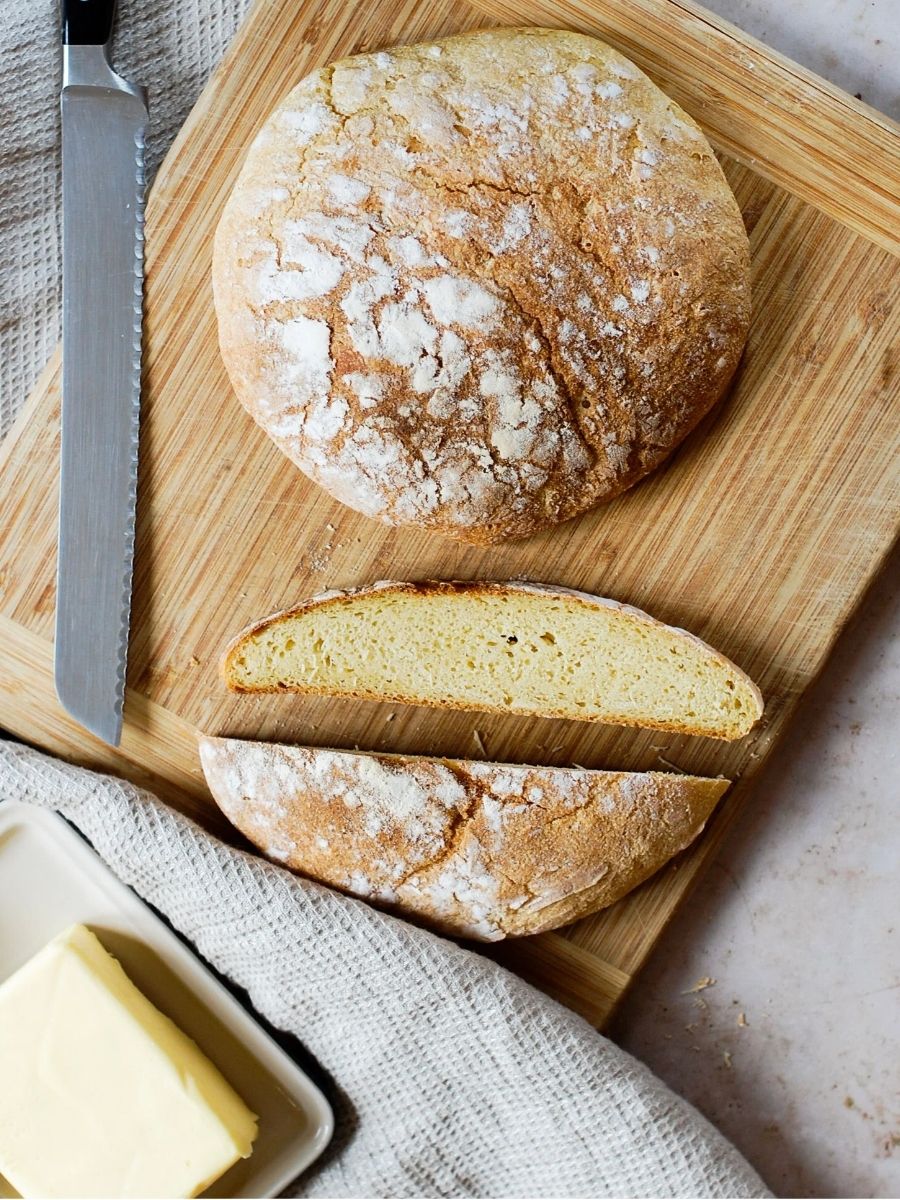
Portuguese Corn Bread, traditionally known as Broa, is a rustic loaf distinguished by its beautifully crackled crust and pleasantly dense, soft interior.
Made from a simple combination of strong white flour and cornmeal flour, this bread has a hearty texture and a subtle corn flavor that makes it especially appealing alongside comforting meals.
The addition of dried yeast gives the dough enough lift to create a satisfying crumb while preserving the substantial character expected from a rustic corn bread.
The dough comes together with warm water, fine salt, and a small amount of olive oil, producing a sticky mixture that is shaped into two rustic rounds after its first rise.
Before the second proof, the loaves are placed on an oiled baking tray and lightly dusted with flour.
That coating helps create the distinctive, naturally crackled appearance as the bread expands during baking.
After baking at 200°C, the loaves develop a firm, lightly crisp exterior while remaining soft yet dense inside.
The finished Broa is particularly enjoyable while still warm, especially when paired with salted butter.
Its sturdy slices also make it ideal for dipping into soups or serving alongside a soft-boiled egg.
Whether enjoyed fresh or lightly toasted the following day, this bread offers a wonderfully rustic addition to the table.

Portuguese Broa Corn Bread
Ingredients
Equipment
Method
- Mix the Dry Ingredients: Combine the strong white flour and cornmeal flour in a medium bowl. Stir in the dried yeast and fine salt until evenly distributed.
- Form the Dough: Pour the warm water into the flour mixture and stir with a wooden spoon until everything comes together into a sticky dough.
- Shape the First Dough Ball: Lightly flour your hands using some of the extra flour, then shape the sticky dough into a rough ball. Transfer it to a clean bowl and dust the surface lightly with flour.
- First Rise: Cover the bowl and leave the dough in a warm place until it has doubled in size. This should take about 1 hour, although the dough should be checked as it rises.
- Knock Back the Dough: Lightly flour your work surface. Punch down the risen dough with your hands to deflate it, then transfer it onto the floured surface.
- Divide the Dough: Shape the dough roughly into a ball, then use a dough scraper or knife to cut it in half.
- Shape the Loaves: Form each portion into a smaller rough ball, approximately 15–20 cm wide.
- Prepare for the Second Rise: Lightly oil a large baking tray and place the two dough balls on it. Sprinkle the loaves with additional flour; this helps create the characteristic crackled effect on the surface.
- Second Proof: Cover the dough loosely with a tea towel and leave it in a warm place for about 30 minutes, or until the loaves have doubled in size.
- Bake the Bread: Preheat the oven to 200°C. Bake the risen loaves for 35 minutes, or until the bottoms sound hollow when tapped.
- Cool or Serve Warm: Remove the baked loaves from the oven and allow them to cool, or serve them warm.
Notes
- Store leftover bread in a cool, dry place wrapped in a tea towel or paper bag.
- Leftover Broa is best enjoyed within 1–2 days.
- Refresh slightly stale bread by warming it for a few minutes in the oven or toasting it.
- The baked loaves can be frozen for 2–3 months when wrapped in foil or stored in a freezer bag.
- For convenient portions, slice the bread before freezing. Open-freeze the slices on a tray first, then transfer them to a freezer bag so individual slices can be removed as needed.
Chef’s Secret
The key to Broa’s distinctive crackled appearance is the light flouring before the second proof.
Once the shaped dough balls are placed on the lightly oiled baking tray, dust them generously enough to coat the surface without creating a heavy layer.
As the loaves expand during their second rise and then bake, the flour helps emphasize the natural cracks across the crust.
It is also important not to rush the first rise: wait until the dough has visibly doubled in size before knocking it back.
This gives the yeast time to develop the dough’s structure while retaining the rustic, dense character that makes this corn bread different from a light wheat loaf.
Serving Suggestions
Serve the Broa warm with salted butter for a simple, classic pairing. Its substantial texture also makes it excellent for dipping into soups, where the dense crumb can absorb flavorful broth without falling apart.
Thin slices can be toasted and enjoyed alongside a soft-boiled “dippy” egg, or served as a rustic accompaniment to a hearty meal.
Leftover slices can be warmed or toasted the following day, making the bread just as useful beyond its first serving.
Conclusion
Portuguese Corn Bread is a wonderfully rustic loaf that balances a crackled exterior with a soft yet dense centre.
The combination of white flour and cornmeal gives it a satisfying texture and subtle corn character, while its simple preparation makes it an inviting homemade bread for everyday meals.
Serve it warm, toasted, or alongside soup and eggs for a comforting and versatile Broa experience.
