Go Back
Lawrence D. Smith

Hearty Homemade Multigrain Bread

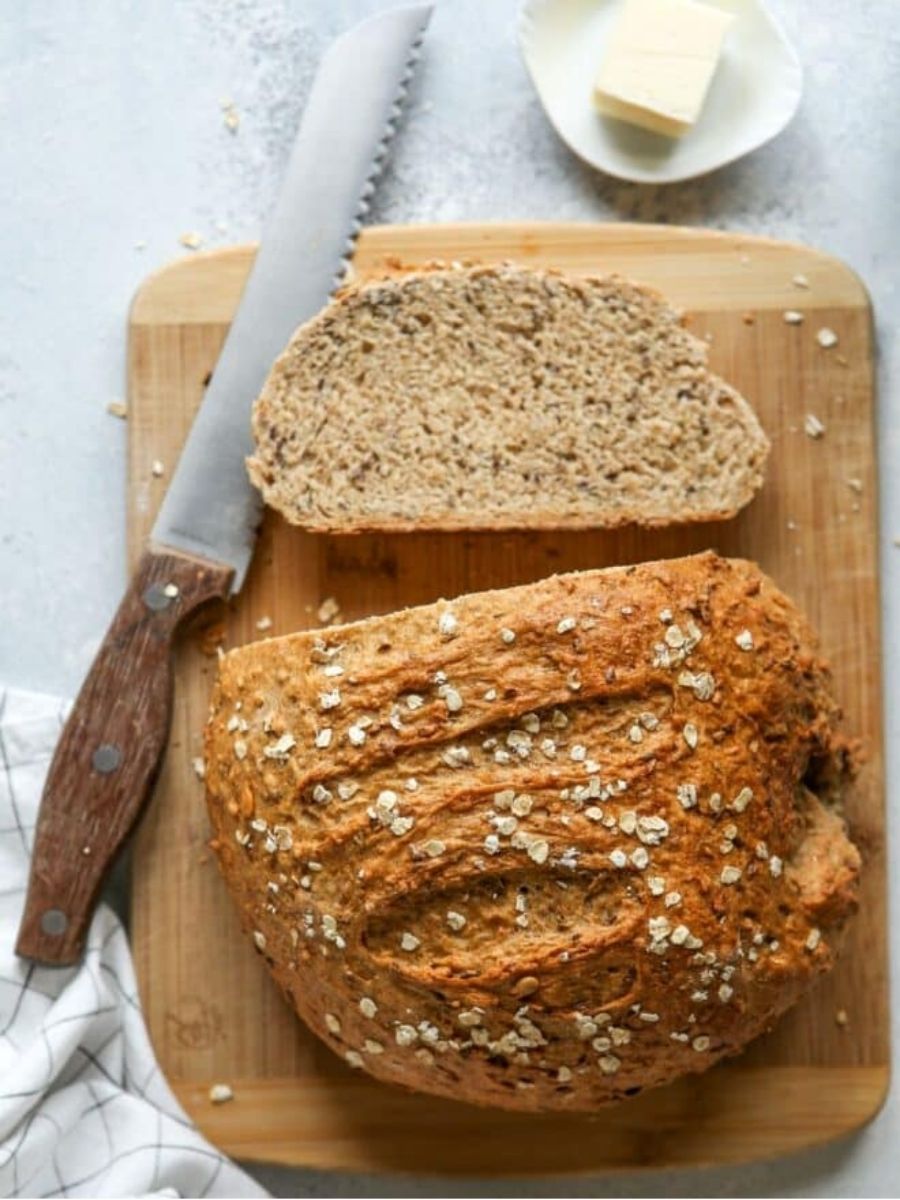
A rustic, hearty multigrain loaf made with whole wheat and rye flours, bulgur, oats, flaxseed, and sunflower seeds, lightly sweetened with honey and baked until beautifully golden.
Prep Time 30 minutes
Cook Time 45 minutes
Rising Time 1 hour 30 minutes
Total Time 2 hours 45 minutes
Servings: 10 slices
Course: Bread
Cuisine: American, European, Mediterranean

Ingredients
  

For the Dough
  • 3 tablespoons 30 grams bulgur wheat
  • 1 ¼ cups 283 grams water, divided
  • 2 tablespoons 43 grams honey
  • 2 tablespoons 28 grams unsalted butter
  • 2 ¼ teaspoons 7 grams active-dry yeast
  • 1 ½ cups 170 grams whole wheat flour
  • ½ cup 50 grams rye flour
  • 2 teaspoons coarse salt
  • ¼ cup 25 grams old-fashioned rolled oats
  • ¼ cup 35 grams flaxseed
  • 2 tablespoons 20 grams raw sunflower seeds
  • 1 –1 ½ cups 120–170 grams all-purpose flour
For Finishing
  • 1 large egg + 1 tablespoon water beaten, for optional egg wash
  • Additional rolled oats for optional sprinkling

Equipment

  • Stand mixer fitted with a dough hook
  • Small saucepan
  • Mixing bowl
  • Dough whisk
  • Dutch oven or large heavy oven-safe pot with a lid
  • Parchment paper
  • Plastic wrap
  • Sharp knife
  • Pastry brush

Method
 

  1. Soak the Bulgur: Place the bulgur wheat in ¼ cup warm water and let it stand for 30 minutes, or until the water has been completely absorbed.
  2. Warm the Liquid Mixture: Combine the remaining 1 cup water, honey, and unsalted butter in a small saucepan. Warm over medium heat until the butter has melted. Remove from the heat and cool for about 5 minutes, until the mixture reaches approximately 120–130°F.
  3. Combine the Dry Ingredients: In the bowl of a stand mixer fitted with a dough hook, add the active-dry yeast, whole wheat flour, rye flour, and coarse salt.
  4. Form the Dough: Pour the warm water mixture into the dry ingredients and mix until combined. Add the rolled oats, flaxseed, sunflower seeds, and soaked bulgur, then mix again until the ingredients are evenly incorporated.
  5. Add the All-Purpose Flour: Add the all-purpose flour a few tablespoons at a time until the dough clears the sides of the bowl. You may not need the full 1½ cups.
  6. Knead the Dough: Continue kneading with the mixer for about 3–4 minutes, until the dough becomes smooth and elastic. The dough will be heavier than many bread doughs, but it should stretch slightly without immediately breaking.
  7. First Rise: Shape the dough into a ball and place it in a greased bowl. Cover with plastic wrap and set it in a warm place. Let it rise for about 1 hour, or until doubled in size and the dough does not spring back when gently pressed.
  8. Rest the Dough: Punch down the risen dough and knead it a few times until smooth. Allow it to rest for about 5 minutes.
  9. Shape the Loaf: Line a Dutch oven or large heavy pot with parchment paper and place the dough inside.
  10. Add the Topping: If desired, brush the surface with the beaten egg wash and sprinkle additional rolled oats over the top.
  11. Score the Bread: Using a sharp knife, make 3 cuts across the top of the loaf.
  12. Second Rise: Cover the loaf with plastic wrap and let it rise for another 30–45 minutes.
  13. Preheat the Oven: Meanwhile, preheat the oven to 425°F and position the rack in the center of the oven, or lower if needed to accommodate the pot.
  14. Bake the Bread: Cover the Dutch oven with its lid and place it in the preheated oven. Immediately reduce the oven temperature to 400°F and bake for about 45 minutes, until the top of the bread is golden brown.
  15. Cool Before Slicing: Remove the bread from the oven and allow it to cool before slicing. For the best eating quality, enjoy it on the day it is baked; it can also be stored in an airtight container at room temperature for several days.
Notes

  • Bulgur soaking: Soak the bulgur in ¼ cup warm water for 30 minutes, allowing it to absorb the water fully before adding it to the dough.
  • Liquid temperature: Let the honey-butter-water mixture cool to approximately 120–130°F before mixing it into the flour and yeast.
  • Flour amount: Add the all-purpose flour gradually. The dough may need anywhere from 1 to 1½ cups, so stop adding flour once the dough clears the bowl.
  • Dough texture: This is a heavier bread dough than many standard loaves. It should become smooth and elastic after kneading and stretch slightly without breaking immediately.
  • First rise: Look for the dough to double in size and remain indented when pressed rather than relying only on the clock.
  • Second rise: Allow 30–45 minutes for the shaped loaf to rise before baking.
  • Dutch oven: A Dutch oven or another heavy oven-safe pot with a lid helps create better baking conditions for the loaf. If a cast-iron Dutch oven is unavailable, a heavy lidded pot can be used.
  • Storage: The bread is best enjoyed on the day it is baked, but leftovers can be kept in an airtight container at room temperature for several days.
  • Instant yeast option: If using instant or quick-rise yeast instead of active-dry yeast, check the dough after about 30 minutes during the first rise and after 20–30 minutes during the second rise.