Prepare the Pastry Discs: Divide the puff pastry block into two pieces. On a lightly floured surface, roll one piece into a square or circle approximately 25 cm / 10 inches wide. Use the base of a 23 cm / 9-inch cake pan as a template and cut around it to create the smaller pastry disc. Place it on a parchment-lined baking tray. Roll the second piece to the same general size, then cut a slightly larger disc approximately 25 cm / 10 inches wide. Transfer it to another parchment-lined tray and refrigerate both pastry discs while preparing the almond cream. Combine Orange Zest and Sugar: Rub the orange zest into the granulated sugar with your fingers to release the zest's aromatic oils.
Cream the Butter Mixture: Place the room-temperature butter and orange-scented sugar in the bowl of a stand mixer fitted with a paddle attachment. Beat until the mixture becomes pale and creamy.
Add the Eggs and Flavoring: Add the whole egg, egg yolk, and cognac, if using. Beat until incorporated. The mixture may appear slightly curdled at this stage, but it will smooth out when the ground almonds are added.
Finish the Almond Cream: Add the almond meal and salt to the bowl. Beat until the mixture is smooth and evenly combined.
Transfer to a Piping Bag: Spoon the almond cream into a piping bag and twist the top closed. This step is optional; the filling can also be spooned directly onto the pastry.
Fill the Pastry Base: Remove the pastry discs from the refrigerator. Pipe or spoon the almond cream onto the smaller disc, keeping a 2.5 cm / 1-inch border clear around the edge. Smooth the filling into an even layer using a palette knife.
Apply the First Egg Wash: Whisk the egg and water together. Brush the exposed pastry border around the almond cream with the egg wash.
Add the Fève: If using one, place a plastic or ceramic fève, whole almond, or other nut or bean into the almond cream. Take care when serving, as a hidden hard object can present a choking hazard.
Cover the Filling: Place the larger pastry disc over the almond cream. Gently press the pastry down around the mound of filling to remove trapped air without flattening the filling excessively.
Seal the Edges: Shape the pastry edge into a scalloped border using two fingers, while using the back of a knife to press the pastry inward between your fingers as you work around the entire galette.
Brush the Top: Brush the top surface generously with egg wash, taking care not to allow it to run down the sides, as this can interfere with the pastry's ability to rise.
Chill the Galette: Refrigerate the assembled galette on its baking tray for at least 30 minutes. This chilling period helps the puff pastry bake up particularly crisp.
Preheat the Oven: While the galette chills, preheat the oven to 200°C / 390°F.
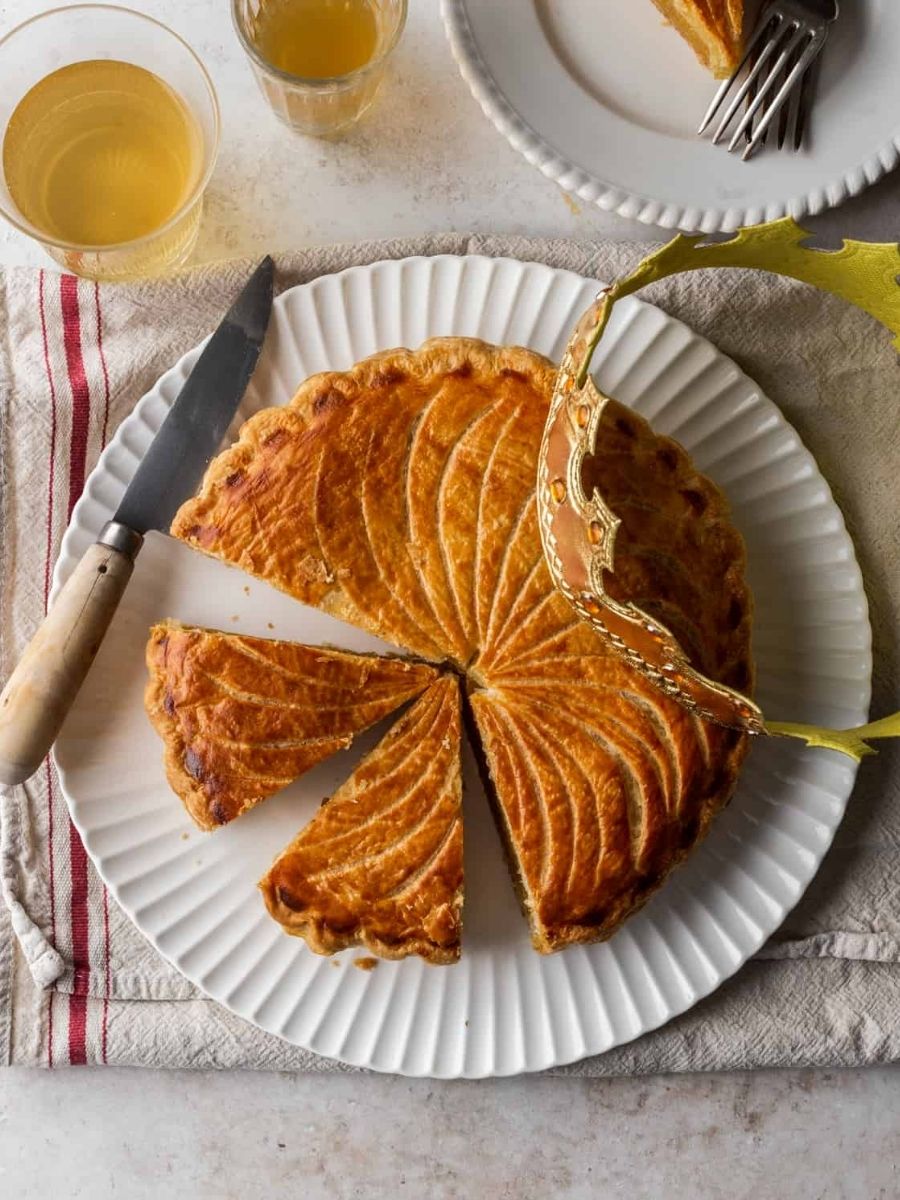
Score and Decorate: Remove the chilled galette from the refrigerator and brush the top with egg wash again. Using a sharp paring knife, score a decorative pattern into the surface, such as radiating arcs from the center toward the edge, a herringbone pattern, or a leaf design. Do not cut completely through the pastry. Make a small hole in the center to provide a steam vent. Bake at High Heat: Place the galette in the preheated 200°C / 390°F oven and bake for 15 minutes.
Reduce the Oven Temperature: After 15 minutes, lower the oven temperature to 180°C / 350°F.
Finish Baking: Continue baking for another 15–20 minutes, until the puff pastry is deeply golden. Remove the galette from the oven and transfer it to a cooling rack.
Prepare the Sugar Syrup: For the optional glossy finish, combine 30 ml water and 30 g sugar in a saucepan. Bring to a boil and cook until the sugar has dissolved. Pour the syrup into a bowl and allow it to cool.
Glaze the Warm Galette: Immediately after removing the galette from the oven, brush the cooled sugar syrup over the pastry for a professional-looking finish.
Cool Before Serving: Allow the galette to cool until warm. Serve warm or at room temperature.