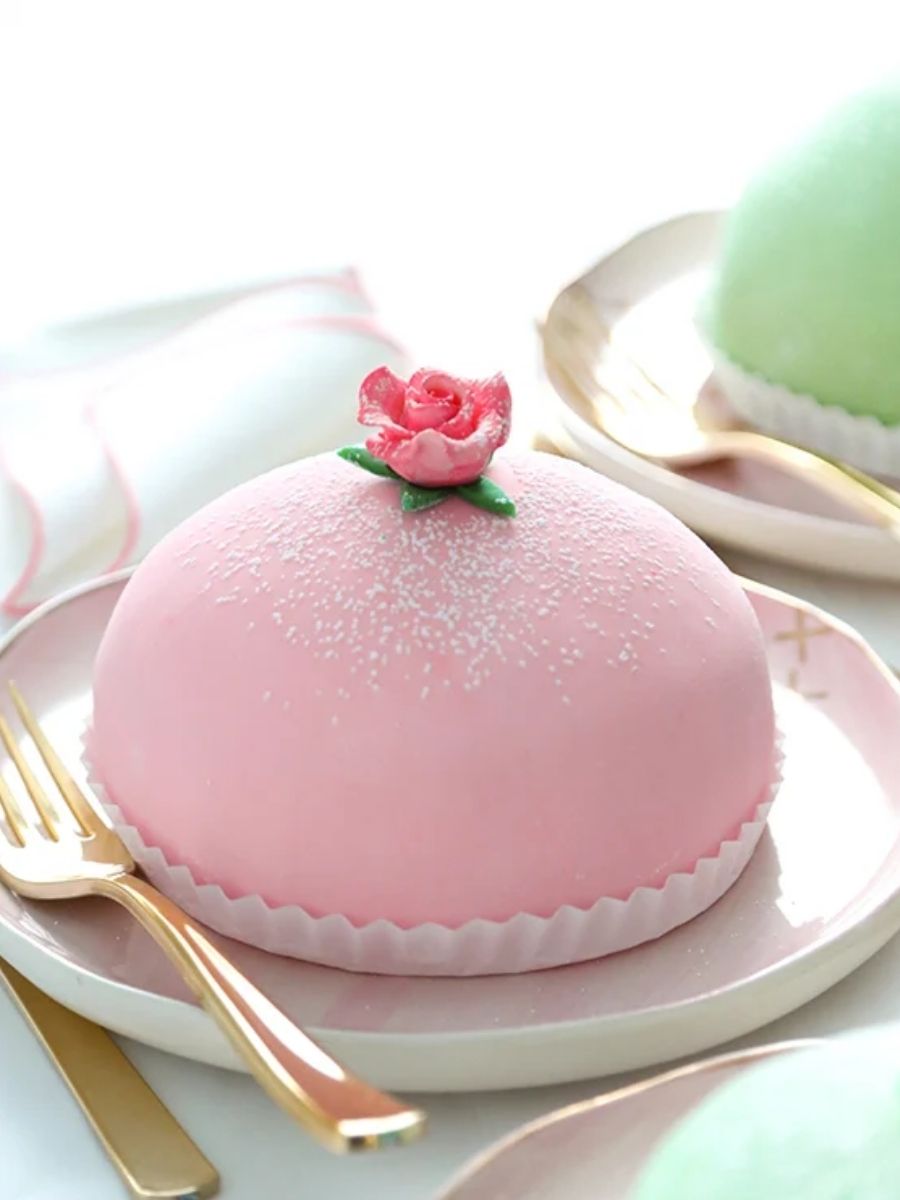
Prepare the Pan: Grease and line a 9-inch round springform pan with parchment paper, then set it aside.
Preheat the Oven: Heat the oven to 350°F so it is ready when the sponge batter is prepared.
Whip the Eggs and Sugar: Beat the eggs and sugar together on high speed until the mixture becomes pale, thick, and greatly increased in volume. Set a timer for 5 minutes; the properly whipped mixture should triple in volume and fall back into the bowl in a ribbon, leaving visible trails on the surface. Combine the Dry Ingredients: In a separate bowl, whisk together the flour, cornstarch or potato flour, baking powder, and salt until evenly combined.
Fold the Sponge Batter: Carefully fold the dry ingredients into the whipped egg mixture until thoroughly incorporated, taking care not to knock out the air that gives the sponge its volume.
Bake the Sponge: Pour the batter into the prepared springform pan and bake at 350°F for about 27–30 minutes, or until a toothpick inserted into the cake comes out clean.
Cool the Cake: Let the baked sponge cool in the pan for a few minutes, then remove the springform collar. Peel away the parchment paper and transfer the cake to a wire rack to cool completely.
Chill the Sponge: Once completely cool, optionally wrap the sponge in plastic wrap and refrigerate it overnight. This helps soften the dry, firm exterior and makes the cake easier to cut. The wrapped sponge can be refrigerated for up to 5 days.
Prepare the Custard: Combine the whole milk, egg yolks, cornstarch, and granulated sugar in a small saucepan. Cook over medium heat, whisking constantly, until the mixture begins to thicken.
Finish the Custard: As soon as the custard starts thickening, remove the saucepan from the heat and whisk vigorously. Stir in the vanilla extract.
Chill the Custard: Transfer the custard to a bowl and allow it to cool slightly. Press plastic wrap directly over the surface, then refrigerate until firm. The chilled custard should be thick enough to hold in the bowl of a spoon.
Bloom the Gelatin: Sprinkle the powdered unflavored gelatin over the 2 tablespoons of cold water in a small bowl. Let it stand until the gelatin sets.
Whip the Cream: Place the heavy cream in the bowl of an electric mixer fitted with a whisk attachment. Beat at medium speed until soft peaks form. Gradually add the powdered sugar, followed by the vanilla extract.
Dissolve the Gelatin: Microwave the set gelatin for 5–7 seconds, or just until it becomes completely liquid.
Stabilize the Cream: With the mixer running, gradually pour the liquid gelatin into the whipped cream in a thin stream. Once all the gelatin has been incorporated, increase the mixer speed to high and continue beating until stiff peaks form. Reserve 1/2 cup of the stabilized whipped cream for the cake’s finishing layer. Cut the Sponge: Using a serrated knife, carefully cut the cooled sponge horizontally into three thin layers. Handle the layers gently because they will be very thin.
Add the Raspberry Jam: Place the bottom sponge layer on a plate or cake board and spread the raspberry jam evenly over it.
Add the First Custard Layer: Spread half of the chilled vanilla custard over the raspberry jam, keeping the layer even.
Add the Second Sponge: Carefully place the second cake layer over the custard.
Add the Remaining Custard: Spread the remaining half of the custard over the second sponge layer.
Shape the Cream Dome: Pile the stabilized whipped cream over the custard and use a large spatula to smooth it into a rounded dome.
Complete the Cake Layers: Place the final sponge layer over the cream dome. Press gently so the cake edges settle against the whipped cream and the characteristic domed shape is formed.
Cover the Dome: Spread the reserved 1/2 cup of stabilized whipped cream over the top of the cake.
Prepare the Marzipan: Dust the work surface with powdered sugar. Knead the marzipan by hand until softened, then knead in a small amount of leaf green food color until the color is consistent. Add powdered sugar lightly as needed to prevent sticking.
Roll the Marzipan: Roll the green marzipan into a large circle, occasionally lifting it and dusting underneath with powdered sugar to keep it from sticking to the work surface.
Cover the Cake: Gently place the rolled marzipan over the entire cake. Use your hands to carefully mold it around the rounded dome and sides.
Trim the Marzipan: Use a pizza wheel or pastry wheel to remove the excess marzipan around the bottom of the cake.
Tuck the Edges: Gently tuck the lower marzipan edges underneath the cake using the back of a butter knife.
Color the Rose Decoration: Dissolve a little Baker’s Rose food color in clear extract. Using a soft-bristle brush reserved for kitchen use, carefully paint the white candy rose, brushing the color between its petals.
Make Marzipan Flowers: Knead a little additional leaf green food color into the leftover marzipan. Roll it flat on a work surface lightly dusted with powdered sugar, then cut small star-shaped flowers using a fondant cutter.
Attach the Marzipan Flowers: Use leftover buttercream or a small dot of corn syrup to attach each star-shaped marzipan piece to the bottom of the candy rose.
Finish the Decoration: Attach the decorated rose to the center of the cake using buttercream or a small dot of corn syrup.
Dust the Cake: Use a small sieve to lightly dust the top of the finished cake with powdered sugar.
Chill Before Serving: Refrigerate the completed cake for at least 1 hour; overnight chilling is preferred. Keep the cake refrigerated until serving, and refrigerate any leftovers.