Prepare the Oven: Preheat the oven to 300°F (150°C).
Mix the Crust: Combine the graham cracker crumbs and sugar in a medium mixing bowl. Add the melted butter and stir with a fork until the crumbs are evenly moistened.
Form the Crust: Transfer the crumb mixture to a 9-inch springform pan. Press it firmly across the bottom and up the sides. If the crumbs do not reach all the way up the sides, simply pressing the crust evenly over the bottom is also suitable. Set the prepared crust aside.
Blend the Cream Cheese: Place the softened cream cheese and sugar in a large mixing bowl, or use the bowl of a stand mixer fitted with the paddle attachment. Beat until smooth and creamy, taking care not to over-beat the mixture and incorporate excess air. Scrape the bottom and sides of the bowl, then briefly mix again to eliminate any remaining lumps. Add Vanilla and Salt: Add the vanilla extract and salt, then stir until fully incorporated. Scrape the bowl again to ensure the mixture is evenly combined.
Incorporate the Eggs: With the mixer set to low speed, gradually add the lightly beaten eggs one at a time. Mix only until each egg is incorporated before adding the next. Scrape the sides and bottom of the bowl once more to make sure the batter is evenly mixed.
Fill the Pan: Pour the cheesecake batter over the prepared crust. Place the springform pan on a baking sheet lined with parchment paper or foil.
Bake the Cheesecake: Place the baking sheet on the center rack of the preheated 300°F (150°C) oven. Bake for 60–70 minutes. The edges should be set while the center should still have a gentle, jiggly movement similar to gelatin when the cheesecake is lightly jostled. If checking with an instant-read thermometer, the center should reach at least 165°F (74°C). Cool Briefly: Remove the cheesecake from the oven and let it cool at room temperature for 5 minutes. Keep the oven on at 300°F (150°C), as the cheesecake will return to the oven after the topping is added.
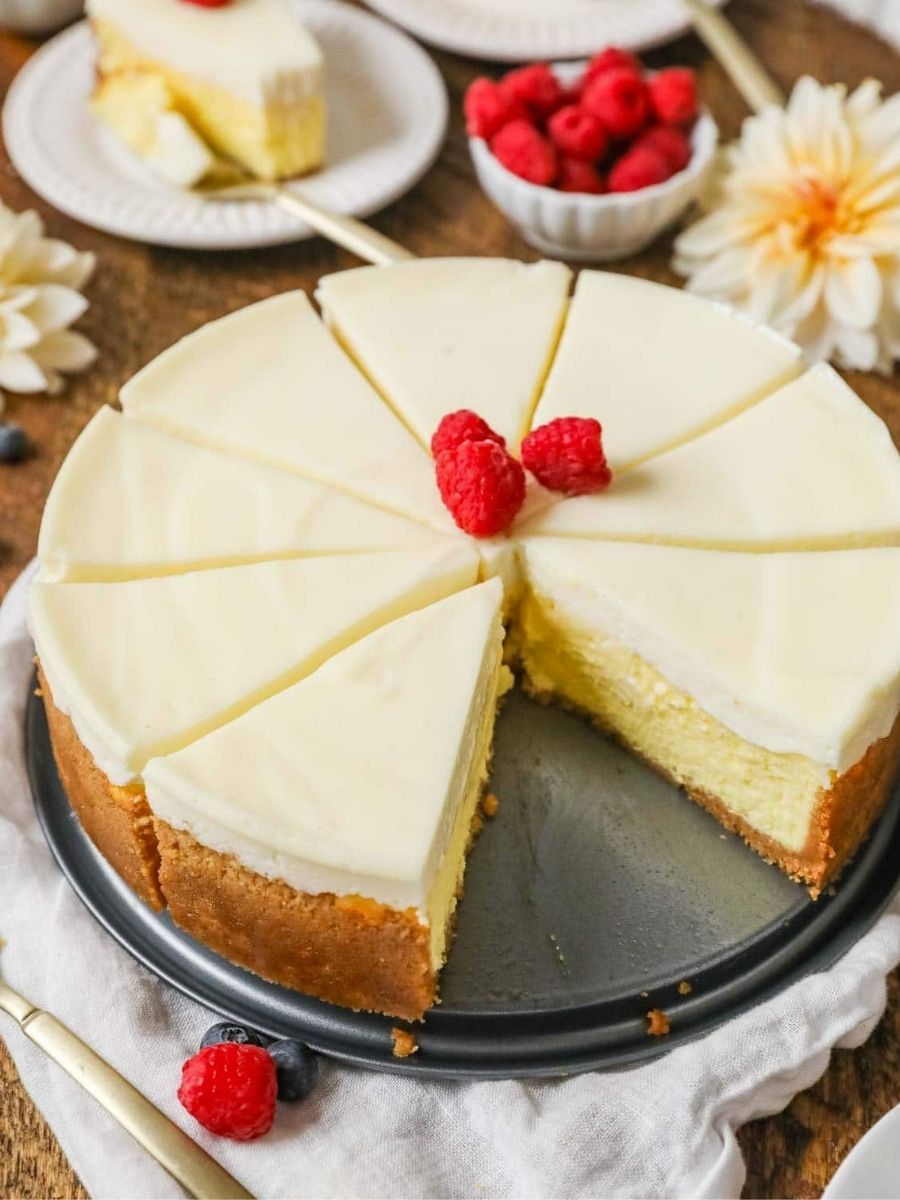
Prepare the Topping: After the 5-minute cooling period, combine the sour cream, sugar, and vanilla extract in a mixing bowl. Beat with an electric mixer until thoroughly combined.
Add the Topping: Pour the sour cream mixture evenly over the surface of the cheesecake.
Bake the Topping: Return the cheesecake to the 300°F (150°C) oven and bake for 5 minutes.
Cool Completely: Remove the cheesecake from the oven and allow it to cool at room temperature for at least 1 hour.
Chill the Cheesecake: Transfer the cooled cheesecake to the refrigerator and chill overnight, or for at least 6 hours, before serving.