Go Back
Lawrence D. Smith

Classic Fresh Plum Cake

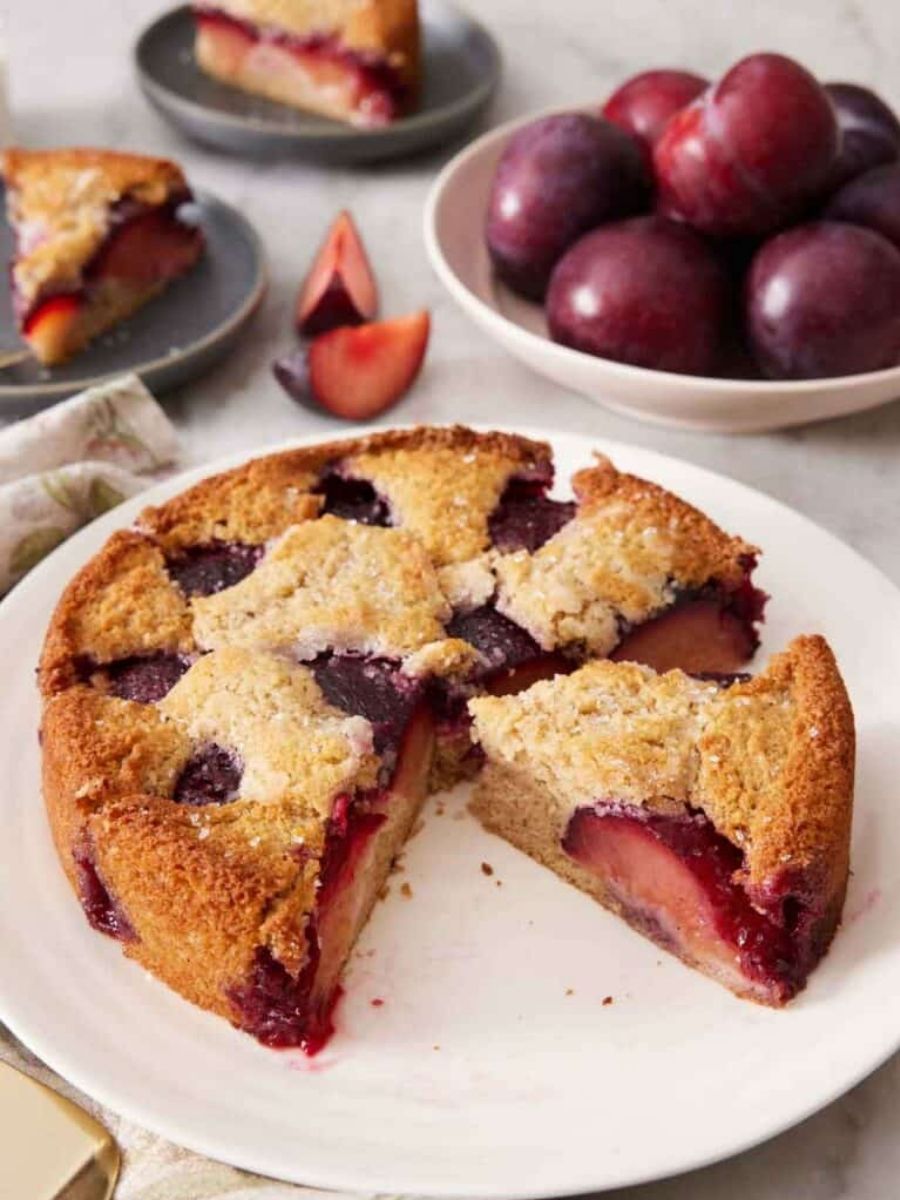
This easy plum cake features a soft, buttery crumb, fragrant cinnamon, and juicy fresh plums baked beneath a lightly golden, sugary top.
Made with everyday baking ingredients, it is a charming dessert for afternoon tea, casual gatherings, or a sweet homemade treat.
Prep Time 20 minutes
Cook Time 55 minutes
Total Time 1 hour 15 minutes
Servings: 8
Course: Dessert
Cuisine: British

Ingredients
  

Dry Ingredients
  • - 1½ cups all-purpose flour 180 g
  • - 1½ teaspoons baking powder
  • - ½ teaspoon ground cinnamon
  • - ½ teaspoon salt
Wet Ingredients
  • - ½ cup unsalted butter softened (113 g)
  • - ¾ cup granulated sugar 150 g, plus extra for sprinkling
  • - 2 large eggs
  • - 2 teaspoons vanilla extract
  • - ½ cup whole milk at room temperature (120 ml)
Fruit
  • - 1 pound fresh plums pitted and quartered (4–6 plums)

Equipment

  • 9-inch springform cake pan
  • Mixing bowls
  • Electric hand mixer or stand mixer fitted with a paddle attachment
  • Whisk
  • Measuring cups and spoons
  • Kitchen scale
  • Rubber spatula
  • Knife and cutting board
  • Baking spray
  • Toothpick or cake tester
  • Wire cooling rack

Method
 

  1. Prepare the Oven and Pan: Preheat the oven to 350°F (175°C). Lightly grease a 9-inch springform cake pan with baking spray to help prevent the cake from sticking.
  2. Combine the Dry Ingredients: In a medium mixing bowl, whisk together the all-purpose flour, baking powder, ground cinnamon, and salt until evenly distributed. Set the mixture aside.
  3. Cream the Butter and Sugar: Place the softened butter and granulated sugar in a large mixing bowl or the bowl of a stand mixer fitted with the paddle attachment.
    Beat on medium speed for approximately 3 minutes, until the mixture becomes pale, light, and fluffy.
  4. Incorporate the Eggs and Vanilla: Add the eggs and vanilla extract to the creamed butter mixture. Beat until thoroughly combined, then scrape down the sides and bottom of the bowl to ensure the ingredients are evenly incorporated.
  5. Alternate the Flour Mixture and Milk: Reduce the mixer speed to low. Add the dry ingredients in three portions, alternating with additions of the room-temperature milk between the flour additions.
    Mix just until the ingredients come together, scraping down the bowl as needed. Give the batter one final mix to ensure it is evenly combined.
  6. Fill the Prepared Pan: Transfer the batter into the greased springform pan. Use a spatula to spread it evenly across the pan, smoothing the surface so the plums can be arranged on top.
  7. Arrange the Plums: Distribute the pitted, quartered plums over the batter with their skin sides facing upward. Cover the surface with the fruit as evenly as possible. Sprinkle additional granulated sugar over the plums if desired.
  8. Bake the Cake: Place the pan in the preheated oven and bake for approximately 55 minutes. The cake is ready when the top is golden brown and a toothpick inserted into the center comes out clean.
    If the toothpick still shows wet batter, continue baking for a couple of additional minutes and check again.
  9. Cool in the Pan: Remove the cake from the oven and let it rest in the pan for 10 minutes. This initial cooling period helps the cake settle before you remove it from the pan.
  10. Release the Springform Ring: Carefully run a knife around the inside edge of the pan to loosen any cake that may be sticking. Release the springform mechanism and lift away the outer ring.
  11. Cool Completely Before Serving: Allow the cake to cool completely to room temperature before transferring it to a serving plate or cutting it into slices.
    This helps the cake set properly while preserving its moist interior and delicate crumb.
Notes

  • Check for doneness: Begin checking the cake around the 55-minute mark. A toothpick inserted into the center should come out clean. If wet batter remains on the toothpick, bake for a couple of additional minutes before checking again.
  • Let the cake cool completely: Allow the cake to reach room temperature before slicing. This helps the crumb set and makes it easier to cut neat slices without disturbing the soft fruit.
  • Use a regular cake pan if needed: If you do not have a 9-inch springform pan, a standard 9-inch cake pan can be used. Since removing the cake may disturb the fruit topping, it is best to slice and serve it directly from the pan.
  • Choose ripe, firm plums: Fresh plums that are ripe but still hold their shape work well for this recipe. Pit and quarter them before arranging them on the batter.
  • Adjust the sweetness on top: The extra sugar sprinkled over the plums is optional. Add it according to your preference for a sweeter, lightly crisp surface.
  • Try different flavor variations: The original recipe notes suggest substituting other stone fruits, such as peaches, apricots, nectarines, or cherries. Brown sugar, a little nutmeg or cardamom, ¼ teaspoon of almond extract, or some lemon zest can also offer variations in flavor.