Prepare the Choux Base: Place the milk, water, butter, caster sugar, and salt in a medium saucepan over medium heat. Stir until the sugar has dissolved and the butter has completely melted. Bring the mixture to a gentle boil, then remove the saucepan from the heat. Add the Flour: Immediately add all 160 g of flour to the hot liquid. Stir vigorously with a wooden spoon until the flour is completely incorporated and a smooth dough forms.
Cook the Dough: Return the saucepan to the heat and continue stirring for 2–3 minutes. Cook until a thick film develops on the bottom of the pan. The dough should be very thick, smooth, shiny, and free from visible lumps.
Cool the Dough: Transfer the hot dough to the bowl of a stand mixer. Use a spatula to spread the dough into a thin layer across the bottom and sides of the bowl. Leave it to cool for about 15 minutes, or until it reaches room temperature.
Incorporate the First Eggs: Fit the mixer with the paddle attachment. Scrape the dough from the sides of the bowl, then add two beaten eggs. Mix at medium speed until the eggs are thoroughly incorporated, scraping down the bowl whenever necessary. Add the Remaining Egg: Add the third egg and continue mixing at medium speed until it is completely incorporated and the mixture is smooth.
Finish the Choux Dough: Add the egg white and optional grated lemon or orange zest. Mix again at medium speed until everything is fully incorporated and the dough is smooth and glossy.
Pipe the Dough: Transfer the finished choux dough to a large piping bag fitted with a large open star or French star nozzle. Place the filled piping bag in the refrigerator for at least 1 hour to chill.
Prepare the Parchment: Cut baking paper into 12 squares, each measuring 9 × 9 cm. Draw a 7 cm diameter circle on each square, then turn the squares over so the marked circles are on the underside.
Pipe the Cruller Rings: Hold the piping bag vertically over one parchment square. Pipe an even ring of dough following the marked circle, bringing the two ends together so they connect. Repeat with the remaining dough and parchment squares.
Heat the Oil: Half-fill a deep-fat fryer or heavy-based large saucepan with the vegetable oil. Heat the oil to 180°C, using a cooking thermometer to monitor the temperature. Keep the oil at a constant temperature during frying and do not allow it to exceed 180°C. Lower the Crullers: Carefully place a piped cruller into the hot oil with its parchment square still attached and facing upward. Alternatively, place the parchment square holding the cruller onto a slotted spoon and carefully lower it into the oil. The parchment may detach during this process, which is fine. Fry in Batches: Fry 2–3 crullers at a time for approximately 2–3 minutes on each side. Remove the parchment using metal tongs once it can be safely detached. Keep the oil temperature consistent between batches.
Check for Doneness: Continue frying until the crullers are a deep golden brown on both sides.
Drain the Crullers: Remove the cooked crullers from the oil using a slotted spoon. Transfer them to a plate lined with kitchen paper to drain excess oil. Allow the crullers to cool before glazing.
Prepare the Glaze: Combine the icing sugar, milk, and optional vanilla extract or vanilla bean paste. Add enough milk to produce a glaze that is thick enough to coat the doughnuts while remaining loose enough for dipping.
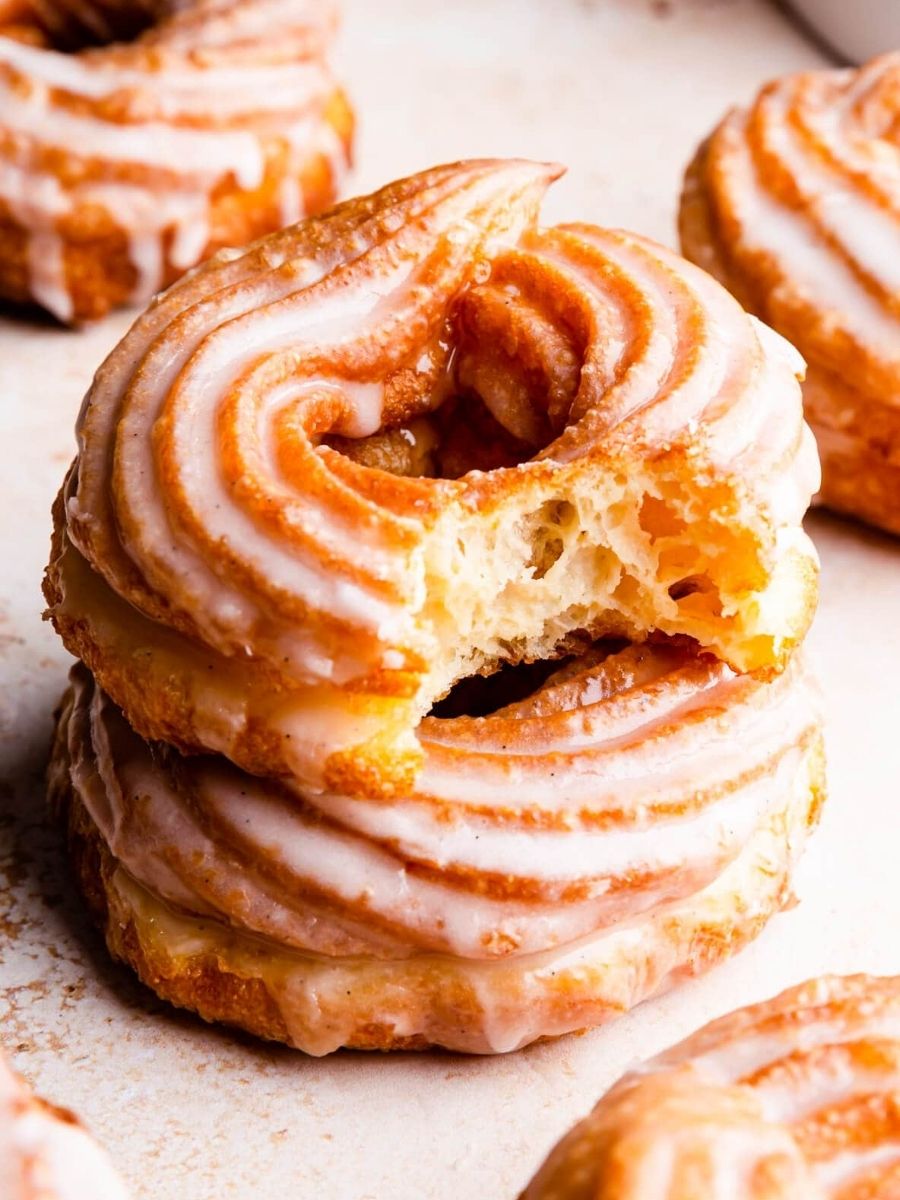
Glaze the Crullers: Dip the cooled crullers into the prepared glaze, allowing the excess to run off, then serve.