
BakeryDiary is a recipe curation and editorial platform. We research and curate recipes from public sources, considering ratings, reviews, comments, and feedback. We then refine and present them clearly for home cooks. We are committed to an ad-free, focused experience that makes discovering and preparing recipes easier.
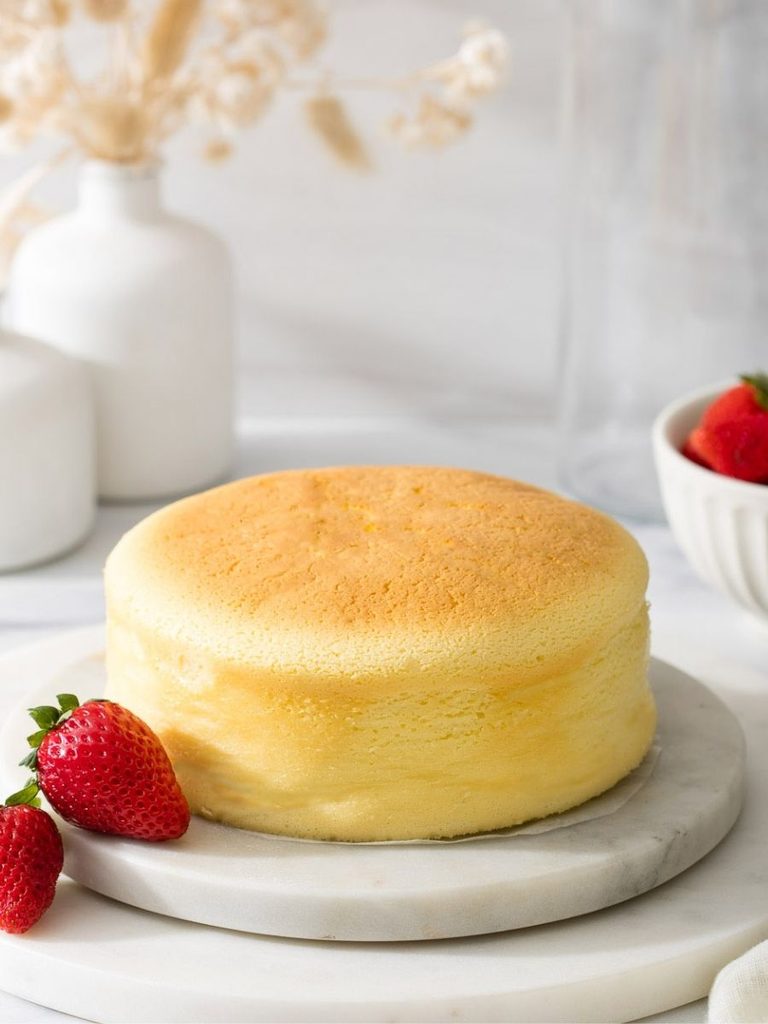
Japanese Cotton Cheesecake is a wonderfully delicate dessert known for its airy crumb, gentle jiggle, and creamy cheesecake flavor.
Unlike dense, rich cheesecake styles, this Japanese-inspired version has an almost cloud-like texture created by carefully folding a softly whipped meringue into a smooth cream cheese batter.
The result is light enough to feel almost like a soufflé while still offering the familiar richness of cheesecake.
Japanese cheesecake is widely recognized for this distinctive fluffy, wobbly character and its relatively delicate sweetness.
This recipe combines full-fat cream cheese, unsalted butter, whole milk, egg yolks, cake flour, cornstarch, vanilla, and a modest amount of sugar for a balanced base.
Lemon juice adds a subtle brightness, while the separated egg whites provide the structure and lift that make the finished cake so soft and airy.
The cream cheese mixture is gently prepared over a double boiler before being combined with the meringue, helping create a smooth batter without losing its delicate texture.
The cake is baked gradually in a hot water bath, an important part of the method for maintaining a moist baking environment.
The changing oven temperatures help the cheesecake cook gently while developing its lightly golden top.
A slow cooling process inside the turned-off oven further helps minimize sudden temperature changes.
Finished with a simple dusting of powdered sugar, this cheesecake is elegant enough for special occasions yet wonderfully comforting for an afternoon dessert.
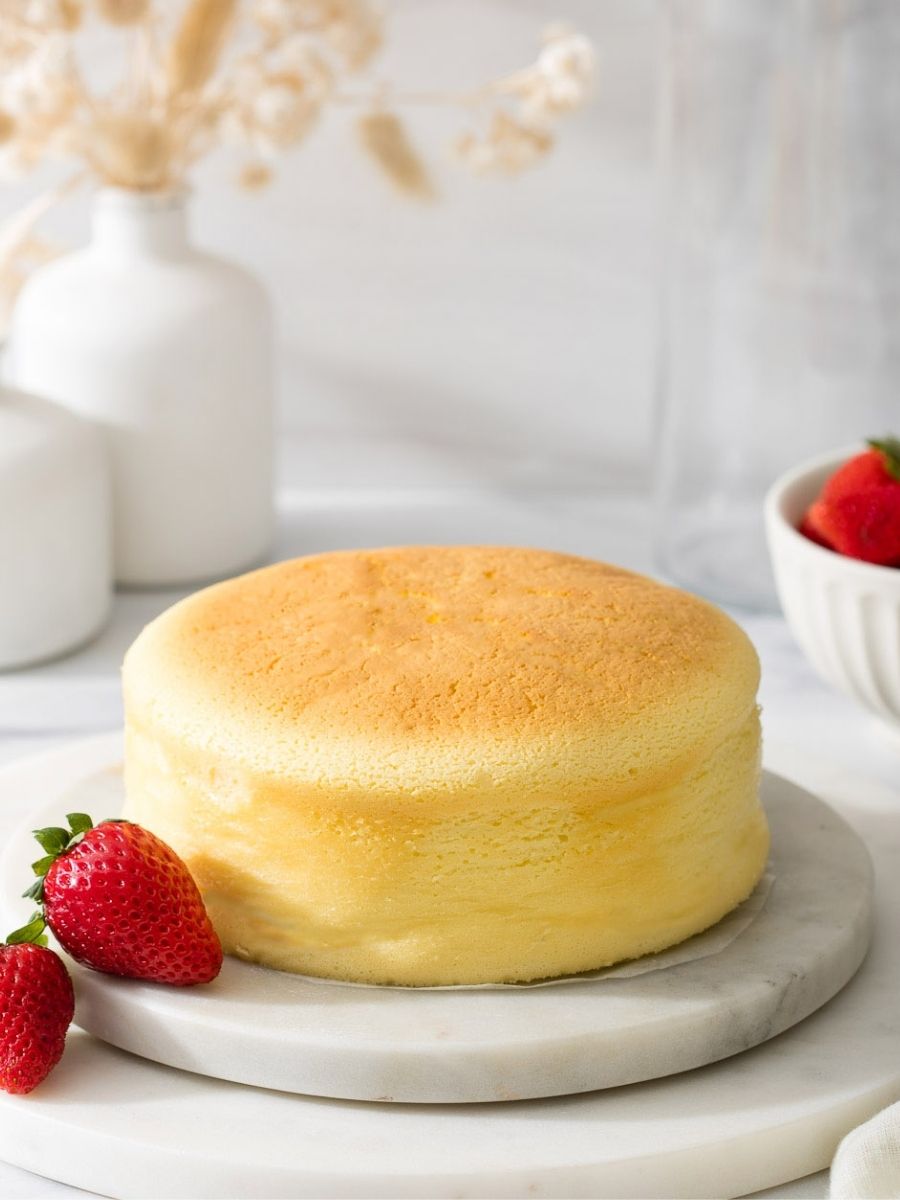

Fluffy Japanese Cotton Cheesecake
Ingredients
Equipment
Method
- Prepare the oven and pan: Preheat the oven to 300°F (150°C). Line the bottom and sides of a 6-inch round baking pan with parchment paper.
- Melt the cream cheese mixture: Fill a small saucepan halfway with water and bring it to a boil. Place a heatproof mixing bowl over the saucepan, making sure it fits securely, then add the cream cheese, butter, and milk. Whisk until the butter and cream cheese have completely melted and the mixture reaches about 130°F (55°C).
- Add the yolks and vanilla: Remove the bowl from the heat. Whisk in the room-temperature egg yolks and vanilla extract until the mixture is evenly combined and smooth.
- Sift the dry ingredients: Pass the cake flour and cornstarch through a fine-mesh sieve into the cream cheese mixture. Whisk until smooth, then strain the batter through the sieve once more to remove any remaining lumps.
- Whip the meringue: Place the egg whites and lemon juice in a large mixing bowl. Using an electric hand mixer on high speed, beat until the whites are white and frothy. With the mixer running, gradually add the sugar in three batches, continuing to beat between additions. Stop when the meringue reaches medium-soft peaks that gently fold over when the beaters are lifted. Reduce the mixer to low and beat for another 30 seconds to remove larger air bubbles.
- Lighten the batter: Add one-third of the meringue to the egg-and-cream-cheese batter. Fold gently until completely incorporated and smooth.
- Fold in the remaining meringue: Pour the lightened egg batter gently into the remaining meringue. Using a rubber spatula, fold carefully until just combined, taking care not to over-mix or deflate the air in the meringue.
- Fill the pan: Pour the batter into the prepared 6-inch pan from about 5 inches above the pan. This helps release remaining large air bubbles.
- Set up the water bath: Place the filled cake pan inside a larger, deep baking tray. Carefully add about 1–2 cm of hot boiling water to the larger tray, creating a water bath.
- Bake the cheesecake: Bake at 300°F (150°C) for 30 minutes. Reduce the oven temperature to 230°F (110°C) and continue baking for another 30 minutes. Increase the temperature to 275°F (135°C) and bake for a final 13–15 minutes. Watch the cheesecake closely during baking. If it begins to crack, briefly crack the oven door for about 5 seconds to release steam. The cheesecake is ready when the top is golden and a toothpick inserted into the center comes out mostly clean.
- Cool gradually in the oven: Turn off the oven and leave the cheesecake inside with the oven door cracked for about 15 minutes. Remove the cake pan from the water bath, then return the cheesecake to the oven and leave it there for another 15 minutes. This gradual cooling helps prevent dramatic shrinking from a sudden temperature change.
- Cool completely: Remove the cheesecake from the pan and place it on a wire rack. Allow it to cool completely, then sift powdered sugar over the top before serving.
Notes
- Whip the egg whites to medium-soft peaks. The peaks should gently curve over when the mixer is lifted rather than standing upright.
- Avoid over-whipping the meringue, as the texture needs to remain soft and flexible for folding.
- Fold the meringue gently to retain as much air as possible. Over-mixing can cause the batter to lose volume.
- Straining the cream cheese batter through a fine-mesh sieve helps ensure a smooth, lump-free texture.
- The hot water bath provides a moist, regulated baking environment and helps reduce the chance of cracking.
- If using a springform pan, protect it from water by placing a slightly larger round pan between it and the deep baking tray, or wrap the bottom with aluminum foil.
- Watch the cheesecake carefully during the final baking stage. If cracks begin forming, briefly crack the oven door to release excess steam.
- Allow the cheesecake to cool gradually in the oven rather than removing it immediately after baking. This helps reduce dramatic shrinking.
- Dust the completely cooled cheesecake with powdered sugar just before serving for a simple, elegant finish.
Chef’s Secret
The most important detail for achieving the characteristic cotton-soft texture is the consistency of the meringue.
Stop beating the egg whites as soon as they reach medium-soft peaks: when the beaters are lifted, the peaks should form a tip that slowly bends over.
A meringue that is too stiff can be difficult to incorporate smoothly and may encourage the batter to lose volume during folding.
Once the meringue is ready, use a rubber spatula and fold gently, especially when combining the final portion. Work only until no obvious streaks remain.
This preserves the tiny air bubbles responsible for the cheesecake’s light, fluffy structure while keeping the batter smooth enough to bake evenly.
Serving Suggestions
Serve the completely cooled cheesecake with its simple powdered-sugar finish for a classic presentation.
For a more decorative dessert, add a light dusting of additional powdered sugar immediately before serving.
Cut the cake gently to showcase its soft, airy interior, and serve individual slices on their own so the delicate cream cheese flavor remains the focus.
The cheesecake also works well as an elegant afternoon dessert or as a light finish to a meal.
Conclusion
Japanese Cotton Cheesecake brings together a creamy cheesecake base and an exceptionally light meringue to create its signature fluffy, jiggly texture.
The gradual temperature changes, water bath, and careful cooling process are central to achieving its delicate structure.
Finished with nothing more than powdered sugar, this soft and airy cheesecake makes an impressive yet beautifully simple dessert.
