
BakeryDiary is a recipe curation and editorial platform. We research and curate recipes from public sources, considering ratings, reviews, comments, and feedback. We then refine and present them clearly for home cooks. We are committed to an ad-free, focused experience that makes discovering and preparing recipes easier.
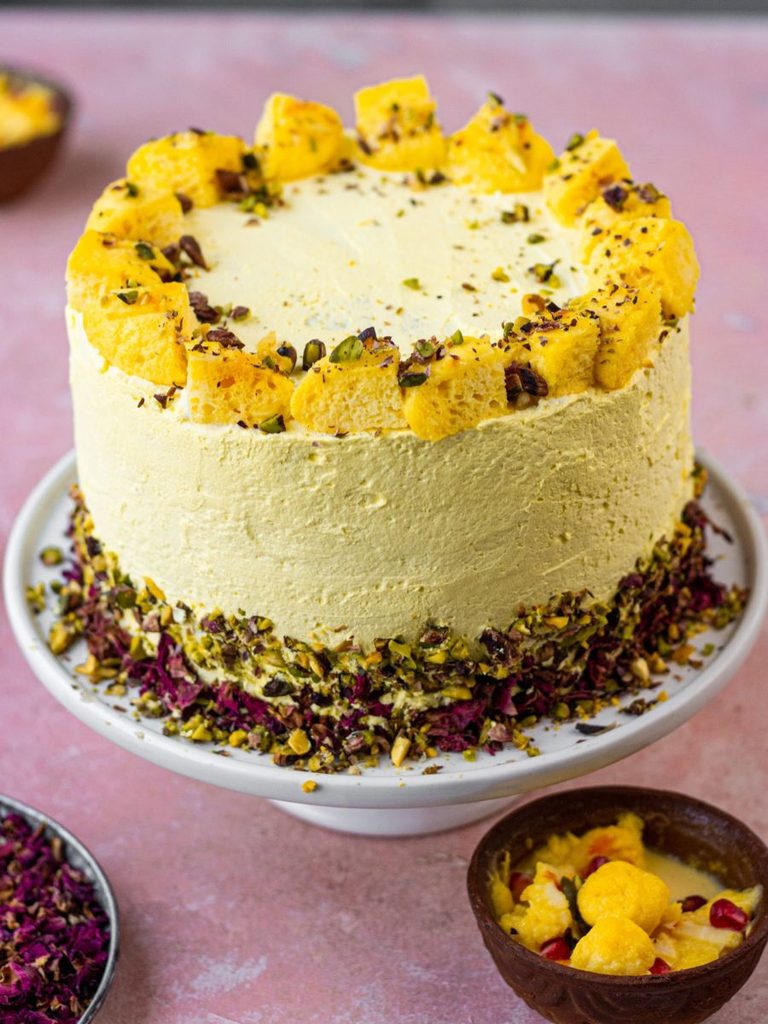
Rasmalai cake brings together the rich flavors of a traditional Indian dessert and the soft, delicate texture of a layered cream cake.
This eggless version is infused with aromatic cardamom, fragrant saffron, and a hint of kewra extract, creating a dessert that feels both festive and indulgent.
With its tender sponge layers, silky whipped cream frosting, and pieces of classic rasmalai, every slice offers a delightful combination of flavors and textures.
The cake batter uses yogurt, vegetable oil, milk, and sugar to create a moist sponge without eggs.
Baking powder and baking soda help the layers rise, while saffron-infused milk adds a subtle golden hue and a delicate aroma.
Cardamom brings gentle warmth, and kewra extract contributes a distinctive floral note that complements the traditional Indian dessert inspiration.
Once baked and completely cooled, the cakes are divided into thinner layers.
Each layer is brushed with the sweet liquid from the rasmalai, helping the sponge absorb its creamy flavor and remain moist.
Whipped cream, enriched with a little rasmalai liquid and a touch of yellow food coloring, creates a light, smooth frosting that balances the sweetness of the cake.
Chopped pistachios add a pleasant nutty contrast, while small pieces of rasmalai make the final decoration especially inviting.
Perfect for birthdays, family gatherings, festive celebrations, or special occasions, this eggless rasmalai cake offers an elegant way to enjoy familiar Indian dessert flavors in a beautiful layered presentation.
Its creamy finish, aromatic sponge, and delicate sweetness make it a memorable treat for anyone who loves rasmalai.
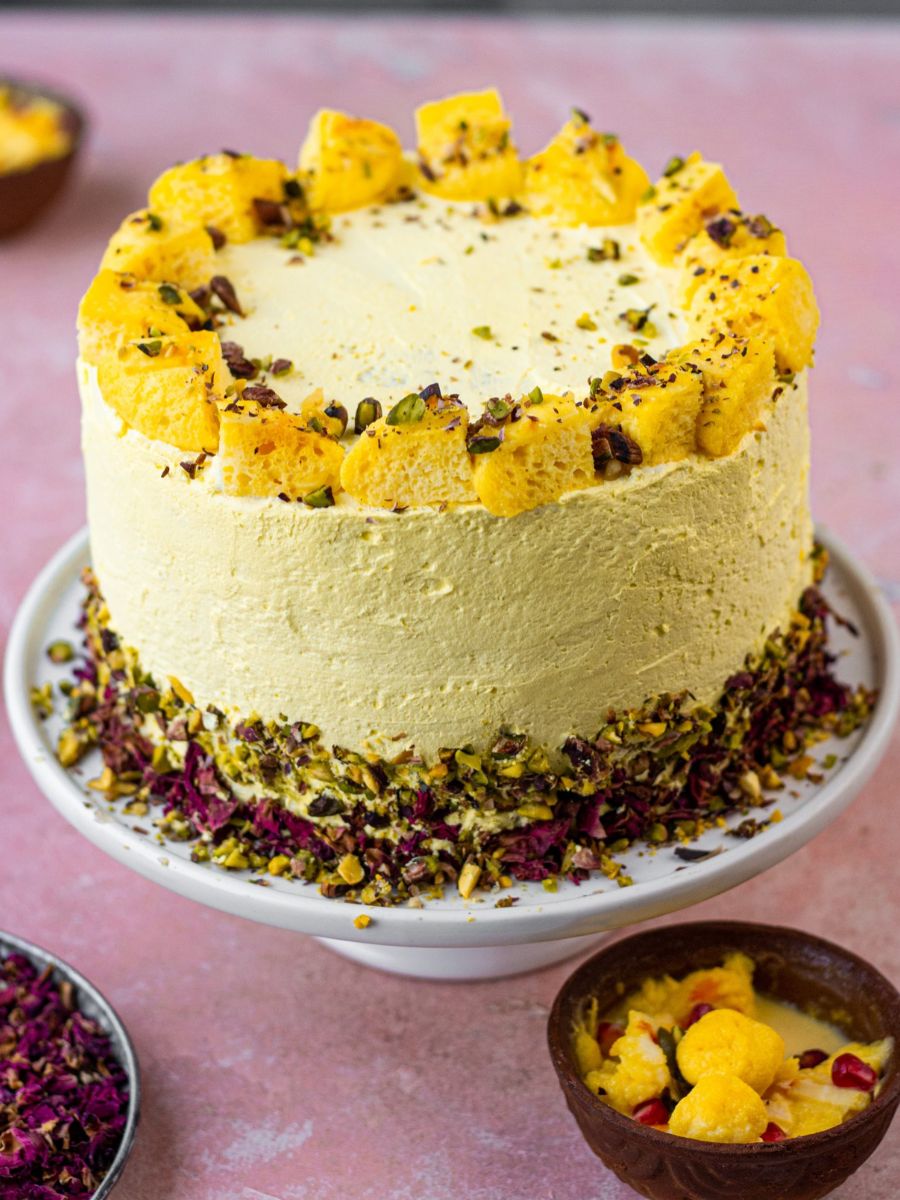

Indian Rasmalai Birthday Cake
Ingredients
Equipment
Method
- Prepare the Cake Pans and Oven: Preheat the oven to 180°C (356°F). Line two 6-inch round cake pans with parchment paper.
- Infuse the Milk: Place the milk in a small bowl and add 2–3 saffron strands along with some of the cardamom powder. Mix well and set aside for a few minutes to allow the flavors to infuse.
- Activate the Baking Soda: In a separate mixing bowl, add the yogurt and sprinkle the baking soda over it. Set aside and allow the mixture to foam.
- Whisk the Oil and Sugar: In another bowl, combine the vegetable oil and castor sugar. Whisk until the mixture looks pale and the ingredients are evenly combined.
- Add the Flavoring: Stir the kewra extract into the oil and sugar mixture until incorporated.
- Combine the Wet Ingredients: Add the foamy yogurt mixture and saffron-infused milk to the oil and sugar mixture. Mix thoroughly until the ingredients are evenly combined.
- Incorporate the Dry Ingredients: Sift the all-purpose flour and baking powder into the wet mixture. Whisk gently until the batter is smooth and no visible lumps remain.
- Fill the Cake Pans: Divide the prepared batter between the two lined 6-inch cake pans, distributing it evenly.
- Bake the Cake Layers: Place the pans in the preheated oven and bake at 180°C for 30–35 minutes, or until a skewer inserted into the center of each cake comes out clean.
- Cool the Cakes: Remove the cakes from the oven and allow them to cool completely before assembling. Once cooled, use a serrated knife to slice each cake horizontally into two layers.
- Whip the Cream: Beat the whipping cream until stiff peaks form. Fold in a few spoons of the liquid from the rasmalai to give the cream its characteristic flavor.
- Tint the Frosting: Add a few drops of yellow food coloring to the whipped cream and gently mix until the color is evenly distributed.
- Moisten the First Cake Layer: Place one cake layer on your serving plate or cake stand. Drizzle some rasmalai liquid over the surface to moisten the sponge.
- Add the Cream and Pistachios: Pipe a generous layer of the flavored whipped cream over the cake. Sprinkle chopped pistachios evenly over the cream.
- Build the Remaining Layers: Place the next cake layer on top and repeat the process of drizzling rasmalai liquid, piping whipped cream, and adding chopped pistachios. Continue until all the cake layers have been assembled.
- Frost the Top: Add dollops of the remaining whipped cream to the top of the assembled cake and spread it evenly across the surface.
- Garnish and Serve: Decorate the top with small pieces of rasmalai. Serve the finished eggless rasmalai cake once the decoration is complete.
Notes
- Yogurt Preparation: Sprinkle the baking soda over the yogurt and let it foam before combining it with the other wet ingredients.
- Saffron Infusion: Allow the saffron strands and cardamom powder to infuse in the milk for a few minutes to develop their aroma.
- Flour Mixing: Sift the flour and baking powder into the wet ingredients, then whisk until no visible lumps remain.
- Check for Doneness: Bake the cakes at 180°C for 30–35 minutes. Insert a skewer into the center to check that it comes out clean.
- Cool Completely: Let both cakes cool fully before slicing or frosting to prevent the whipped cream from melting.
- Whipped Cream: Beat the cream until stiff peaks form before folding in the rasmalai liquid. Add the liquid gradually to preserve the cream’s structure.
- Layering: Drizzle the rasmalai liquid over each sponge layer without soaking it excessively, helping the cake stay moist while remaining easy to assemble.
- Food Coloring: The two drops of yellow food coloring are intended for the cake batter. Add a few additional drops to the frosting as directed, adjusting the color gradually.
- Decoration: Use chopped pistachios between the layers and small pieces of rasmalai on top for a traditional finishing touch.
Chef’s Secret
The key to a beautifully layered eggless rasmalai cake is controlling the moisture in the sponge.
Rasmalai liquid adds the signature milky sweetness, but too much can make the cake layers fragile and cause the whipped cream to slide.
Once the cakes have cooled completely, slice them horizontally with a serrated knife using gentle, steady movements.
When assembling, drizzle a modest amount of rasmalai liquid over each layer, distributing it across the surface rather than pouring it in one spot.
Make sure the whipped cream has reached stiff peaks before folding in the rasmalai liquid, and incorporate it gently to maintain a light texture.
This careful balance helps the cake remain moist, creamy, and stable while allowing the saffron and cardamom flavors to shine.
Serving Suggestions
Serve the eggless rasmalai cake as a centerpiece for birthdays, family celebrations, festive meals, or special gatherings.
Garnish each slice with a small piece of rasmalai and a sprinkling of chopped pistachios for an attractive finish.
A few saffron strands can also complement the cake’s aromatic flavor and golden appearance.
Pair each serving with masala chai, cardamom tea, or a cup of unsweetened coffee to balance the creamy sweetness.
For a traditional Indian dessert spread, serve it alongside other mithai in small portions.
Keep the cake chilled until serving so the whipped cream frosting holds its shape, and use a clean knife to cut neat slices.
Conclusion
This eggless rasmalai cake combines a soft, saffron- and cardamom-infused sponge with lightly sweetened whipped cream and the distinctive flavor of traditional rasmalai.
Layers of moist cake, chopped pistachios, and creamy frosting create a dessert that is both elegant and full of familiar Indian-inspired flavors.
Whether prepared for a festive occasion or a special family treat, this cake offers a delightful alternative to a traditional rasmalai presentation.
Follow the baking, cooling, and layering steps carefully to create a beautiful cake that is ready to share and enjoy.
